THE ADVENTURE COLLECTIVE® · Independent discovery and booking for outdoor travel

A private two-day circuit through the Sacred Valley that pairs Chinchero’s weaving, Moray’s experimental terraces and Maras’ salt pans with a Vistadome train ride and a guided visit to Machu Picchu. Ideal for time-limited travelers who want big sights and local context.
A private two-day circuit through the Sacred Valley that pairs Chinchero’s weaving, Moray’s experimental terraces and Maras’ salt pans with a Vistadome train ride and a guided visit to Machu Picchu. Ideal for time-limited travelers who want big sights and local context.
You step off the panoramic Vistadome and the Andes fold open: terraced slopes, a river threading the valley below, and the mist-scrubbed silhouette of Machu Picchu rising above cloud forest.
Verified experiences and guided adventures in the surrounding area.
Operated by Inkayni Peru Tours · Cusco, Cusco Region
You step off the panoramic Vistadome and the Andes fold open: terraced slopes, a river threading the valley below, and the mist-scrubbed silhouette of Machu Picchu rising above cloud forest.
This two-day private itinerary threads together the Sacred Valley’s living heritage — the textile looms of Chinchero, the concentric agricultural rings of Moray and the thousand salt pans of Maras — before delivering you to the stonework and terraces of the Inca citadel itself. Geologically the valley is a braided mix of volcanic and sedimentary formations carved by the Urubamba River; the Incas harnessed that vertical range for microclimates, experimenting with crops at different altitudes.
Culturally you’ll encounter Quechua-speaking artisans practicing techniques unchanged for centuries and small Andean markets where alpaca fiber and natural dyes are still processed by hand. The train ride is part scenery, part transition: the Vistadome’s panoramic windows frame cloud forest niches where hummingbirds and orchids thrive.
Practical guidance: the tour starts and ends in Cusco and includes one hotel night in Aguas Calientes. Altitude is the primary consideration — Cusco sits above 3,300 m while Machu Picchu is 2,430 m — so hydrate, sleep well in Cusco before departure and move deliberately. Comfortable walking shoes, layered clothing and sun protection make the difference on damp mornings or sudden sun. If you plan Huayna Picchu or Machu Picchu Mountain, reserve those permits well in advance. Expect moderate walking, many stone steps and payoff views at every turn.
moderate.
2 days.
Moderate fitness recommended; able to manage sustained walking, uneven stone steps, and short climbs at altitude.
This is a two-day private tour that begins and ends in Cusco with hotel pickup included.
The Vistadome round-trip train and Machu Picchu entrance are included; additional mountain summit permits must be purchased in advance if desired.
The tour involves walking on uneven stone steps and terraces; it’s not recommended for travelers with significant mobility issues or spinal problems.
Cusco is above 3,300 m; travelers should hydrate, avoid heavy exertion on day one, and consider medication like acetazolamide after consulting a doctor.
The Sacred Valley was a core agricultural and administrative region for the Inca; sites like Moray likely functioned as experimental agricultural labs and Maras supplied salt long before Spanish contact.
Machu Picchu has strict daily visitor limits and path routing—stay on designated trails, carry out waste and support local guides to minimize impact.
Inkayni Peru Tours operates guided outdoor trips and adventures with an emphasis on safety, stewardship, and memorable experiences.


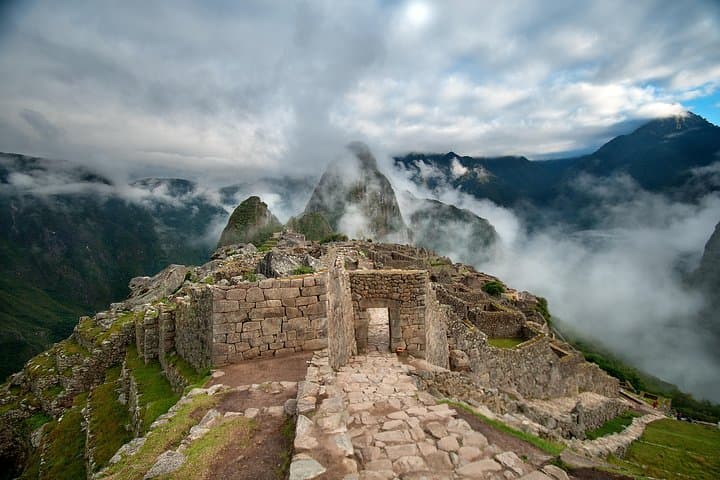

You step off the panoramic Vistadome and the Andes fold open: terraced slopes, a river threading the valley below, and the mist-scrubbed silhouette of Machu Picchu rising above cloud forest.
You step off the panoramic Vistadome and the Andes fold open: terraced slopes, a river threading the valley below, and the mist-scrubbed silhouette of Machu Picchu rising above cloud forest.
This two-day private itinerary threads together the Sacred Valley’s living heritage — the textile looms of Chinchero, the concentric agricultural rings of Moray and the thousand salt pans of Maras — before delivering you to the stonework and terraces of the Inca citadel itself. Geologically the valley is a braided mix of volcanic and sedimentary formations carved by the Urubamba River; the Incas harnessed that vertical range for microclimates, experimenting with crops at different altitudes.
Culturally you’ll encounter Quechua-speaking artisans practicing techniques unchanged for centuries and small Andean markets where alpaca fiber and natural dyes are still processed by hand. The train ride is part scenery, part transition: the Vistadome’s panoramic windows frame cloud forest niches where hummingbirds and orchids thrive.
Practical guidance: the tour starts and ends in Cusco and includes one hotel night in Aguas Calientes. Altitude is the primary consideration — Cusco sits above 3,300 m while Machu Picchu is 2,430 m — so hydrate, sleep well in Cusco before departure and move deliberately. Comfortable walking shoes, layered clothing and sun protection make the difference on damp mornings or sudden sun. If you plan Huayna Picchu or Machu Picchu Mountain, reserve those permits well in advance. Expect moderate walking, many stone steps and payoff views at every turn.