THE ADVENTURE COLLECTIVE® · Independent discovery and booking for outdoor travel

A private half-day trip from Berlin to the Sachsenhausen Memorial that combines hotel pickup with a guided, in-depth visit to the camp’s barracks, Station Z and exhibition spaces. Expect a sober, historically rich experience with practical logistics handled for you.
A private half-day trip from Berlin to the Sachsenhausen Memorial that combines hotel pickup with a guided, in-depth visit to the camp’s barracks, Station Z and exhibition spaces. Expect a sober, historically rich experience with practical logistics handled for you.
You step out of a modern, air-conditioned vehicle and onto a wide gravel forecourt; the winter trees beyond the perimeter fence lean in as if to listen. The memorial’s long, low barracks and main guard tower hold a quiet gravity—this is a place where architecture, land and history confront one another.
Verified experiences and guided adventures in the surrounding area.
Operated by taxiGo Limo Airport Service · Oranienburg, Brandenburg
You step out of a modern, air-conditioned vehicle and onto a wide gravel forecourt; the winter trees beyond the perimeter fence lean in as if to listen. The memorial’s long, low barracks and main guard tower hold a quiet gravity—this is a place where architecture, land and history confront one another.
Sachsenhausen was built north of Berlin in 1936 as a purpose-built concentration camp and later became a site of systematic imprisonment, forced labor and executions. The site occupies the flat glacial plain of Brandenburg, where compacted soils and open fields make the barracks and watchtowers unavoidably visible across the landscape—a sober contrast to the city’s animation 35 km to the south.
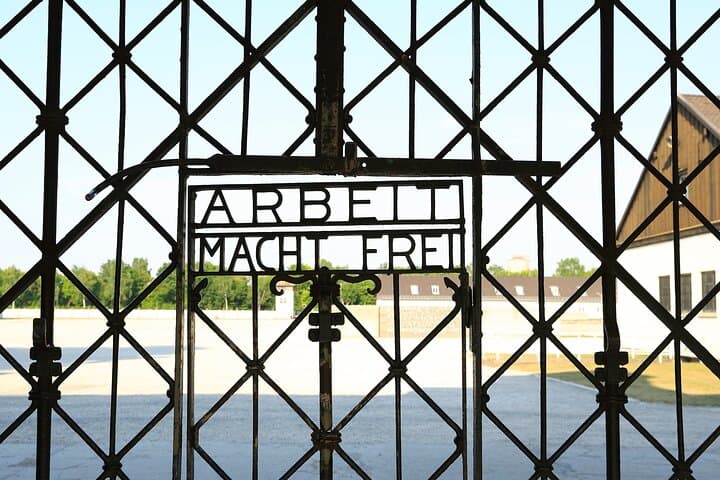
A guided visit moves from the gatehouse to the prison blocks, Station Z, the crematorium area and the exhibitions that interpret daily life and the camp system. Local guides pair archival detail with cultural context: the camp’s role in the Third Reich, postwar memory politics, and ongoing preservation efforts.
Practicalities: the private tour includes hotel pickup, return transport and a professional guide; the tour spends roughly 2–2.5 hours on-site within a 4.5-hour round trip. Admission or special exhibition fees are not included—confirm current museum openings and any reservation requirements before you go. Wear sturdy shoes for gravel and uneven surfaces, bring water and allow time afterwards to process the visit—this is a historically intense experience. Photography of some buildings and exhibits may be restricted; follow signage and the guide’s instructions.
This trip is a focused, respectful way to understand a difficult chapter of history while relying on private transport and local expertise to simplify logistics.
easy.
4–4.5 hours.
Suitable for most fitness levels; involves standing and walking on uneven surfaces for up to 2–2.5 hours at the memorial.
No. The tour includes private transport and a guide; confirm whether special exhibitions or museum areas require separate tickets before your visit.
The itinerary allocates about 150 minutes on-site, with the total door-to-door duration around 4–4.5 hours.
The memorial has paved routes and accessible facilities in parts, but some areas have gravel and uneven ground—notify the operator of accessibility needs at booking.
Photography of outdoor areas is generally permitted, but some exhibits or interior spaces may prohibit flash or filming; follow posted rules and your guide’s instructions.
Sachsenhausen was established in 1936 near Oranienburg as a model concentration camp and later became central to Nazi forced labor and extermination systems; the site is now a national memorial and educational center.
The memorial is preserved for education and remembrance—visitors are asked to stay on marked paths and not remove any objects; conservation efforts balance public access with preserving fragile architecture and artifacts.
taxiGo Limo Airport Service operates guided outdoor trips and adventures with an emphasis on safety, stewardship, and memorable experiences.
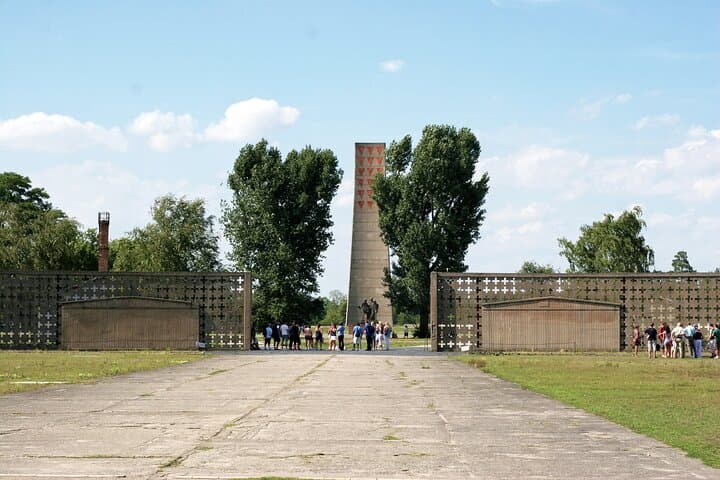

You step out of a modern, air-conditioned vehicle and onto a wide gravel forecourt; the winter trees beyond the perimeter fence lean in as if to listen. The memorial’s long, low barracks and main guard tower hold a quiet gravity—this is a place where architecture, land and history confront one another.
You step out of a modern, air-conditioned vehicle and onto a wide gravel forecourt; the winter trees beyond the perimeter fence lean in as if to listen. The memorial’s long, low barracks and main guard tower hold a quiet gravity—this is a place where architecture, land and history confront one another.
Sachsenhausen was built north of Berlin in 1936 as a purpose-built concentration camp and later became a site of systematic imprisonment, forced labor and executions. The site occupies the flat glacial plain of Brandenburg, where compacted soils and open fields make the barracks and watchtowers unavoidably visible across the landscape—a sober contrast to the city’s animation 35 km to the south.
A guided visit moves from the gatehouse to the prison blocks, Station Z, the crematorium area and the exhibitions that interpret daily life and the camp system. Local guides pair archival detail with cultural context: the camp’s role in the Third Reich, postwar memory politics, and ongoing preservation efforts.
Practicalities: the private tour includes hotel pickup, return transport and a professional guide; the tour spends roughly 2–2.5 hours on-site within a 4.5-hour round trip. Admission or special exhibition fees are not included—confirm current museum openings and any reservation requirements before you go. Wear sturdy shoes for gravel and uneven surfaces, bring water and allow time afterwards to process the visit—this is a historically intense experience. Photography of some buildings and exhibits may be restricted; follow signage and the guide’s instructions.
This trip is a focused, respectful way to understand a difficult chapter of history while relying on private transport and local expertise to simplify logistics.