THE ADVENTURE COLLECTIVE® · Independent discovery and booking for outdoor travel

Skip the crowds and trade Rome’s bustle for the quiet streets of Ostia Antica on a private tour. An official guide leads you through temples, baths, and bakeries while private transport gets you there and back in comfort.
Skip the crowds and trade Rome’s bustle for the quiet streets of Ostia Antica on a private tour. An official guide leads you through temples, baths, and bakeries while private transport gets you there and back in comfort.
A breeze off the Tiber cuts across the open forum as you step through a low, sandstone gateway and the city shifts around you — from modern Rome’s traffic to cobbled lanes and flat-roofed houses frozen in stone. The guide’s voice threads between columns, pointing out mosaics and shuttered shopfronts while sunlight picks out the hollows where merchants once stacked amphorae.
Verified experiences and guided adventures in the surrounding area.
Operated by AcrossRome · Rome, Lazio
A breeze off the Tiber cuts across the open forum as you step through a low, sandstone gateway and the city shifts around you — from modern Rome’s traffic to cobbled lanes and flat-roofed houses frozen in stone. The guide’s voice threads between columns, pointing out mosaics and shuttered shopfronts while sunlight picks out the hollows where merchants once stacked amphorae.
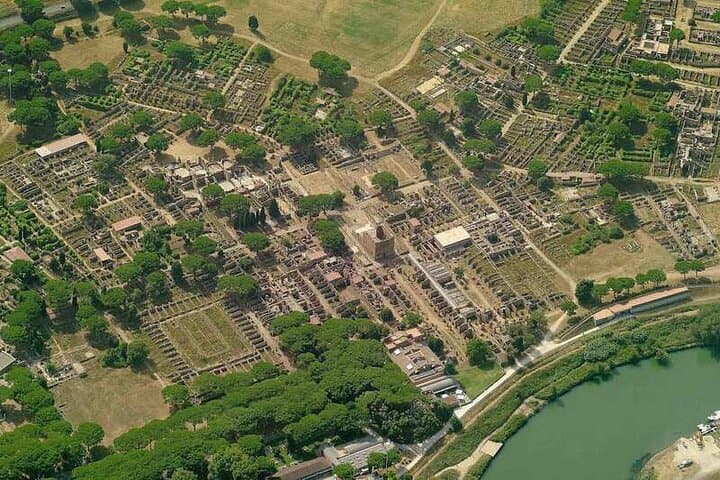
Ostia Antica began as Rome’s port in the 4th century BCE and grew into a dense, working city through the Imperial era; its decline began when the Tiber shifted and the coastline changed. Geologically the site sits on sedimentary plains near the ancient mouth of the Tiber, which helped preserve streets and warehouses but also left the ruins vulnerable to groundwater and salt. Culturally, Ostia reveals ordinary Roman life — bakeries, baths, taverns — rather than imperial monuments, making the site a clearer window into daily routines.
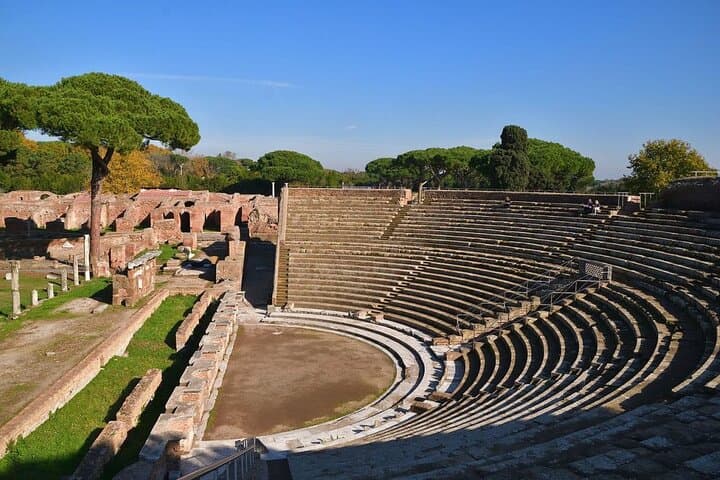
Expect wide, level walking across exposed stone and packed earth, with occasional stairs to enter baths and the small theater. The tour typically spends about three hours inside the park, enough time to climb the theater’s terraces for a sweeping view and to examine household mosaics up close.
Practical notes: wear sturdy shoes with good grip and a hat; bring water (some bottles provided) and a light layer for coastal winds. Morning or late afternoon visits are cooler and deliver better light for photography. The private transfer from Rome removes transit hassle, letting you focus on the archaeology and stories that give shape to an ancient port city.
moderate.
4–6 hours.
Moderate fitness required: several hours of walking on uneven surfaces, brief stair climbs.
Yes — entrance to the Ostia Antica archaeological park is included with the tour.
Private pickup is provided from Rome at a scheduled location or hotel; the tour returns you to your drop-off point in the city.
The park has uneven surfaces and stairs; it’s not recommended for travelers with significant mobility, spinal, or cardiovascular problems.
Photography for personal use is allowed; avoid flash on fragile mosaics and follow guide instructions for restricted areas.
Ostia Antica was Rome’s principal port from the Republic through the Empire; when the Tiber’s mouth shifted and silted, the city gradually declined.
Ongoing conservation addresses groundwater and salt damage; visitors are asked to stay on paths and avoid touching fragile surfaces to protect the ruins.
AcrossRome operates guided outdoor trips and adventures with an emphasis on safety, stewardship, and memorable experiences.
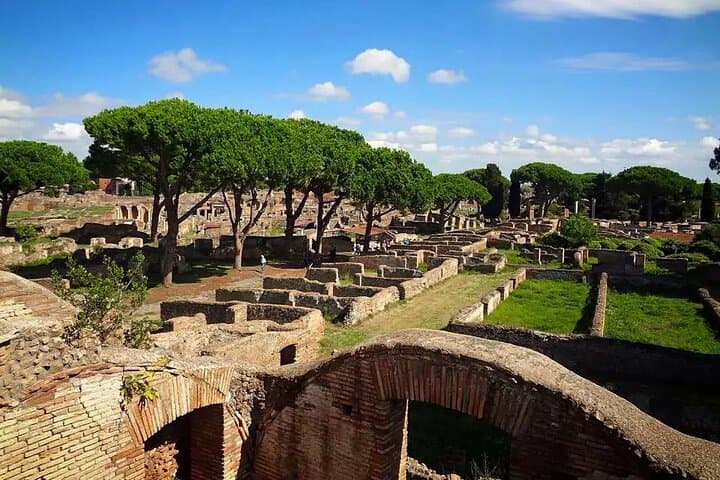
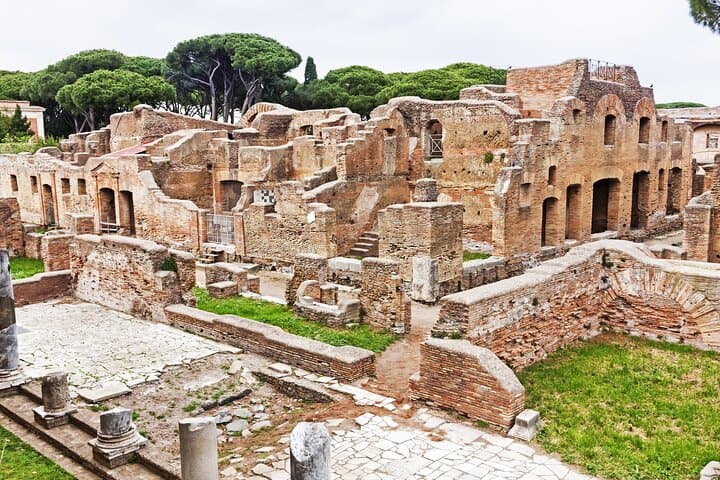
A breeze off the Tiber cuts across the open forum as you step through a low, sandstone gateway and the city shifts around you — from modern Rome’s traffic to cobbled lanes and flat-roofed houses frozen in stone. The guide’s voice threads between columns, pointing out mosaics and shuttered shopfronts while sunlight picks out the hollows where merchants once stacked amphorae.
A breeze off the Tiber cuts across the open forum as you step through a low, sandstone gateway and the city shifts around you — from modern Rome’s traffic to cobbled lanes and flat-roofed houses frozen in stone. The guide’s voice threads between columns, pointing out mosaics and shuttered shopfronts while sunlight picks out the hollows where merchants once stacked amphorae.
Ostia Antica began as Rome’s port in the 4th century BCE and grew into a dense, working city through the Imperial era; its decline began when the Tiber shifted and the coastline changed. Geologically the site sits on sedimentary plains near the ancient mouth of the Tiber, which helped preserve streets and warehouses but also left the ruins vulnerable to groundwater and salt. Culturally, Ostia reveals ordinary Roman life — bakeries, baths, taverns — rather than imperial monuments, making the site a clearer window into daily routines.
Expect wide, level walking across exposed stone and packed earth, with occasional stairs to enter baths and the small theater. The tour typically spends about three hours inside the park, enough time to climb the theater’s terraces for a sweeping view and to examine household mosaics up close.
Practical notes: wear sturdy shoes with good grip and a hat; bring water (some bottles provided) and a light layer for coastal winds. Morning or late afternoon visits are cooler and deliver better light for photography. The private transfer from Rome removes transit hassle, letting you focus on the archaeology and stories that give shape to an ancient port city.