THE ADVENTURE COLLECTIVE® · Independent discovery and booking for outdoor travel

Explore Rome at an easy pace on a private golf cart tour that combines subterranean history with iconic piazzas. Visit the Catacombs of St. Callixtus, the Pantheon, Piazza Navona and more with a licensed guide and short, curated walks.
Explore Rome at an easy pace on a private golf cart tour that combines subterranean history with iconic piazzas. Visit the Catacombs of St. Callixtus, the Pantheon, Piazza Navona and more with a licensed guide and short, curated walks.
A low-slung golf cart hums through Rome's narrow arteries as sunlight slips between fluted columns and orange-tinged brick. The driver eases onto the Appian Way; the city opens in layers—ancient burial galleries give way to broad piazzas and the dome of the Pantheon punctures the skyline. Riders lean in to hear a guide's concise stories, then step out to feel cooler air in the subterranean corridors of the Catacombs of St. Callixtus.
Verified experiences and guided adventures in the surrounding area.
Operated by White Travel Tours · Rome, Lazio
A low-slung golf cart hums through Rome's narrow arteries as sunlight slips between fluted columns and orange-tinged brick. The driver eases onto the Appian Way; the city opens in layers—ancient burial galleries give way to broad piazzas and the dome of the Pantheon punctures the skyline. Riders lean in to hear a guide's concise stories, then step out to feel cooler air in the subterranean corridors of the Catacombs of St. Callixtus.
Rome's streets are geological pages: travertine quarries, volcanic tuff cliffs and Roman concrete that have survived two millennia. The catacombs speak to early Christian burial practices from the 2nd–4th centuries, while the Pantheon and Piazza Navona map imperial ambition and Baroque reinvention. The city’s living culture—cafés, market sellers, and Vespa traffic—frames the monuments and keeps them immediate.
For practical planning, expect 2–3 hours total with short walks at each stop; the tour supplies bottled water but requires ID for some sites. Dress in comfortable walking shoes and bring a light layer—the catacombs are cool year-round. Photography policies vary; follow your guide's instructions in sacred spaces.
This is a curated, accessible way to cover large distances quickly while still stepping into quieter corners of Rome. It’s well suited to travelers who want historical depth without the kilometers on foot, though moderate mobility is required for steps and uneven surfaces. Time your visit early in the day to avoid midday crowds and allow for photo stops in the quieter alleys near the Pantheon.
easy.
2–3 hours.
Light physical condition required; short walks and some steps at historic sites are involved.
Yes—admission to the Catacombs of St. Callixtus (or an alternate catacomb if there’s a last-minute closure) is included in the tour.
The tour is not recommended for babies or young children and strollers are impractical due to narrow passages and steps in some sites.
Short guided stops allow time to step out, take photos, and walk designated paths; guides manage timing to meet the overall duration.
Restrooms are available at some stops (cafés or public facilities) but not inside the catacombs; plan accordingly before entering underground sites.
The Catacombs of St. Callixtus date to the 2nd–4th centuries and were major Christian burial sites, while the Pantheon survives as one of ancient Rome's best-preserved buildings.
Visitors must follow strict rules to protect frescoes and underground spaces; staying on paths, avoiding flash photography and respecting group size limits helps preserve fragile sites.
White Travel Tours operates guided outdoor trips and adventures with an emphasis on safety, stewardship, and memorable experiences.

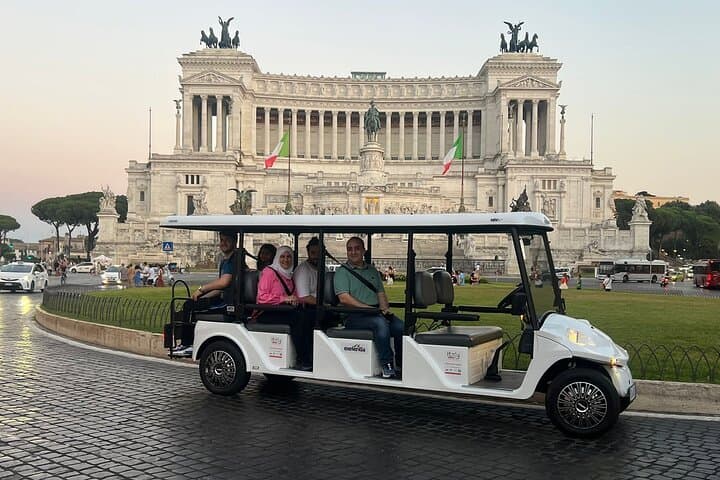


A low-slung golf cart hums through Rome's narrow arteries as sunlight slips between fluted columns and orange-tinged brick. The driver eases onto the Appian Way; the city opens in layers—ancient burial galleries give way to broad piazzas and the dome of the Pantheon punctures the skyline. Riders lean in to hear a guide's concise stories, then step out to feel cooler air in the subterranean corridors of the Catacombs of St. Callixtus.
A low-slung golf cart hums through Rome's narrow arteries as sunlight slips between fluted columns and orange-tinged brick. The driver eases onto the Appian Way; the city opens in layers—ancient burial galleries give way to broad piazzas and the dome of the Pantheon punctures the skyline. Riders lean in to hear a guide's concise stories, then step out to feel cooler air in the subterranean corridors of the Catacombs of St. Callixtus.
Rome's streets are geological pages: travertine quarries, volcanic tuff cliffs and Roman concrete that have survived two millennia. The catacombs speak to early Christian burial practices from the 2nd–4th centuries, while the Pantheon and Piazza Navona map imperial ambition and Baroque reinvention. The city’s living culture—cafés, market sellers, and Vespa traffic—frames the monuments and keeps them immediate.
For practical planning, expect 2–3 hours total with short walks at each stop; the tour supplies bottled water but requires ID for some sites. Dress in comfortable walking shoes and bring a light layer—the catacombs are cool year-round. Photography policies vary; follow your guide's instructions in sacred spaces.
This is a curated, accessible way to cover large distances quickly while still stepping into quieter corners of Rome. It’s well suited to travelers who want historical depth without the kilometers on foot, though moderate mobility is required for steps and uneven surfaces. Time your visit early in the day to avoid midday crowds and allow for photo stops in the quieter alleys near the Pantheon.