THE ADVENTURE COLLECTIVE® · Independent discovery and booking for outdoor travel

Explore Rome’s subterranean cemeteries on a private, chauffeur-driven tour to the catacombs of St. Callixtus (or St. Sebastian). This two-hour experience pairs doorstep pickup with a guided visit led by catacombs’ staff — ideal for travelers who want history without navigating public transit.
Explore Rome’s subterranean cemeteries on a private, chauffeur-driven tour to the catacombs of St. Callixtus (or St. Sebastian). This two-hour experience pairs doorstep pickup with a guided visit led by catacombs’ staff — ideal for travelers who want history without navigating public transit.
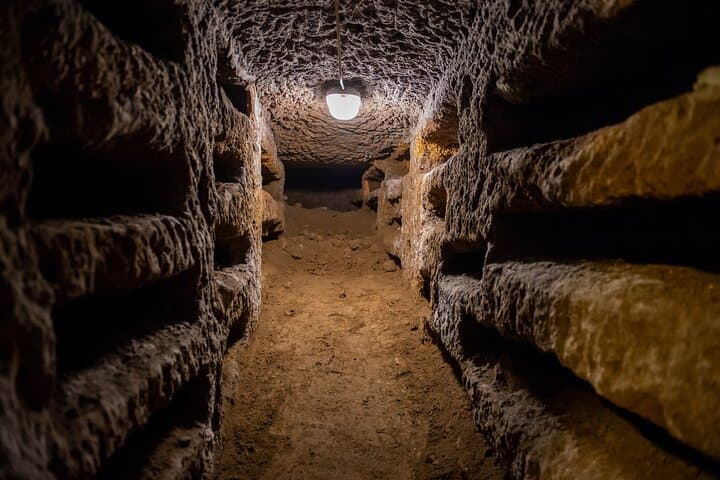
Descending beneath Rome's sunlit streets, the passage narrows and stone cools against your skin. The van eases to a stop near the ancient Appian Way; your English-speaking driver checks names, then guides you toward a low doorway that leads into corridors carved from volcanic tuff. Light thins, and the air carries the quiet of centuries — soft, close, human.
Verified experiences and guided adventures in the surrounding area.
Operated by Italy Wonders SRLS · Rome, Lazio
Descending beneath Rome's sunlit streets, the passage narrows and stone cools against your skin. The van eases to a stop near the ancient Appian Way; your English-speaking driver checks names, then guides you toward a low doorway that leads into corridors carved from volcanic tuff. Light thins, and the air carries the quiet of centuries — soft, close, human.
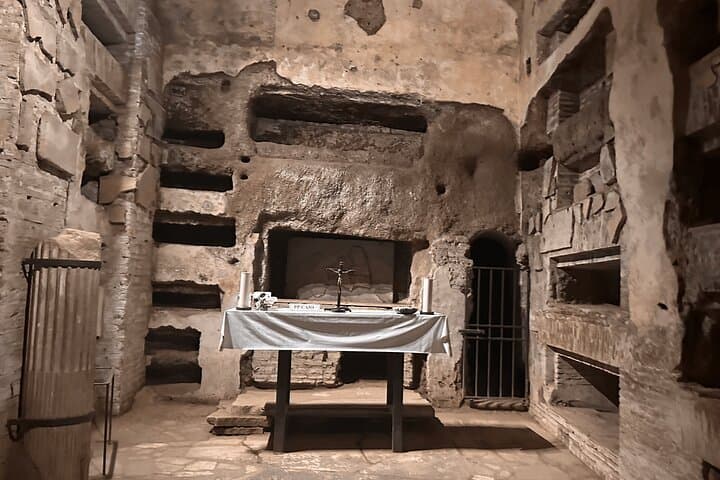
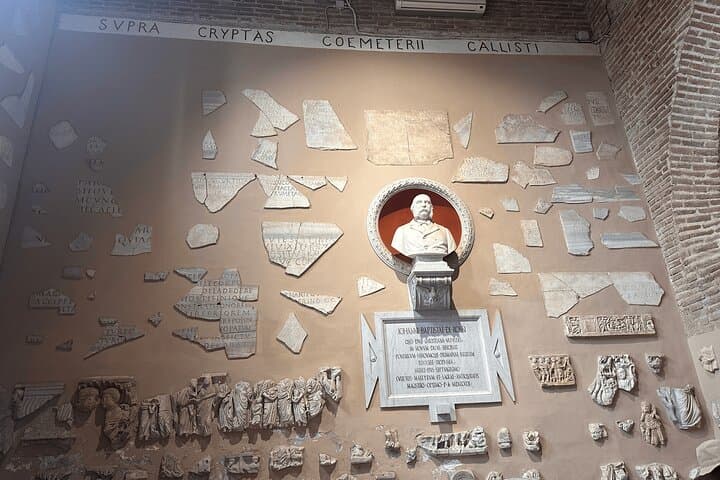
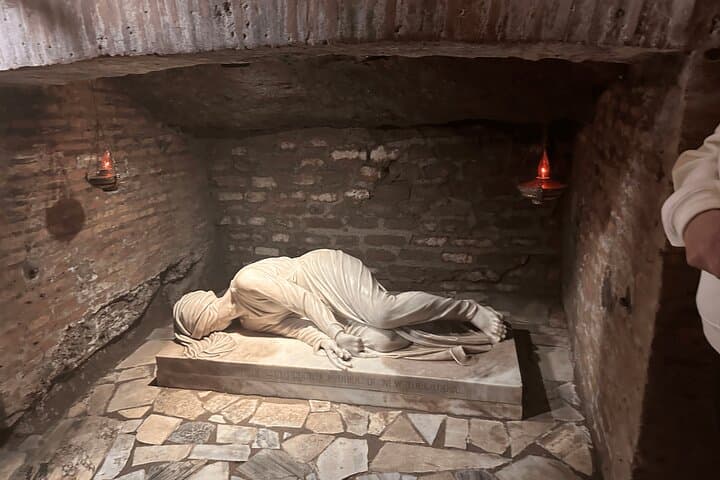
The catacombs began to take shape in the 2nd–3rd centuries AD as subterranean burial networks for early Christians. St. Callixtus and St. Sebastian are among the best-preserved, with arcosolia, painted cubicula and inscriptions that map Roman faith, social networks and funerary practice. Geologically, the soft tufa made excavation possible but also demands careful conservation; narrow galleries and stepped ramps are common. Local culture treats these places as both archaeological site and sacred cemetery — visits are led by catacombs’ staff who explain rites, iconography and the context of martyr cults.
Practical guidance: the tour runs about two hours including hotel transfer in a climate-controlled vehicle. Dress respectfully — knees and shoulders must be covered — and expect uneven steps, low ceilings and cool, stable temperatures underground. Photography rules vary by site; follow staff directions. Bookings include entrance and a sharing guided visit by catacombs personnel; if St. Callixtus is closed, St. Sebastian is the typical alternative. Allow time for pickup logistics and be punctual: late arrivals are not refunded. For a calm, informative visit, bring a light layer, closed-toe shoes and a charged camera (no flash unless permitted).
easy.
2 hours.
Light walking and basic mobility; able to manage several flights of stairs and short low-ceiling passages.
Most catacombs have narrow passages and steps and are not fully wheelchair accessible; contact the provider in advance to discuss alternatives or ground-level access options.
Photography rules vary by site and room—some areas allow photos without flash, others don’t; always follow the instructions of the catacombs’ staff during the visit.
Yes — the tour includes hotel pickup and drop-off in central Rome via an air-conditioned vehicle; confirm your exact pickup point and phone number when booking.
The driver is English-speaking and the visit includes a guide from the catacombs’ staff; language options can vary, so request English commentary when you book to ensure availability.
The Roman catacombs were excavated in soft tufa from the 2nd–4th centuries AD and served as burial networks for early Christians, including several popes and martyrs.
Soft volcanic tuff and ancient pigments are fragile; the sites limit visitor behavior and group sizes to slow deterioration and require guided visits led by authorized staff.
Italy Wonders SRLS operates guided outdoor trips and adventures with an emphasis on safety, stewardship, and memorable experiences.
Descending beneath Rome's sunlit streets, the passage narrows and stone cools against your skin. The van eases to a stop near the ancient Appian Way; your English-speaking driver checks names, then guides you toward a low doorway that leads into corridors carved from volcanic tuff. Light thins, and the air carries the quiet of centuries — soft, close, human.
Descending beneath Rome's sunlit streets, the passage narrows and stone cools against your skin. The van eases to a stop near the ancient Appian Way; your English-speaking driver checks names, then guides you toward a low doorway that leads into corridors carved from volcanic tuff. Light thins, and the air carries the quiet of centuries — soft, close, human.
The catacombs began to take shape in the 2nd–3rd centuries AD as subterranean burial networks for early Christians. St. Callixtus and St. Sebastian are among the best-preserved, with arcosolia, painted cubicula and inscriptions that map Roman faith, social networks and funerary practice. Geologically, the soft tufa made excavation possible but also demands careful conservation; narrow galleries and stepped ramps are common. Local culture treats these places as both archaeological site and sacred cemetery — visits are led by catacombs’ staff who explain rites, iconography and the context of martyr cults.
Practical guidance: the tour runs about two hours including hotel transfer in a climate-controlled vehicle. Dress respectfully — knees and shoulders must be covered — and expect uneven steps, low ceilings and cool, stable temperatures underground. Photography rules vary by site; follow staff directions. Bookings include entrance and a sharing guided visit by catacombs personnel; if St. Callixtus is closed, St. Sebastian is the typical alternative. Allow time for pickup logistics and be punctual: late arrivals are not refunded. For a calm, informative visit, bring a light layer, closed-toe shoes and a charged camera (no flash unless permitted).