THE ADVENTURE COLLECTIVE® · Independent discovery and booking for outdoor travel

Walk the line where history and landscape collide: a private day tour from Kanchanaburi visiting the War Cemetery, Hellfire Pass cutting and the Bridge over the River Kwai. Expect 10 hours of guided history, short walks on uneven terrain and an air‑conditioned transfer.
Walk the line where history and landscape collide: a private day tour from Kanchanaburi visiting the War Cemetery, Hellfire Pass cutting and the Bridge over the River Kwai. Expect 10 hours of guided history, short walks on uneven terrain and an air‑conditioned transfer.
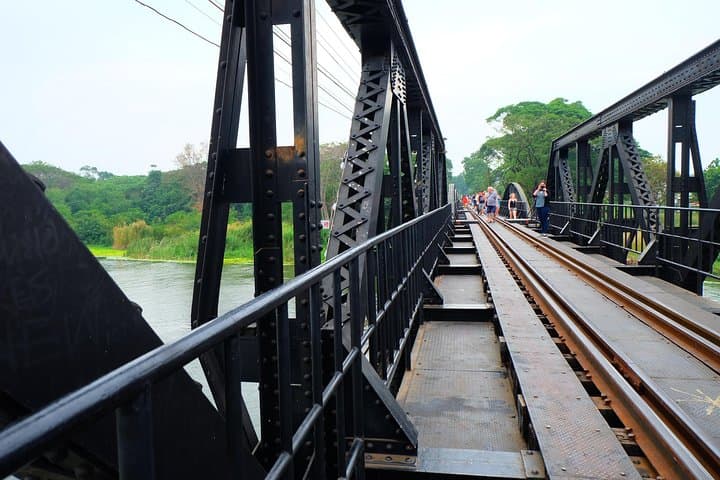
The day opens on the slow wide current of the Khwae Yai, the iron bridge cutting a stark line across the river as coaches pull up to its edge. Guests step out into humid air and a landscape that still feels shaped by the railway: river sandbanks, low limestone bluffs and stretches of teak and secondary forest that once screened camps and work sites.
Verified experiences and guided adventures in the surrounding area.
Operated by Idaytrip · Kanchanaburi, Kanchanaburi Province
The day opens on the slow wide current of the Khwae Yai, the iron bridge cutting a stark line across the river as coaches pull up to its edge. Guests step out into humid air and a landscape that still feels shaped by the railway: river sandbanks, low limestone bluffs and stretches of teak and secondary forest that once screened camps and work sites.
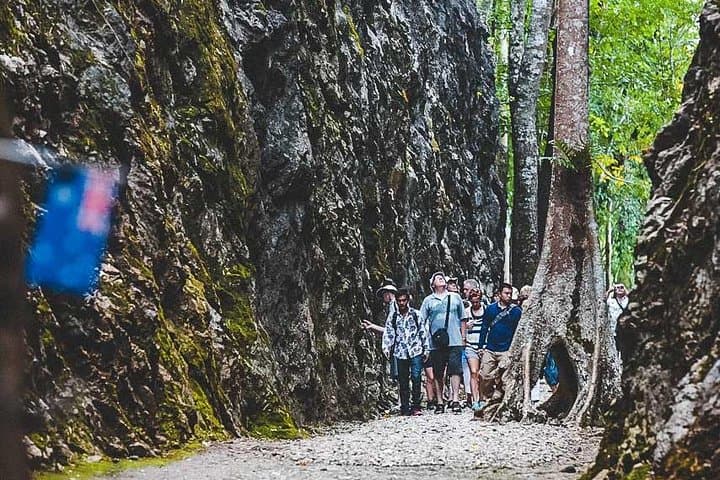
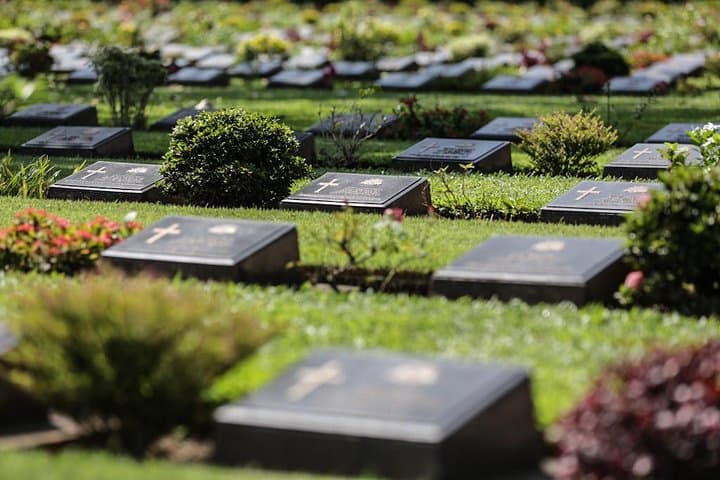
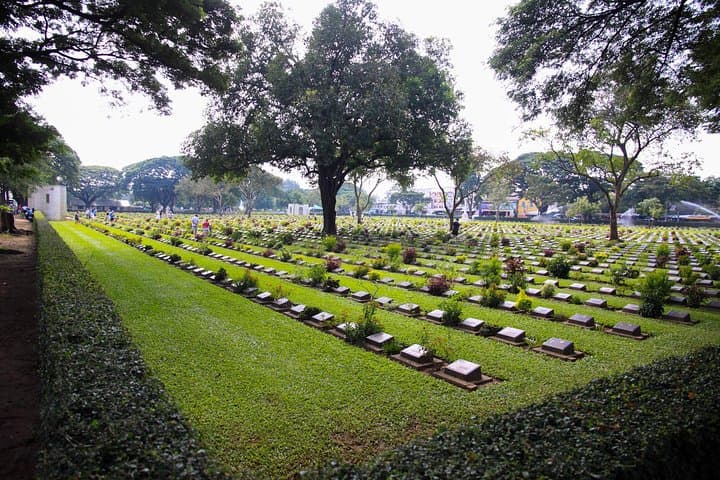
This private full-day tour moves through hard history. The Kanchanaburi War Cemetery holds the graves of 6,982 Allied prisoners; Hellfire Pass—an exposed rock cutting—reveals the geology of sandstone and shale that Allied and Asian laborers hacked with hand tools. The Death Railway itself follows river terraces and low ridgelines, its iron sleepers and fortified piers a reminder of wartime logistics and suffering. Local culture is present in simple roadside markets, small Buddhist shrines in caves, and village restaurants that serve rice and grilled fish—modern life continuing beside these heavy memories.
Practicalities matter: plan for a roughly 10-hour day with several short walks—the Hellfire Pass trail is a 1–2 km trail with uneven surfaces and steps, while the Bridge over the River Kwai is a 200–400 m walk along iron decking. Expect low elevation (river valley) but humid conditions; bring sun and rain protection, comfortable walking shoes, and a respectful demeanor at memorials. Transport is by air-conditioned vehicle; the itinerary includes museum entrances and lunch. The route is accessible for those in moderate fitness, but some sites require steady footing on ballast and stairs.
moderate.
10 hours (full day).
Moderate fitness for several short to medium walks on uneven terrain; comfortable walking and stair climbing required.
Tours typically operate from Kanchanaburi with private pickup; some operators offer pickup from Bangkok for an additional transfer—confirm at booking.
Yes—this private tour includes museum entrance fees and a provided lunch, plus bottled water and an English-speaking guide.
Some sites have uneven ground, steps and unpaved trails; travelers with limited mobility should check specific access points—transport is by air‑conditioned vehicle but site access varies.
Expect short, purposeful walks: Hellfire Pass has a 1–2 km trail with stairs and boardwalks, while the bridge walk is around 200–400 m on metal decking.
The Thai–Burma Death Railway was built under forced labor between 1942–1945; thousands of Allied POWs and Asian laborers died during its construction.
Sites are managed with emphasis on remembrance—stay on marked trails to protect fragile cutting walls and avoid disturbing memorial grounds.
Idaytrip operates guided outdoor trips and adventures with an emphasis on safety, stewardship, and memorable experiences.
The day opens on the slow wide current of the Khwae Yai, the iron bridge cutting a stark line across the river as coaches pull up to its edge. Guests step out into humid air and a landscape that still feels shaped by the railway: river sandbanks, low limestone bluffs and stretches of teak and secondary forest that once screened camps and work sites.
The day opens on the slow wide current of the Khwae Yai, the iron bridge cutting a stark line across the river as coaches pull up to its edge. Guests step out into humid air and a landscape that still feels shaped by the railway: river sandbanks, low limestone bluffs and stretches of teak and secondary forest that once screened camps and work sites.
This private full-day tour moves through hard history. The Kanchanaburi War Cemetery holds the graves of 6,982 Allied prisoners; Hellfire Pass—an exposed rock cutting—reveals the geology of sandstone and shale that Allied and Asian laborers hacked with hand tools. The Death Railway itself follows river terraces and low ridgelines, its iron sleepers and fortified piers a reminder of wartime logistics and suffering. Local culture is present in simple roadside markets, small Buddhist shrines in caves, and village restaurants that serve rice and grilled fish—modern life continuing beside these heavy memories.
Practicalities matter: plan for a roughly 10-hour day with several short walks—the Hellfire Pass trail is a 1–2 km trail with uneven surfaces and steps, while the Bridge over the River Kwai is a 200–400 m walk along iron decking. Expect low elevation (river valley) but humid conditions; bring sun and rain protection, comfortable walking shoes, and a respectful demeanor at memorials. Transport is by air-conditioned vehicle; the itinerary includes museum entrances and lunch. The route is accessible for those in moderate fitness, but some sites require steady footing on ballast and stairs.