THE ADVENTURE COLLECTIVE® · Independent discovery and booking for outdoor travel

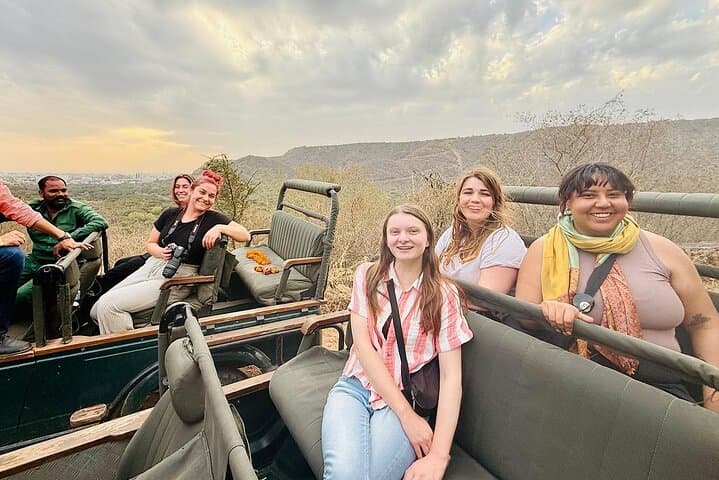
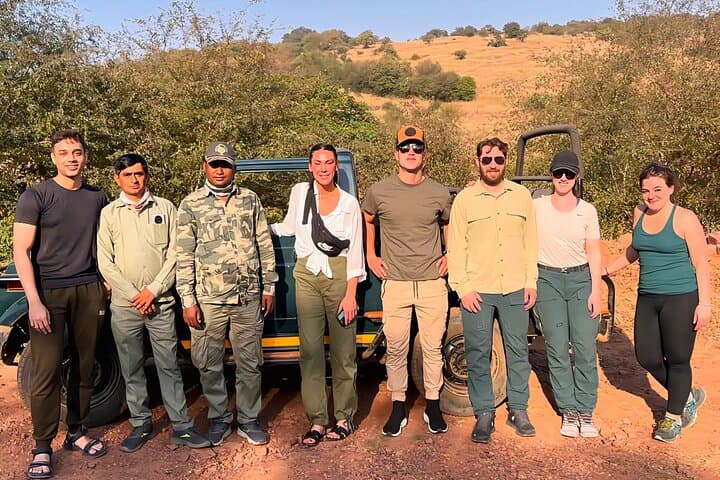
Secure a private jeep and advance permit for a Ranthambore safari that prioritizes time, space, and photography. Travel with a government-certified naturalist and an open 6-seater Gypsy to explore the park’s lakes, cliffs, and tiger country.
Secure a private jeep and advance permit for a Ranthambore safari that prioritizes time, space, and photography. Travel with a government-certified naturalist and an open 6-seater Gypsy to explore the park’s lakes, cliffs, and tiger country.
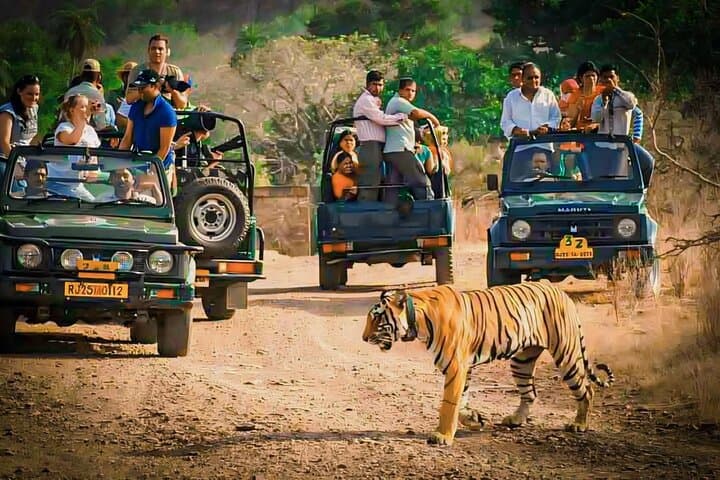
The jeep bumps over a laterite track, dust lifting like a curtain as banyan roots and dry sal forests close in. Dawn here feels tactical: the forest wakes in stages — birds chatter, sambar feed at the waterline, and the low scrub seems to hold its breath. In a private 6-seater Gypsy you sit higher, eyes scanning a landscape carved by ancient Vindhyan rock and seasonal lakes that collect life when monsoon-fed streams retreat.
Verified experiences and guided adventures in the surrounding area.
Operated by Ranthambore National Park Booking · Sawai Madhopur, Rajasthan
The jeep bumps over a laterite track, dust lifting like a curtain as banyan roots and dry sal forests close in. Dawn here feels tactical: the forest wakes in stages — birds chatter, sambar feed at the waterline, and the low scrub seems to hold its breath. In a private 6-seater Gypsy you sit higher, eyes scanning a landscape carved by ancient Vindhyan rock and seasonal lakes that collect life when monsoon-fed streams retreat.
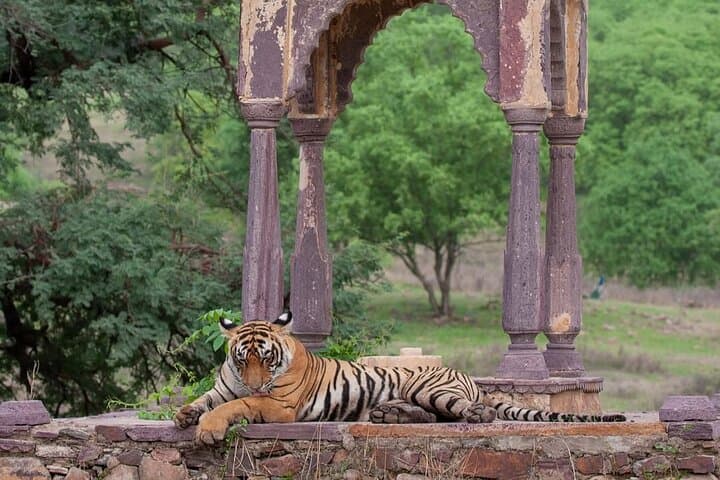
Ranthambore’s story runs deep: a medieval fort crowns the reserve, once a strategic outpost on trade routes and later a royal hunting ground for Rajput and Mughal rulers. Geologically it’s an island of harder rock rising from plains, creating cliffs, escarpments, and pockets of dry deciduous forest that concentrate wildlife around a handful of waterholes.
Culturally, Sawai Madhopur town supplies guides, cookhouses, and the vernacular rhythm of Rajasthan — vendors, spice-scented chai, and temple bells. Local naturalists are fluent in animal behavior and government protocols; their tracking skills are the practical advantage of a private safari.
Plan for early starts and late light: animals move when temperatures moderate. Stay on designated routes, follow the guide’s directions, and keep lenses ready — sightings are unpredictable but intimate in a private vehicle. Bring water, sun protection, and a telephoto lens if you want crisp wildlife frames. The experience is about patience, reading the land, and a quiet willingness to let the forest decide the show.
easy.
3–4 hours.
Suitable for most travelers who can climb into a raised jeep and sit for multiple hours; minimal walking required.
Private jeeps give flexibility of pace and space to follow leads, but sightings are never guaranteed — tigers are wild and mobile.
Typical safari duration is about 3–4 hours; most drives start at dawn or late afternoon to align with peak wildlife activity.
This all-inclusive option covers government safari permits, forest fees, guide, driver, and hotel pickup/drop-off as described in the booking details.
Children can ride but operators may restrict very young children; the activity is not recommended for pregnant travelers per forest regulations and safety policies.
Ranthambore surrounds an ancient fort that has shifted roles from strategic military outpost to royal hunting grounds, and now to protected tiger reserve status.
Permits, limited jeep numbers, and guided routes are crucial to minimizing disturbance; avoid single-use plastics and follow ranger instructions to support conservation.
Ranthambore National Park Booking operates guided outdoor trips and adventures with an emphasis on safety, stewardship, and memorable experiences.
The jeep bumps over a laterite track, dust lifting like a curtain as banyan roots and dry sal forests close in. Dawn here feels tactical: the forest wakes in stages — birds chatter, sambar feed at the waterline, and the low scrub seems to hold its breath. In a private 6-seater Gypsy you sit higher, eyes scanning a landscape carved by ancient Vindhyan rock and seasonal lakes that collect life when monsoon-fed streams retreat.
The jeep bumps over a laterite track, dust lifting like a curtain as banyan roots and dry sal forests close in. Dawn here feels tactical: the forest wakes in stages — birds chatter, sambar feed at the waterline, and the low scrub seems to hold its breath. In a private 6-seater Gypsy you sit higher, eyes scanning a landscape carved by ancient Vindhyan rock and seasonal lakes that collect life when monsoon-fed streams retreat.
Ranthambore’s story runs deep: a medieval fort crowns the reserve, once a strategic outpost on trade routes and later a royal hunting ground for Rajput and Mughal rulers. Geologically it’s an island of harder rock rising from plains, creating cliffs, escarpments, and pockets of dry deciduous forest that concentrate wildlife around a handful of waterholes.
Culturally, Sawai Madhopur town supplies guides, cookhouses, and the vernacular rhythm of Rajasthan — vendors, spice-scented chai, and temple bells. Local naturalists are fluent in animal behavior and government protocols; their tracking skills are the practical advantage of a private safari.
Plan for early starts and late light: animals move when temperatures moderate. Stay on designated routes, follow the guide’s directions, and keep lenses ready — sightings are unpredictable but intimate in a private vehicle. Bring water, sun protection, and a telephoto lens if you want crisp wildlife frames. The experience is about patience, reading the land, and a quiet willingness to let the forest decide the show.