THE ADVENTURE COLLECTIVE® · Independent discovery and booking for outdoor travel

Swap crowded buses for predictable, bilingual door-to-door transport across Ecuador’s highlands. This private transfer links Quito with Cotopaxi, Otavalo, Mindo and Baños while offering flexible stops and luggage handling.
Swap crowded buses for predictable, bilingual door-to-door transport across Ecuador’s highlands. This private transfer links Quito with Cotopaxi, Otavalo, Mindo and Baños while offering flexible stops and luggage handling.
The morning air on the Panamericana carries a crisp, highland clarity as your driver eases the vehicle away from Quito’s airport and toward an Andean horizon. Windows frame black basalt ridges and agricultural terraces; Cotopaxi’s cone occasionally peeks through cloud, and valley towns slip by with markets and roadside fruit stalls. This is not just a ride — it’s the connective tissue between Ecuador’s highland culture and cloud forest biodiversity.
Verified experiences and guided adventures in the surrounding area.
Operated by ANDEAN ESCAPE · Quito, Pichincha
The morning air on the Panamericana carries a crisp, highland clarity as your driver eases the vehicle away from Quito’s airport and toward an Andean horizon. Windows frame black basalt ridges and agricultural terraces; Cotopaxi’s cone occasionally peeks through cloud, and valley towns slip by with markets and roadside fruit stalls. This is not just a ride — it’s the connective tissue between Ecuador’s highland culture and cloud forest biodiversity.
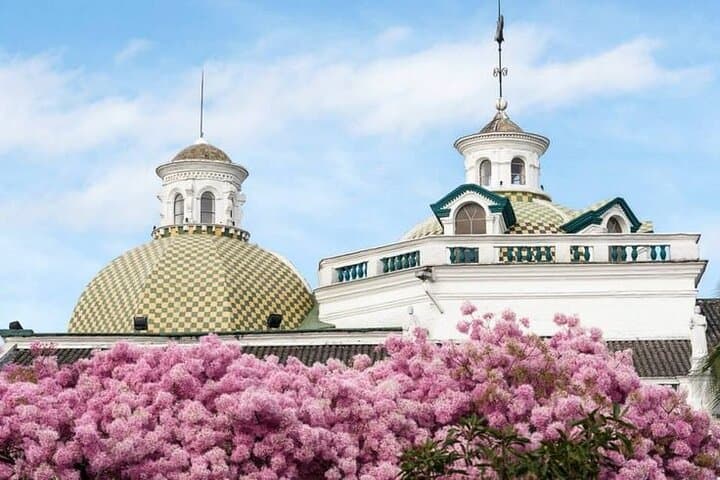
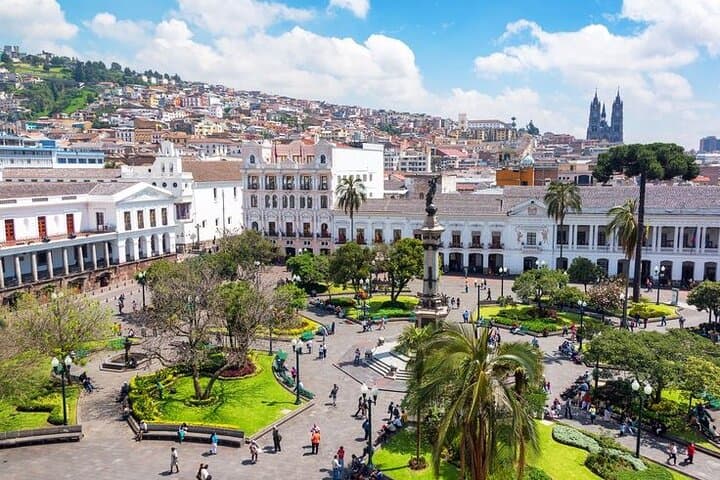
Quito’s colonial center, a UNESCO site, sits at the crossroads of Spanish colonial history and pre-Columbian trade routes. Geology tells the same story: volcanic shoulders like Cotopaxi and Antisana shape roads and weather, while the eastern slopes descend rapidly into the humid ecosystems of Mindo. Otavalo’s market preserves Kichwa weaving traditions that have traded across these routes for generations.
Practically, expect private pickup and drop-off at hotels or the Mariscal Sucre Airport, a bilingual driver, and flexible stop requests for short photo breaks or restroom stops. Transfer times vary: Quito to the city is under an hour; Quito to Otavalo and Mindo are a couple hours; Baños and Cotopaxi can be three hours or more depending on traffic and snowline conditions.
Bring layered clothing for altitude swings, allow time for acclimatization if you plan hikes, and confirm pickup windows. Drivers commonly handle luggage and local directions; polite negotiation can add helpful stops at viewpoints or local craft stalls. For travelers moving between Quito, Cotopaxi, Otavalo, Mindo and Baños, a private transfer trades the unpredictability of buses for predictable timing, safer luggage handling, and a practical way to spend more time exploring and less time worrying about logistics.
easy.
30 minutes–4 hours.
Suitable for travelers of all fitness levels; minimal exertion for the transfer itself, but plan for walking at destinations.
Most transfers include an English-speaking driver or assistant; confirm language needs when booking.
Private transfers usually allow short photo or restroom stops—request them in advance to plan timing.
Many providers can supply child seats; indicate age/size during booking so the correct restraint is provided.
For a full refund cancel at least 24 hours before the scheduled pickup; same-day cancellations are typically non-refundable.
Quito’s historic center is one of the best-preserved Spanish colonial downtowns in South America, while Otavalo remains a major cultural hub for Kichwa weaving and trade.
Highland and cloud-forest environments are fragile—stay on roads and trails, dispose of waste properly, and support locally owned guides and artisans to reduce tourism pressure.
ANDEAN ESCAPE operates guided outdoor trips and adventures with an emphasis on safety, stewardship, and memorable experiences.
The morning air on the Panamericana carries a crisp, highland clarity as your driver eases the vehicle away from Quito’s airport and toward an Andean horizon. Windows frame black basalt ridges and agricultural terraces; Cotopaxi’s cone occasionally peeks through cloud, and valley towns slip by with markets and roadside fruit stalls. This is not just a ride — it’s the connective tissue between Ecuador’s highland culture and cloud forest biodiversity.
The morning air on the Panamericana carries a crisp, highland clarity as your driver eases the vehicle away from Quito’s airport and toward an Andean horizon. Windows frame black basalt ridges and agricultural terraces; Cotopaxi’s cone occasionally peeks through cloud, and valley towns slip by with markets and roadside fruit stalls. This is not just a ride — it’s the connective tissue between Ecuador’s highland culture and cloud forest biodiversity.
Quito’s colonial center, a UNESCO site, sits at the crossroads of Spanish colonial history and pre-Columbian trade routes. Geology tells the same story: volcanic shoulders like Cotopaxi and Antisana shape roads and weather, while the eastern slopes descend rapidly into the humid ecosystems of Mindo. Otavalo’s market preserves Kichwa weaving traditions that have traded across these routes for generations.
Practically, expect private pickup and drop-off at hotels or the Mariscal Sucre Airport, a bilingual driver, and flexible stop requests for short photo breaks or restroom stops. Transfer times vary: Quito to the city is under an hour; Quito to Otavalo and Mindo are a couple hours; Baños and Cotopaxi can be three hours or more depending on traffic and snowline conditions.
Bring layered clothing for altitude swings, allow time for acclimatization if you plan hikes, and confirm pickup windows. Drivers commonly handle luggage and local directions; polite negotiation can add helpful stops at viewpoints or local craft stalls. For travelers moving between Quito, Cotopaxi, Otavalo, Mindo and Baños, a private transfer trades the unpredictability of buses for predictable timing, safer luggage handling, and a practical way to spend more time exploring and less time worrying about logistics.