THE ADVENTURE COLLECTIVE® · Independent discovery and booking for outdoor travel

Spend a day with an expert guide touring the Great Pyramid of Khufu, Djoser’s Step Pyramid at Saqqara and the Red Pyramid at Dahshour. This private full-day trip combines slowed-down exploration, desert geology and practical advice for handling heat, tickets and terrain.
Spend a day with an expert guide touring the Great Pyramid of Khufu, Djoser’s Step Pyramid at Saqqara and the Red Pyramid at Dahshour. This private full-day trip combines slowed-down exploration, desert geology and practical advice for handling heat, tickets and terrain.
You step out of an air-conditioned van onto wind-scoured limestone; the Great Pyramid rises ahead, its stepped silhouette softened where ancient casing stones remain. Sand crunches underfoot and the Sphinx watches the horizon while your guide sorts chronology and mythology into clear lines—who built what, and why these stones still command the desert.
Verified experiences and guided adventures in the surrounding area.
Operated by Easy Tours Egypt · Giza, Giza Governorate
You step out of an air-conditioned van onto wind-scoured limestone; the Great Pyramid rises ahead, its stepped silhouette softened where ancient casing stones remain. Sand crunches underfoot and the Sphinx watches the horizon while your guide sorts chronology and mythology into clear lines—who built what, and why these stones still command the desert.
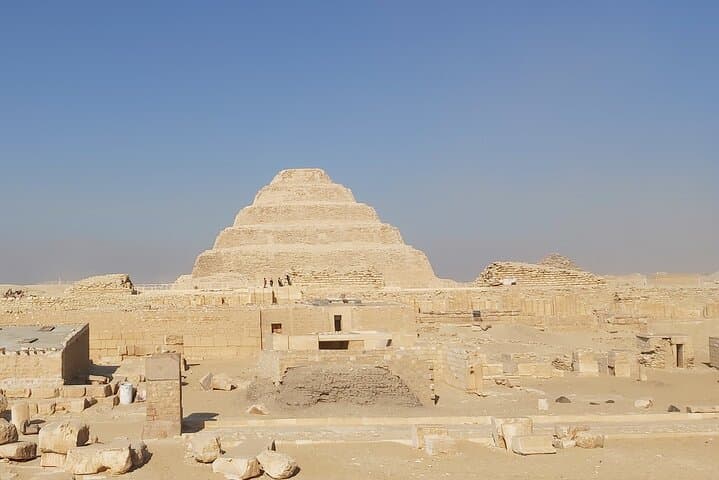
This full-day private tour threads three eras of Old Kingdom Egypt. At Giza you’ll stand before Khufu’s Great Pyramid—over 2,300,000 blocks and centuries of human curiosity—then pass the Sphinx, a carved guardian in limestone. Saqqara’s Step Pyramid of Djoser, engineered by Imhotep, shows the move from mud-brick mastabas to engineered stone. At Dahshour, Sneferu’s Red and Bent Pyramids illustrate the experiments that led to smooth-sided design.
Geology here is visible: pale Eocene limestone beds that builders quarried locally, thin desert varnish, and occasional artifacts peeking from wind-scoured sand. The cultural context is constant—funerary architecture meant to stabilize kings’ afterlives—and your guide will point out mastaba tombs, reliefs and niches often overlooked by quicker tours.
Practical guidance: this is a long day—expect 6–7 hours with walking over uneven ground, short climbs and open sun. Bring sun protection, sturdy shoes, cash for entry and tips, and plan to move between sites in an air-conditioned vehicle. Cameras are welcome but be respectful at tomb entrances; some interiors are low and dim. With a knowledgeable guide and measured pace, the ancient plateau becomes a readable landscape rather than a checklist of photo stops.
easy.
6–7 hours.
Light fitness required: mostly walking on uneven ground with short climbs and stairs in tombs.
No. According to the itinerary details, admission fees are not included; bring cash to pay on-site or arrange tickets in advance.
Yes. The operator notes the tour is suitable for all physical fitness levels, though some tomb interiors require stooping and the day is long.
Yes. A 20-minute camel ride is included as part of the experience at the Giza plateau.
Expect moderate walking across uneven ground and sand with occasional short stairways inside tombs and archaeological structures.
The Step Pyramid at Saqqara, designed by Imhotep for Djoser in the 27th century BCE, marks the shift from mud-brick mastabas to monumental stone construction; later developments by Sneferu at Dahshour led to the smooth-sided pyramids at Giza.
High visitor numbers and wind-driven sand cause wear on ancient stone—stay on marked paths, avoid touching carved surfaces, and use water sparingly to reduce local resource strain.
Easy Tours Egypt operates guided outdoor trips and adventures with an emphasis on safety, stewardship, and memorable experiences.


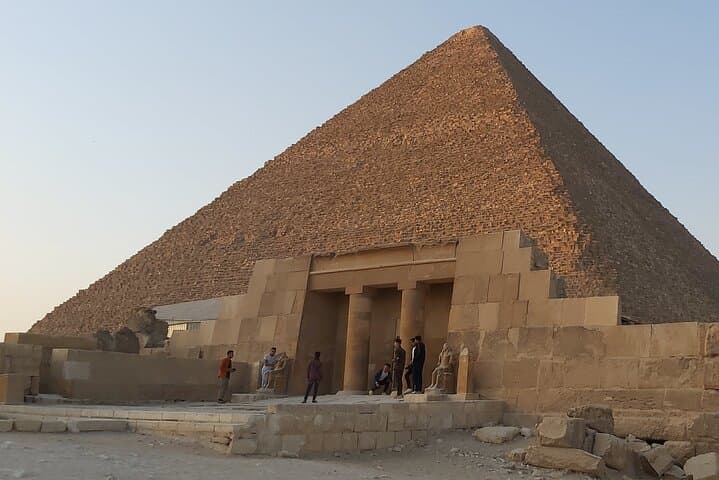
You step out of an air-conditioned van onto wind-scoured limestone; the Great Pyramid rises ahead, its stepped silhouette softened where ancient casing stones remain. Sand crunches underfoot and the Sphinx watches the horizon while your guide sorts chronology and mythology into clear lines—who built what, and why these stones still command the desert.
You step out of an air-conditioned van onto wind-scoured limestone; the Great Pyramid rises ahead, its stepped silhouette softened where ancient casing stones remain. Sand crunches underfoot and the Sphinx watches the horizon while your guide sorts chronology and mythology into clear lines—who built what, and why these stones still command the desert.
This full-day private tour threads three eras of Old Kingdom Egypt. At Giza you’ll stand before Khufu’s Great Pyramid—over 2,300,000 blocks and centuries of human curiosity—then pass the Sphinx, a carved guardian in limestone. Saqqara’s Step Pyramid of Djoser, engineered by Imhotep, shows the move from mud-brick mastabas to engineered stone. At Dahshour, Sneferu’s Red and Bent Pyramids illustrate the experiments that led to smooth-sided design.
Geology here is visible: pale Eocene limestone beds that builders quarried locally, thin desert varnish, and occasional artifacts peeking from wind-scoured sand. The cultural context is constant—funerary architecture meant to stabilize kings’ afterlives—and your guide will point out mastaba tombs, reliefs and niches often overlooked by quicker tours.
Practical guidance: this is a long day—expect 6–7 hours with walking over uneven ground, short climbs and open sun. Bring sun protection, sturdy shoes, cash for entry and tips, and plan to move between sites in an air-conditioned vehicle. Cameras are welcome but be respectful at tomb entrances; some interiors are low and dim. With a knowledgeable guide and measured pace, the ancient plateau becomes a readable landscape rather than a checklist of photo stops.