THE ADVENTURE COLLECTIVE® · Independent discovery and booking for outdoor travel

Spend a day moving from Prague’s hilltop castle and medieval lanes to the quiet, UNESCO‑listed streets of Kutná Hora. This private tour pairs urban walking with a countryside transfer and included admissions to key Kutná Hora sites.
Spend a day moving from Prague’s hilltop castle and medieval lanes to the quiet, UNESCO‑listed streets of Kutná Hora. This private tour pairs urban walking with a countryside transfer and included admissions to key Kutná Hora sites.
Morning light across the Vltava lifts the ribbed spires of Prague Castle into sharp relief as a private guide waits to lead a day that shifts between urban panorama and medieval quiet.
Verified experiences and guided adventures in the surrounding area.
Operated by Real Prague Tours · Prague, Prague
Morning light across the Vltava lifts the ribbed spires of Prague Castle into sharp relief as a private guide waits to lead a day that shifts between urban panorama and medieval quiet.
The tour moves with purpose: a focused walking circuit through Prague Castle and Lesser Town, a stop at the Old Town Astronomical Clock and Jewish Quarter exteriors, then a one‑hour air‑conditioned transfer east to Kutná Hora. Kutná Hora’s stone streets and twin Gothic cathedrals record the town’s silver‑mining boom of the 13th–15th centuries; the Sedlec Ossuary offers an unvarnished human history sculpted in bone, while the nearby cathedral holds artifacts that reflect the region’s ecclesiastical wealth.
Geology and culture sit side by side — Bohemian granites and sandstones underlie the city, while centuries of trade and faith shaped the skyline. Locals point out lesser‑seen courtyards and coffee houses in Malá Strana; guides contextualize the Jewish Quarter as one of Europe’s oldest continuous communities.
Practical edge: expect 9–10 hours with much on foot, interspersed with seated transfers. Wear broken‑in walking shoes and layers for variable weather; bring ID for museum admissions and a small amount of cash for markets or tips. Hydrate between stops — bottled water is provided, but refills are convenient. If you want interior access in Prague (cathedral, synagogues) or a longer stay in Kutná Hora, request those in advance to avoid queues. The pace is private and adaptable, designed to maximize sights without rushing them.
moderate.
9–10 hours.
Suitable for travelers comfortable being on their feet for most of the day and climbing short stair sections; not strenuous but steady walking required.
The private transfer is about 1 hour each way from central Prague, depending on traffic.
Yes — admission to the Ossuary and two cathedrals in Kutná Hora is included in the tour price.
Yes — as a private tour the guide can adjust stops and focus areas; request interiors in advance if you want to enter synagogues or specific museums.
Yes — the tour notes stroller accessibility and can accommodate infants, though cobbled streets in Kutná Hora can be bumpy.
Kutná Hora grew wealthy on medieval silver mining and was a royal mint and ecclesiastical center; Prague’s castle complex reflects centuries of Bohemian rulership.
Both Prague and Kutná Hora are managing visitor impact—stay on marked paths in historic zones, avoid touching frescoes or bone displays, and minimize single‑use plastics.
Real Prague Tours operates guided outdoor trips and adventures with an emphasis on safety, stewardship, and memorable experiences.
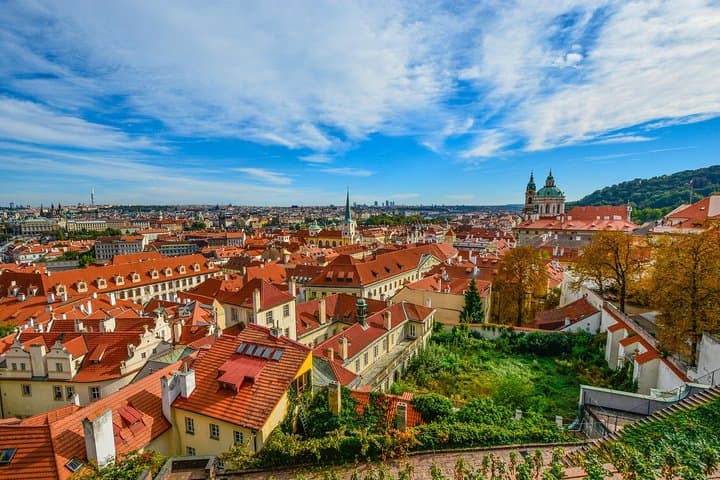


Morning light across the Vltava lifts the ribbed spires of Prague Castle into sharp relief as a private guide waits to lead a day that shifts between urban panorama and medieval quiet.
Morning light across the Vltava lifts the ribbed spires of Prague Castle into sharp relief as a private guide waits to lead a day that shifts between urban panorama and medieval quiet.
The tour moves with purpose: a focused walking circuit through Prague Castle and Lesser Town, a stop at the Old Town Astronomical Clock and Jewish Quarter exteriors, then a one‑hour air‑conditioned transfer east to Kutná Hora. Kutná Hora’s stone streets and twin Gothic cathedrals record the town’s silver‑mining boom of the 13th–15th centuries; the Sedlec Ossuary offers an unvarnished human history sculpted in bone, while the nearby cathedral holds artifacts that reflect the region’s ecclesiastical wealth.
Geology and culture sit side by side — Bohemian granites and sandstones underlie the city, while centuries of trade and faith shaped the skyline. Locals point out lesser‑seen courtyards and coffee houses in Malá Strana; guides contextualize the Jewish Quarter as one of Europe’s oldest continuous communities.
Practical edge: expect 9–10 hours with much on foot, interspersed with seated transfers. Wear broken‑in walking shoes and layers for variable weather; bring ID for museum admissions and a small amount of cash for markets or tips. Hydrate between stops — bottled water is provided, but refills are convenient. If you want interior access in Prague (cathedral, synagogues) or a longer stay in Kutná Hora, request those in advance to avoid queues. The pace is private and adaptable, designed to maximize sights without rushing them.