THE ADVENTURE COLLECTIVE® · Independent discovery and booking for outdoor travel

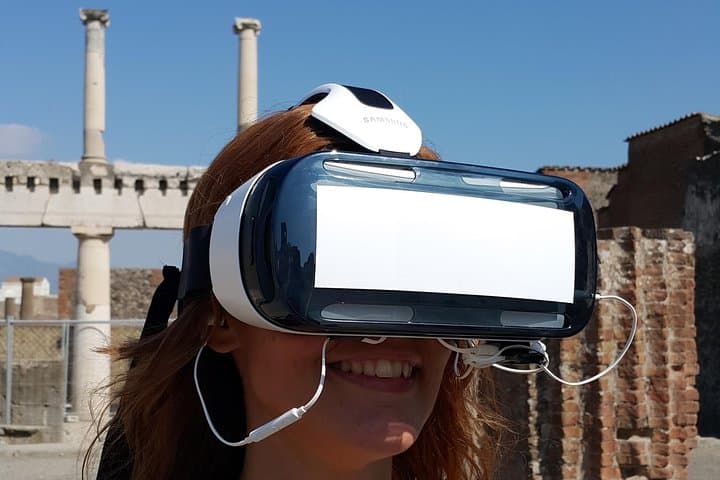
Experience Pompeii in a new dimension: a private 2.5-hour tour uses 3D VR headsets to overlay ancient life onto the ruins. Walk the real streets while watching short historical reconstructions that bring temples, shops, and theaters back to life.
Experience Pompeii in a new dimension: a private 2.5-hour tour uses 3D VR headsets to overlay ancient life onto the ruins. Walk the real streets while watching short historical reconstructions that bring temples, shops, and theaters back to life.
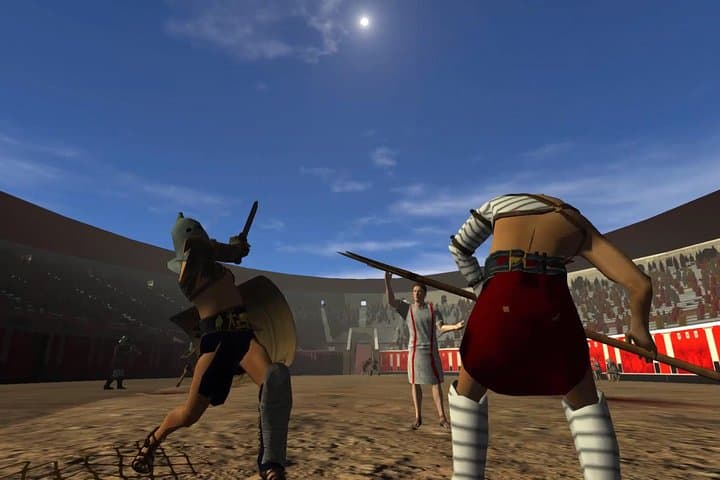
You step through a modern gate and into a city frozen mid-day: sun hits mosaic floors, a bakery's oven gapes like an open mouth, and Mount Vesuvius looms above, almost watching. For 2.5 hours you'll move through shaded colonnades and sun-drenched forums, but the real shift happens when a 3D headset overlays life onto ruin — merchants hawk goods, chariot wheels spin, and temples regrow in layered virtual light.
Verified experiences and guided adventures in the surrounding area.
Operated by Flashback Journey to Pompeii · Pompeii, Campania
You step through a modern gate and into a city frozen mid-day: sun hits mosaic floors, a bakery's oven gapes like an open mouth, and Mount Vesuvius looms above, almost watching. For 2.5 hours you'll move through shaded colonnades and sun-drenched forums, but the real shift happens when a 3D headset overlays life onto ruin — merchants hawk goods, chariot wheels spin, and temples regrow in layered virtual light.
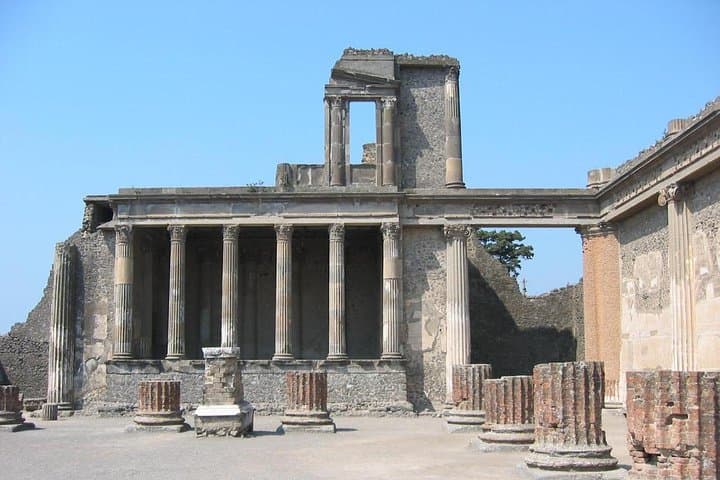
Pompeii's ash-preserved streets record a moment from AD 79, excavated in phases since the 18th century. The site’s volcanic geology — pumice and tuff compacted under pyroclastic flows — is what preserved frescoes and footprints, and it's what gives the ruins their rough, uneven paths today. Culturally, Pompeii offers a direct glance at Roman daily life: bakeries, latrines, and theaters tell a straighter story than most museums.
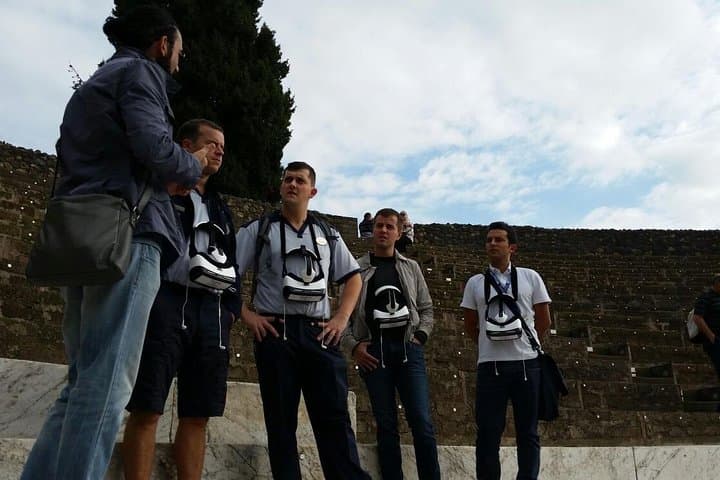
This private option pairs a tour assistant with one VR headset per person; commentary in the headset is available in six languages. Note the assistant is not a licensed archaeologist and cannot provide in-depth answers beyond basic orientation. The experience works best if you travel light, wear sturdy shoes for cobbled streets, and pace headset use to avoid dizziness.
Practical guidance: set your exact start time when booking, plan for about 2–3 hours on site, and carry water and sun protection. If you’re prone to motion sickness, consult a doctor — VR can trigger symptoms for a small number of users. Expect a blend of tangible history and digital reconstruction that reanimates Pompeii without rewriting its stones.
easy.
2–3 hours.
Light walking ability; suitable for most fitness levels but expect uneven ground and some standing.
Headsets are not recommended for children under 13 by the manufacturer; users under 9 cannot use them. Parents assume responsibility if younger children use a headset.
No; the tour assistant provides logistics and headset training but is not a licensed archaeological guide. Commentary is delivered through the headset in six languages.
Yes, the tour notes wheelchair accessibility for parts of the experience, but some areas of the ruins remain uneven; contact the operator with specific accessibility needs.
Full refunds are available if you cancel at least 24 hours before the scheduled start time; no refund within 24 hours.
Pompeii was buried during Mount Vesuvius' AD 79 eruption; the ash layers preserved buildings and artifacts that modern archaeologists have excavated since the 1700s.
Foot traffic, weathering, and past excavation methods stress the site; conservation efforts and visitor limits aim to protect painted surfaces and fragile architecture.
Flashback Journey to Pompeii operates guided outdoor trips and adventures with an emphasis on safety, stewardship, and memorable experiences.
You step through a modern gate and into a city frozen mid-day: sun hits mosaic floors, a bakery's oven gapes like an open mouth, and Mount Vesuvius looms above, almost watching. For 2.5 hours you'll move through shaded colonnades and sun-drenched forums, but the real shift happens when a 3D headset overlays life onto ruin — merchants hawk goods, chariot wheels spin, and temples regrow in layered virtual light.
You step through a modern gate and into a city frozen mid-day: sun hits mosaic floors, a bakery's oven gapes like an open mouth, and Mount Vesuvius looms above, almost watching. For 2.5 hours you'll move through shaded colonnades and sun-drenched forums, but the real shift happens when a 3D headset overlays life onto ruin — merchants hawk goods, chariot wheels spin, and temples regrow in layered virtual light.
Pompeii's ash-preserved streets record a moment from AD 79, excavated in phases since the 18th century. The site’s volcanic geology — pumice and tuff compacted under pyroclastic flows — is what preserved frescoes and footprints, and it's what gives the ruins their rough, uneven paths today. Culturally, Pompeii offers a direct glance at Roman daily life: bakeries, latrines, and theaters tell a straighter story than most museums.
This private option pairs a tour assistant with one VR headset per person; commentary in the headset is available in six languages. Note the assistant is not a licensed archaeologist and cannot provide in-depth answers beyond basic orientation. The experience works best if you travel light, wear sturdy shoes for cobbled streets, and pace headset use to avoid dizziness.
Practical guidance: set your exact start time when booking, plan for about 2–3 hours on site, and carry water and sun protection. If you’re prone to motion sickness, consult a doctor — VR can trigger symptoms for a small number of users. Expect a blend of tangible history and digital reconstruction that reanimates Pompeii without rewriting its stones.