THE ADVENTURE COLLECTIVE® · Independent discovery and booking for outdoor travel

Walk Pompeii with an archaeologist, then head up Mt. Vesuvius for vineyard views and a hands-on wine lunch. This private tour pairs focused archaeology with local flavors and a flexible pace.
Walk Pompeii with an archaeologist, then head up Mt. Vesuvius for vineyard views and a hands-on wine lunch. This private tour pairs focused archaeology with local flavors and a flexible pace.
You step off the Mercedes minivan into a bright southern sky, cobbles warming underfoot and Vesuvius looming like a restless neighbor. The city opens ahead—streets frozen mid‑market, columns casting exacting shadows—and your guide, an archaeologist with decades of fieldwork, points out details crowds often miss.
Verified experiences and guided adventures in the surrounding area.
Operated by Fabrizio Belleni - Leisure Italy Private Guide · Pompeii, Campania
You step off the Mercedes minivan into a bright southern sky, cobbles warming underfoot and Vesuvius looming like a restless neighbor. The city opens ahead—streets frozen mid‑market, columns casting exacting shadows—and your guide, an archaeologist with decades of fieldwork, points out details crowds often miss.
Pompeii was a functioning Roman city of roughly 150 acres and some 18,000 residents until Vesuvius erupted in 79 AD, burying buildings and everyday life in hot ash that preserved frescoes, shops and bodies. Geologically, the volcano is a stratovolcano whose explosive eruptions left a rich, mineral soil on its slopes; that fertility is why small vineyards produce Lacryma Christi wines today. Culturally the area blends Campanian peasant viticulture with a layered Roman past, visible in basilicas, baths and the Forum’s travertine paving.
The itinerary typically focuses on the Forum, Temple of Apollo, House of the Vettii and Theatre—highlights reachable on a tailored, moderate walking route—then moves to a family winery on Vesuvius for a short vineyard walk and a paired lunch. Practicalities: expect 4–7 hours total, moderate walking on uneven stone with some steps; skip‑the‑line admission is included. Bring sun protection, a full water bottle, and comfortable, grippy shoes; pack a light layer for breezes near the crater. Lunch and wine tasting are paid on site; most wineries accept card. If you prefer a slower pace, request a pared‑back route—this private format is flexible. The day trades crowds for context: archaeology, geology and a glass of local wine where the earth that buried a city now grows vines.
moderate.
4–7 hours.
Moderate fitness: able to walk 2–4 miles on uneven stone with intermittent standing and steps.
Yes—skip‑the‑line admission tickets for Pompeii are included with the tour.
The tour is moderate: expect uneven cobbles, short climbs and several hours on your feet; a flexible pace is offered for slower walkers.
No—the wine tasting and set menu are reserved as part of the tour but are paid on site (card and cash usually accepted).
The visit includes a vineyard walk on Vesuvius’s slopes and views of the crater; full crater rim access depends on weather and park rules that day.
Pompeii preserves Roman urban life frozen by Vesuvius’s 79 AD eruption; the ash sealed homes, shops and public buildings, offering a rare archaeological snapshot.
Visitor impact is managed with designated paths, limited access to sensitive houses and ongoing restorations; follow routes, avoid touching frescoes and support local conservation by using licensed guides.
Fabrizio Belleni - Leisure Italy Private Guide operates guided outdoor trips and adventures with an emphasis on safety, stewardship, and memorable experiences.
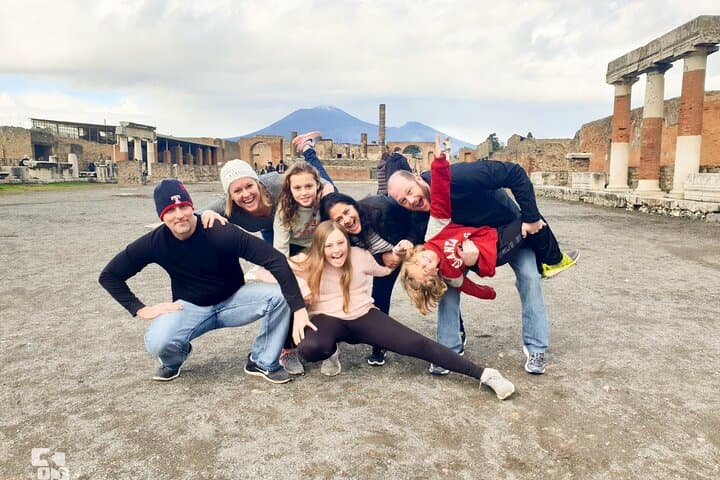


You step off the Mercedes minivan into a bright southern sky, cobbles warming underfoot and Vesuvius looming like a restless neighbor. The city opens ahead—streets frozen mid‑market, columns casting exacting shadows—and your guide, an archaeologist with decades of fieldwork, points out details crowds often miss.
You step off the Mercedes minivan into a bright southern sky, cobbles warming underfoot and Vesuvius looming like a restless neighbor. The city opens ahead—streets frozen mid‑market, columns casting exacting shadows—and your guide, an archaeologist with decades of fieldwork, points out details crowds often miss.
Pompeii was a functioning Roman city of roughly 150 acres and some 18,000 residents until Vesuvius erupted in 79 AD, burying buildings and everyday life in hot ash that preserved frescoes, shops and bodies. Geologically, the volcano is a stratovolcano whose explosive eruptions left a rich, mineral soil on its slopes; that fertility is why small vineyards produce Lacryma Christi wines today. Culturally the area blends Campanian peasant viticulture with a layered Roman past, visible in basilicas, baths and the Forum’s travertine paving.
The itinerary typically focuses on the Forum, Temple of Apollo, House of the Vettii and Theatre—highlights reachable on a tailored, moderate walking route—then moves to a family winery on Vesuvius for a short vineyard walk and a paired lunch. Practicalities: expect 4–7 hours total, moderate walking on uneven stone with some steps; skip‑the‑line admission is included. Bring sun protection, a full water bottle, and comfortable, grippy shoes; pack a light layer for breezes near the crater. Lunch and wine tasting are paid on site; most wineries accept card. If you prefer a slower pace, request a pared‑back route—this private format is flexible. The day trades crowds for context: archaeology, geology and a glass of local wine where the earth that buried a city now grows vines.