THE ADVENTURE COLLECTIVE® · Independent discovery and booking for outdoor travel

Skip the queue and walk Pompeii with an expert guide who brings the city’s streets, houses and frescoes to life. This private, fast-entry tour focuses on the site’s main highlights with practical tips for navigating uneven volcanic terrain.
Skip the queue and walk Pompeii with an expert guide who brings the city’s streets, houses and frescoes to life. This private, fast-entry tour focuses on the site’s main highlights with practical tips for navigating uneven volcanic terrain.
You step through Porta Marina Inferiore and the sun hits volcanic stone; ash-dark streets run straight as lines on a map, and columns keep a quiet watch over open courtyards. The guide leads you past the Palestra’s columned perimeter, the theatres whose acoustics still surprise, and down Via dell’Abbondanza where bakeries and shops freeze a Roman day in time.
Verified experiences and guided adventures in the surrounding area.
Operated by Tours of Naples · Pompeii, Campania
You step through Porta Marina Inferiore and the sun hits volcanic stone; ash-dark streets run straight as lines on a map, and columns keep a quiet watch over open courtyards. The guide leads you past the Palestra’s columned perimeter, the theatres whose acoustics still surprise, and down Via dell’Abbondanza where bakeries and shops freeze a Roman day in time.
Pompeii sits on the southern slopes of Vesuvius, preserved by the catastrophic eruption of 79 A.D. Layers of ash and pumice sealed homes, frescoes and graffiti for nearly two millennia. Geologically, the town rests on pyroclastic deposits and volcanic soils that both nourished the region’s farms and enabled the sudden burial that conserved these streets. Culturally, Pompeii offers a blunt portrait of Roman daily life—markets, baths, temples and the Lupanaria (red-light district) that speak to social norms and commerce.
Your private guide connects the architecture to everyday routines: how water ran through the baths, why the forum oriented trade routes, and what mosaics reveal about belief and wealth. Expect focused interpretation at the House of Menander and pauses at the Forum.
Practical guidance: wear sturdy, closed-toe shoes for uneven basalt and cobbles; carry water and sun protection—there’s little shade. Tours usually run 2–2.5 hours with skip-the-line entry; mobility can be moderately demanding due to distance and steps. Photography is allowed but don’t climb ruins or touch frescoes. Arrive early to avoid midday heat, and plan for public-transport or timed returns if you’re on a cruise schedule.
moderate.
2–2.5 hours.
Basic to moderate fitness; able to walk 2–3 miles on uneven surfaces and climb short steps.
The private tour runs about 2–2.5 hours, covering major sites like the Forum, House of Menander, theatres and Lupanaria.
Portions of Pompeii are wheelchair accessible and the tour notes wheelchair access, but some areas have uneven ground and steps—check specific route details when booking.
Yes—small backpacks and water are permitted; large bags may be subject to inspection and should not be left unattended.
Mobile or paper tickets are accepted; bring your confirmation and ID. Cruise passengers should provide ship and docking details at booking.
Pompeii’s sudden burial in 79 A.D. by Vesuvius preserved an urban snapshot of Roman life, from baths to bakeries, offering direct archaeological evidence of daily routines.
The site is fragile—stay on designated paths, avoid touching painted surfaces, and support conservation by using official guides and facilities.
Tours of Naples operates guided outdoor trips and adventures with an emphasis on safety, stewardship, and memorable experiences.
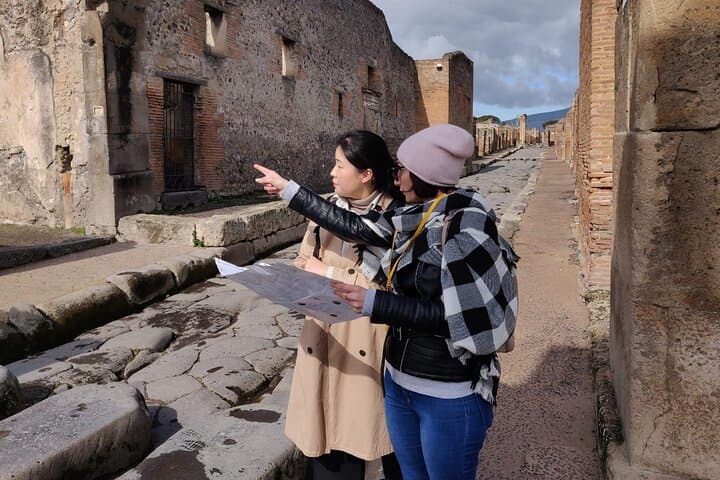
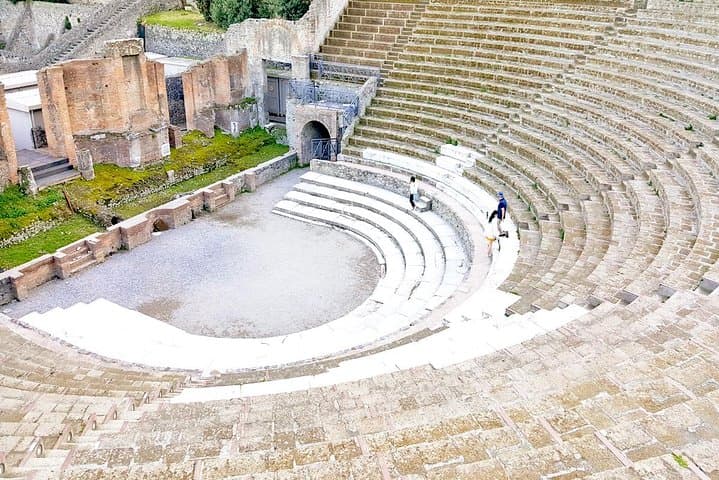
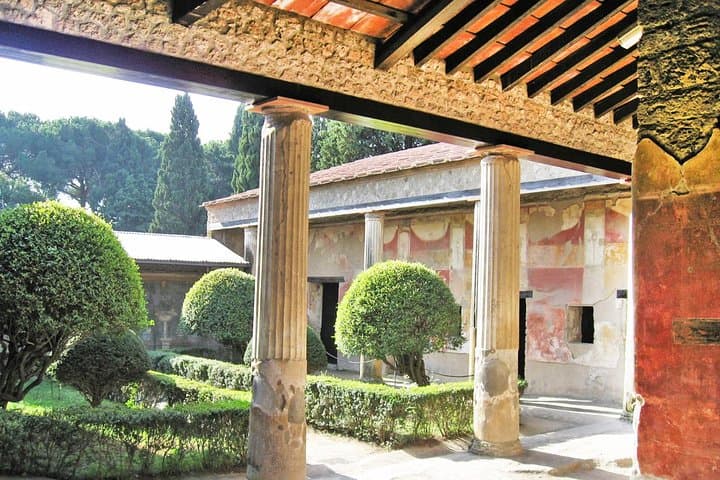
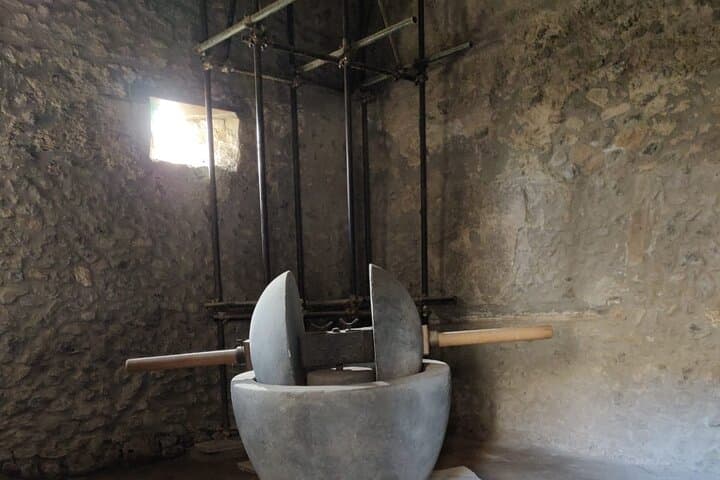
You step through Porta Marina Inferiore and the sun hits volcanic stone; ash-dark streets run straight as lines on a map, and columns keep a quiet watch over open courtyards. The guide leads you past the Palestra’s columned perimeter, the theatres whose acoustics still surprise, and down Via dell’Abbondanza where bakeries and shops freeze a Roman day in time.
You step through Porta Marina Inferiore and the sun hits volcanic stone; ash-dark streets run straight as lines on a map, and columns keep a quiet watch over open courtyards. The guide leads you past the Palestra’s columned perimeter, the theatres whose acoustics still surprise, and down Via dell’Abbondanza where bakeries and shops freeze a Roman day in time.
Pompeii sits on the southern slopes of Vesuvius, preserved by the catastrophic eruption of 79 A.D. Layers of ash and pumice sealed homes, frescoes and graffiti for nearly two millennia. Geologically, the town rests on pyroclastic deposits and volcanic soils that both nourished the region’s farms and enabled the sudden burial that conserved these streets. Culturally, Pompeii offers a blunt portrait of Roman daily life—markets, baths, temples and the Lupanaria (red-light district) that speak to social norms and commerce.
Your private guide connects the architecture to everyday routines: how water ran through the baths, why the forum oriented trade routes, and what mosaics reveal about belief and wealth. Expect focused interpretation at the House of Menander and pauses at the Forum.
Practical guidance: wear sturdy, closed-toe shoes for uneven basalt and cobbles; carry water and sun protection—there’s little shade. Tours usually run 2–2.5 hours with skip-the-line entry; mobility can be moderately demanding due to distance and steps. Photography is allowed but don’t climb ruins or touch frescoes. Arrive early to avoid midday heat, and plan for public-transport or timed returns if you’re on a cruise schedule.