THE ADVENTURE COLLECTIVE® · Independent discovery and booking for outdoor travel

Walk the streets frozen by Vesuvius with an authorized guide who brings Pompeii’s public baths, frescoed houses and market lanes to life. This private tour blends archaeological insight with practical route planning for a focused 2–3 hour visit.
Walk the streets frozen by Vesuvius with an authorized guide who brings Pompeii’s public baths, frescoed houses and market lanes to life. This private tour blends archaeological insight with practical route planning for a focused 2–3 hour visit.
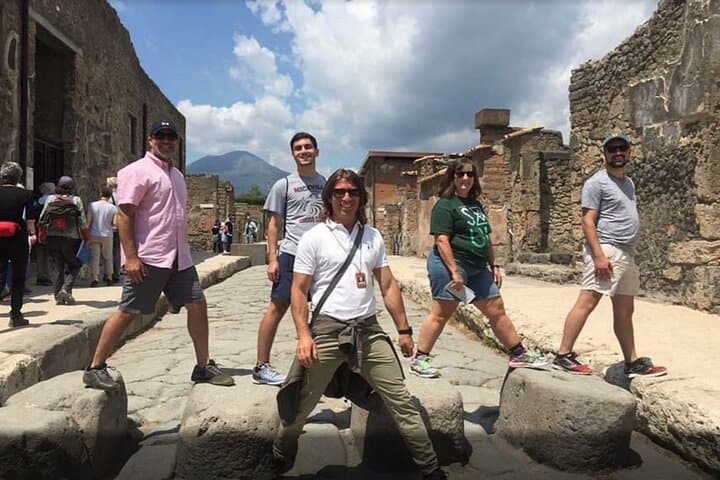
You step through a low stone arch and the city opens — a skeleton of streets, doorways and frescoed rooms that still hold the shape of daily life frozen by ash. Cobblestones slope underfoot, and voices fade as your guide points out a threshold worn smooth by centuries of passage.
Verified experiences and guided adventures in the surrounding area.
Operated by Luca Tour Guide · Pompeii, Campania
You step through a low stone arch and the city opens — a skeleton of streets, doorways and frescoed rooms that still hold the shape of daily life frozen by ash. Cobblestones slope underfoot, and voices fade as your guide points out a threshold worn smooth by centuries of passage.
Pompeii is an archaeological record of a single catastrophic day in AD 79, when Vesuvius erupted and entombed homes, shops and temples. The volcanic tuff preserved painted walls, mosaics and everyday objects, giving archaeologists a rare, three-dimensional snapshot of Roman urban life. The surrounding geology — volcanic plains sloping toward the Bay of Naples — explains both the fertility that attracted settlers and the risk that ended their city.
Culturally, Pompeii was a bustling port town with a mix of trades, religious cults and public baths; walking its forum and markets is walking through a civic center once ruled by commerce and ritual. Local insights from a licensed guide bring these details alive: pointing out water systems, plaster casts of victims, and frescoes that speak to tastes and Tabernae where Romans ate.
Practically, expect 2–3 hours of mostly on-foot exploration over uneven, sometimes dusty paths. Wear sturdy shoes and sun protection; bring water and a light layer for coastal breezes. Note that major highlights like the Forum, Villa of the Mysteries and House of the Faun can get crowded — mornings are best for quieter viewing. Admission is not always included, so confirm tickets and meeting point when you book. Respect roped areas and fragile interiors to help preserve this world-class site.
moderate.
2–3 hours.
Suitable for travelers with moderate fitness who can walk several kilometers on uneven ground
Admission is not always included; check the booking details and bring or purchase tickets for entry if they are excluded.
This tour is advertised as private but may be non-exclusive at times; confirm with the operator if you require a truly private booking.
Some areas are accessible, but many streets are uneven; strollers are possible in parts, and full wheelchair access is limited — check specific accessibility options before booking.
Yes — guides often can arrange private transfers; indicate arrival details when booking to discuss logistics and pricing.
Pompeii was overwhelmed by Mount Vesuvius’s eruption in AD 79, preserving homes and everyday objects under ash and volcanic debris.
The site is sensitive to foot traffic and humidity; follow guide instructions, avoid touching frescoes, and support preservation by staying on marked paths.
Luca Tour Guide operates guided outdoor trips and adventures with an emphasis on safety, stewardship, and memorable experiences.
You step through a low stone arch and the city opens — a skeleton of streets, doorways and frescoed rooms that still hold the shape of daily life frozen by ash. Cobblestones slope underfoot, and voices fade as your guide points out a threshold worn smooth by centuries of passage.
You step through a low stone arch and the city opens — a skeleton of streets, doorways and frescoed rooms that still hold the shape of daily life frozen by ash. Cobblestones slope underfoot, and voices fade as your guide points out a threshold worn smooth by centuries of passage.
Pompeii is an archaeological record of a single catastrophic day in AD 79, when Vesuvius erupted and entombed homes, shops and temples. The volcanic tuff preserved painted walls, mosaics and everyday objects, giving archaeologists a rare, three-dimensional snapshot of Roman urban life. The surrounding geology — volcanic plains sloping toward the Bay of Naples — explains both the fertility that attracted settlers and the risk that ended their city.
Culturally, Pompeii was a bustling port town with a mix of trades, religious cults and public baths; walking its forum and markets is walking through a civic center once ruled by commerce and ritual. Local insights from a licensed guide bring these details alive: pointing out water systems, plaster casts of victims, and frescoes that speak to tastes and Tabernae where Romans ate.
Practically, expect 2–3 hours of mostly on-foot exploration over uneven, sometimes dusty paths. Wear sturdy shoes and sun protection; bring water and a light layer for coastal breezes. Note that major highlights like the Forum, Villa of the Mysteries and House of the Faun can get crowded — mornings are best for quieter viewing. Admission is not always included, so confirm tickets and meeting point when you book. Respect roped areas and fragile interiors to help preserve this world-class site.