THE ADVENTURE COLLECTIVE® · Independent discovery and booking for outdoor travel

Skip the queues and walk through history: a private guided tour from Naples brings you to Pompeii’s streets, frescoed villas, and plaster cast victims with the context of a local driver and optional guide. Practical tips inside for timing, gear, and accessibility.
Skip the queues and walk through history: a private guided tour from Naples brings you to Pompeii’s streets, frescoed villas, and plaster cast victims with the context of a local driver and optional guide. Practical tips inside for timing, gear, and accessibility.
You step out of a private car onto sun-warmed basalt, and Mount Vesuvius watches from the skyline like a geological clock still counting the hours since 79 AD. The air smells of Mediterranean dust and lemon groves as your driver points toward the Porta Marina entrance; today the ruins open to you without the usual line.
Verified experiences and guided adventures in the surrounding area.
Operated by Worldtours · Pompeii, Campania
You step out of a private car onto sun-warmed basalt, and Mount Vesuvius watches from the skyline like a geological clock still counting the hours since 79 AD. The air smells of Mediterranean dust and lemon groves as your driver points toward the Porta Marina entrance; today the ruins open to you without the usual line.
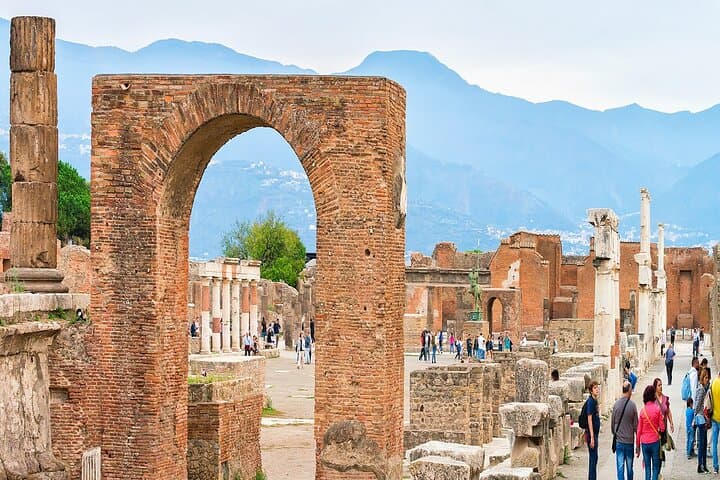
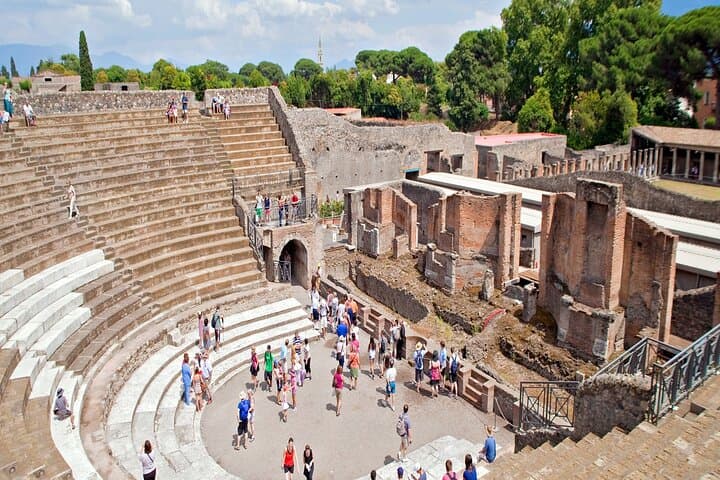
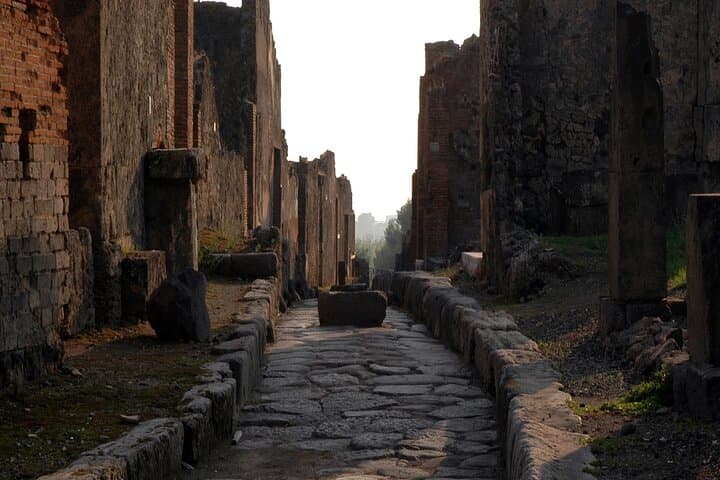
Pompeii is an open-air archive of Roman urban life frozen beneath volcanic ash. Streets, baths, bakeries and plaster casts give shape to ordinary people: children playing, bread baked at dawn, vendors on market days. Geology is immediate here — pumice and ash layers create a stratified map of the eruption, while Vesuvius’ cone dominates the horizon and reminds visitors this place is both archaeological site and landscape in recovery.
Culturally, Pompeii sits in Campania’s layered history: Roman civic planning, later excavations in the 18th century that changed archaeology, and ongoing conservation that balances access with preservation. Local museums and the Antiquarium collect finds that cannot stay exposed to the elements.
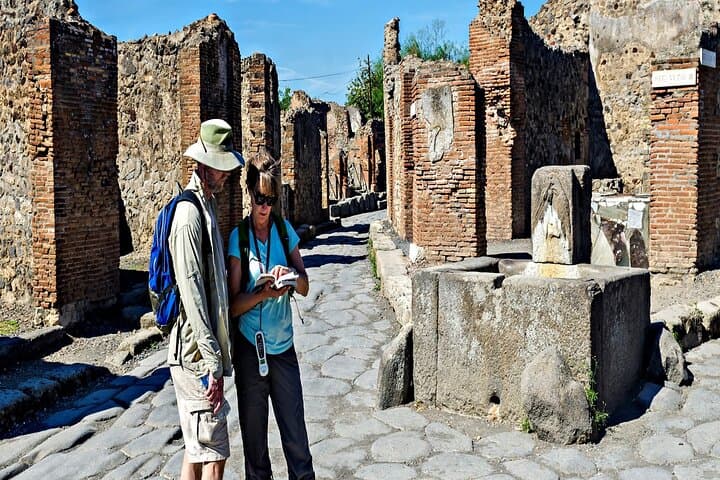
Practical guidance: the tour typically includes a 30–40 minute transfer from Naples and about two hours of on-site exploration; choose the driver+guide option to get context at key houses. Wear sturdy walking shoes — surfaces are uneven — bring water, sun protection, and respect barriers and signage. Mobility-friendly routes exist but check accessibility in advance. Booking with skip-the-line tickets saves time; cancel at least 24 hours before to receive a refund.
easy.
3–4 hours.
Suitable for most fitness levels; expect walking on uneven ground for up to two hours on-site
Expect about 3–4 hours total: roughly 30–40 minutes each way from central Naples and approximately two hours inside the archaeological park.
There are accessible paths and some entrances accommodate wheelchairs, but many areas have uneven surfaces; contact the operator ahead of time to plan accessible routing.
Options include driver+tickets or driver+guide+tickets; confirm your booking selection — this product offers skip-the-line service with entrance fees included per the chosen option.
Yes — infant seats are available for transfers and the tour is suitable for families, but supervise children closely around exposed edges and fragile areas.
Pompeii was buried by the 79 AD eruption of Vesuvius, preserving streets and buildings under ash and pumice and providing an unparalleled snapshot of Roman life.
Ongoing conservation projects limit access to vulnerable structures; visitors should follow paths and signage to reduce wear and assist preservation efforts.
Worldtours operates guided outdoor trips and adventures with an emphasis on safety, stewardship, and memorable experiences.
You step out of a private car onto sun-warmed basalt, and Mount Vesuvius watches from the skyline like a geological clock still counting the hours since 79 AD. The air smells of Mediterranean dust and lemon groves as your driver points toward the Porta Marina entrance; today the ruins open to you without the usual line.
You step out of a private car onto sun-warmed basalt, and Mount Vesuvius watches from the skyline like a geological clock still counting the hours since 79 AD. The air smells of Mediterranean dust and lemon groves as your driver points toward the Porta Marina entrance; today the ruins open to you without the usual line.
Pompeii is an open-air archive of Roman urban life frozen beneath volcanic ash. Streets, baths, bakeries and plaster casts give shape to ordinary people: children playing, bread baked at dawn, vendors on market days. Geology is immediate here — pumice and ash layers create a stratified map of the eruption, while Vesuvius’ cone dominates the horizon and reminds visitors this place is both archaeological site and landscape in recovery.
Culturally, Pompeii sits in Campania’s layered history: Roman civic planning, later excavations in the 18th century that changed archaeology, and ongoing conservation that balances access with preservation. Local museums and the Antiquarium collect finds that cannot stay exposed to the elements.
Practical guidance: the tour typically includes a 30–40 minute transfer from Naples and about two hours of on-site exploration; choose the driver+guide option to get context at key houses. Wear sturdy walking shoes — surfaces are uneven — bring water, sun protection, and respect barriers and signage. Mobility-friendly routes exist but check accessibility in advance. Booking with skip-the-line tickets saves time; cancel at least 24 hours before to receive a refund.