THE ADVENTURE COLLECTIVE® · Independent discovery and booking for outdoor travel

Spend a full day stepping through Pompeii’s frozen streets and then sampling wines grown on the volcanic slopes of Vesuvius. This private, all-inclusive tour from Rome pairs a guided archaeological visit with a family-run vineyard tasting and lunch.
Spend a full day stepping through Pompeii’s frozen streets and then sampling wines grown on the volcanic slopes of Vesuvius. This private, all-inclusive tour from Rome pairs a guided archaeological visit with a family-run vineyard tasting and lunch.
You step out of the air-conditioned vehicle onto sun-warmed cobbles and the open air of a city frozen by ash. The guide leads you past columns and collapsed roofs; voices drop as frescoed walls and plaster casts come into view, each room holding a domestic life suddenly stilled. Mount Vesuvius watches from the ridge, an ever-present geological neighbor that shaped the land and the wines you will taste later.
Verified experiences and guided adventures in the surrounding area.
Operated by Enjoy Pompeii · Pompeii, Campania
You step out of the air-conditioned vehicle onto sun-warmed cobbles and the open air of a city frozen by ash. The guide leads you past columns and collapsed roofs; voices drop as frescoed walls and plaster casts come into view, each room holding a domestic life suddenly stilled. Mount Vesuvius watches from the ridge, an ever-present geological neighbor that shaped the land and the wines you will taste later.
Pompeii’s streets map Roman daily life—bakeries, baths, and boutiques—preserved by the 79 AD eruption that buried the town under pumice and ash. The surrounding Campanian soil, enriched by volcanic minerals, has supported vineyards for millennia; today’s tasting at a family-run estate in Trecase connects those ancient soils to modern bottles. The vineyard sits inside Vesuvius National Park, a UNESCO Biosphere Reserve where terraces and old rootstocks reveal a continuity of place.
Practical edge: expect roughly a 9–10 hour day with hotel pickup in Rome, a private 2h15 guided walk through Pompeii on uneven, sandy surfaces, and a 90-minute tasting plus lunch. Wear sturdy shoes, bring sun protection and a refillable bottle, and be ready for sustained walking between sites. Guides cover archaeological context, fresco and mosaic highlights, and winemaking notes—so questions about production and grape varieties are welcome.
Timing matters—mornings are cooler and less crowded in summer; winter visits mean shorter daylight but quieter ruins. The day balances history, geology, and the sensory reward of tasting wines that grew from the same volcanic earth that shaped Pompeii’s fate.
moderate.
9–10 hours.
Comfortable with several hours of walking on uneven surfaces; able to stand during guided commentary.
No — mobile tickets are accepted, but keep your booking confirmation accessible for pickup and entry.
Children can join, but Pompeii’s uneven ground and steps make the site challenging for limited mobility; contact the operator about alternative access or private adjustments.
It includes entry that avoids the main ticket queues at Pompeii, but you will still go through security and sightline bottlenecks during peak times.
Yes — the tour notes indicate lunch and tasting can accommodate common dietary needs if informed at booking.
Pompeii was buried in ash during Mount Vesuvius’s eruption in 79 AD; the Vesuvius area has supported viticulture since Roman times thanks to fertile volcanic soils.
The archaeological park limits off-path walking and climbing; practice leave-no-trace and support local wineries and guides who follow conservation guidelines.
Enjoy Pompeii operates guided outdoor trips and adventures with an emphasis on safety, stewardship, and memorable experiences.
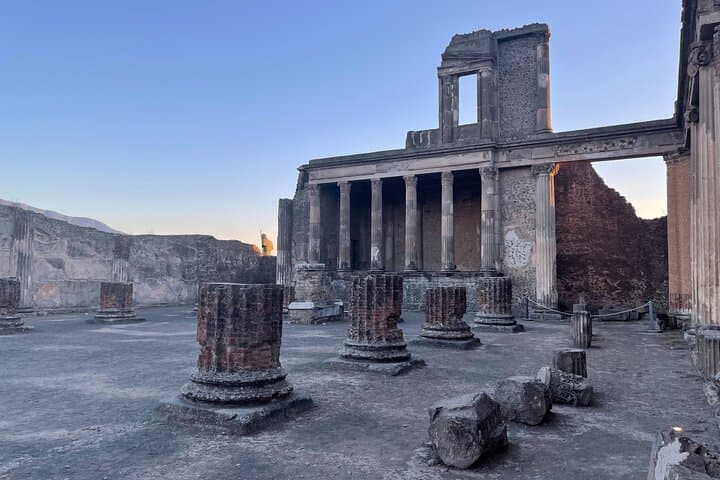
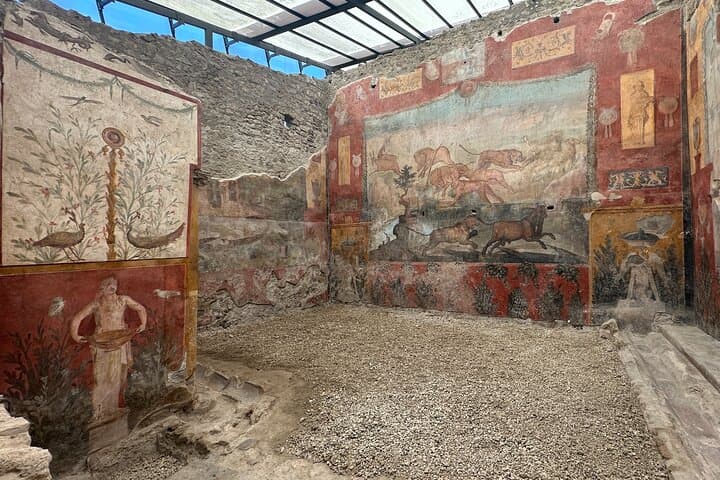
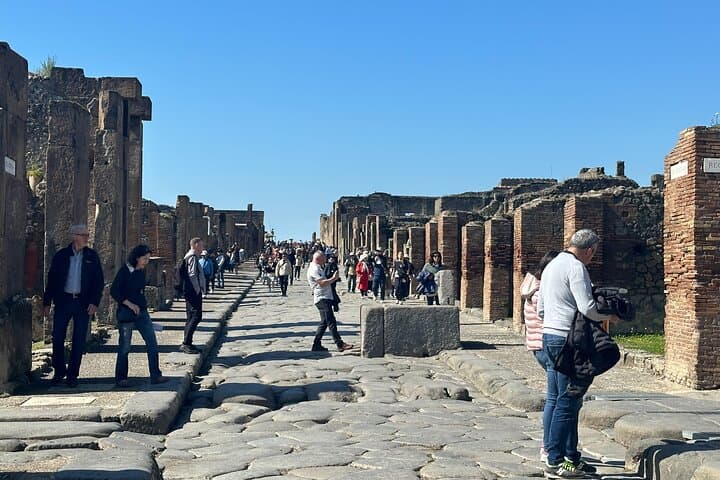
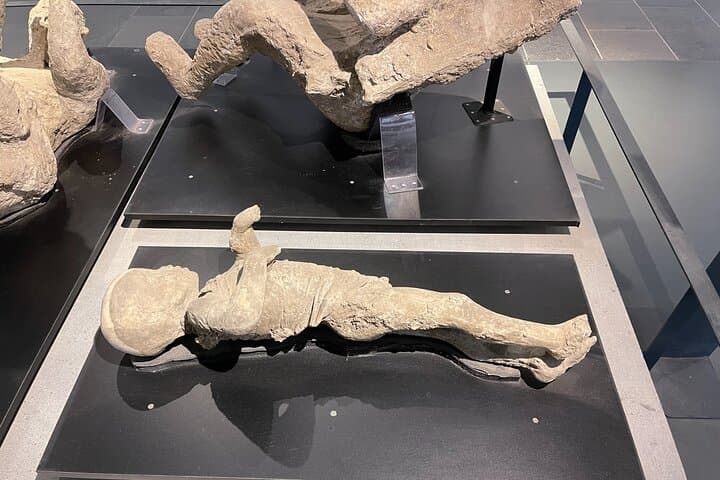
You step out of the air-conditioned vehicle onto sun-warmed cobbles and the open air of a city frozen by ash. The guide leads you past columns and collapsed roofs; voices drop as frescoed walls and plaster casts come into view, each room holding a domestic life suddenly stilled. Mount Vesuvius watches from the ridge, an ever-present geological neighbor that shaped the land and the wines you will taste later.
You step out of the air-conditioned vehicle onto sun-warmed cobbles and the open air of a city frozen by ash. The guide leads you past columns and collapsed roofs; voices drop as frescoed walls and plaster casts come into view, each room holding a domestic life suddenly stilled. Mount Vesuvius watches from the ridge, an ever-present geological neighbor that shaped the land and the wines you will taste later.
Pompeii’s streets map Roman daily life—bakeries, baths, and boutiques—preserved by the 79 AD eruption that buried the town under pumice and ash. The surrounding Campanian soil, enriched by volcanic minerals, has supported vineyards for millennia; today’s tasting at a family-run estate in Trecase connects those ancient soils to modern bottles. The vineyard sits inside Vesuvius National Park, a UNESCO Biosphere Reserve where terraces and old rootstocks reveal a continuity of place.
Practical edge: expect roughly a 9–10 hour day with hotel pickup in Rome, a private 2h15 guided walk through Pompeii on uneven, sandy surfaces, and a 90-minute tasting plus lunch. Wear sturdy shoes, bring sun protection and a refillable bottle, and be ready for sustained walking between sites. Guides cover archaeological context, fresco and mosaic highlights, and winemaking notes—so questions about production and grape varieties are welcome.
Timing matters—mornings are cooler and less crowded in summer; winter visits mean shorter daylight but quieter ruins. The day balances history, geology, and the sensory reward of tasting wines that grew from the same volcanic earth that shaped Pompeii’s fate.