THE ADVENTURE COLLECTIVE® · Independent discovery and booking for outdoor travel

A full‑day private tour from Split to Plitvice Lakes that covers boardwalks, waterfalls and at least 6 km of walking. Expect long travel time, UNESCO‑listed scenery, and practical route options including short park boat shuttles.
A full‑day private tour from Split to Plitvice Lakes that covers boardwalks, waterfalls and at least 6 km of walking. Expect long travel time, UNESCO‑listed scenery, and practical route options including short park boat shuttles.
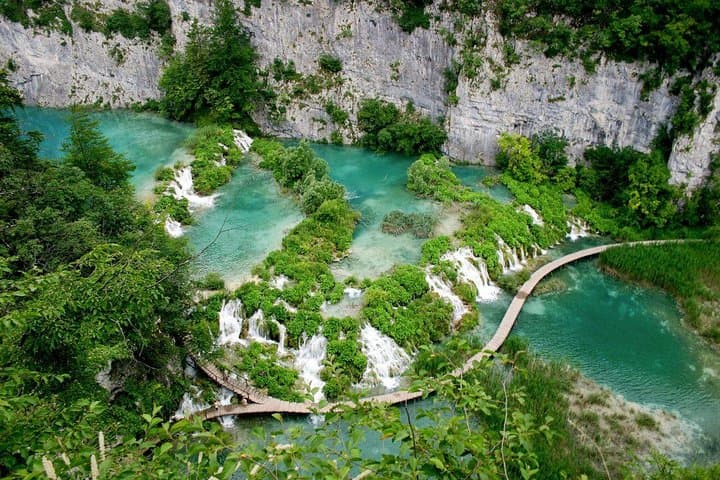
You step off the air-conditioned van and the sound changes: water starts to speak. Walkways weave over emerald pools, and the air is cool with spray from waterfalls that keep carving travertine like an impatient sculptor.
Verified experiences and guided adventures in the surrounding area.
Operated by Labora Tours · Plitvička Jezera, Lika-Senj County
You step off the air-conditioned van and the sound changes: water starts to speak. Walkways weave over emerald pools, and the air is cool with spray from waterfalls that keep carving travertine like an impatient sculptor.
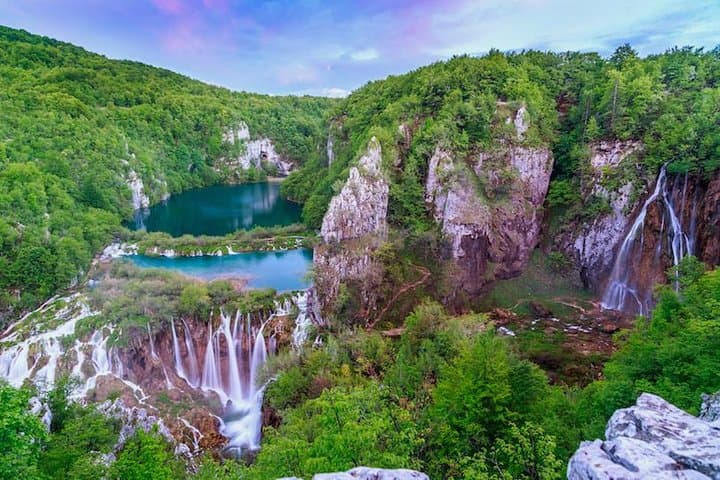
Plitvice Lakes National Park was established in 1949 and added to the UNESCO World Heritage list in 1979. The lakes sit in a karst landscape where mineral-rich water deposits travertine dams, forming terraces and the dramatic cascades visitors come to see—Veliki Slap, the park’s biggest fall, tumbles roughly 78 meters and anchors the lower lakes.
Culturally, the park has long been a crossroads between inland Lika communities and the Adriatic trade routes; nearby konobas serve simple mountain cooking that pairs well with a long day outdoors. Geologically, expect boardwalks over fragile travertine formations and dense mixed forests that feed the lakes and host chattering birdlife.
Practically, a day tour from Split is a long beat—plan for 8–12 hours including round-trip travel. You’ll cover at least 6 km on foot across wooden boardwalks and gentle trails; some routes use short electric boat rides and park shuttles to bridge lakes. Wear grippy footwear and a waterproof layer, and bring water and snacks: services at the park are limited and lines can form at ticket windows. Follow park rules—stay on boardwalks and avoid feeding wildlife—to protect delicate calcium formations and the species that rely on them. If you want quieter photos, aim for early arrival or late afternoon on shoulder seasons; summer brings crowds but full foliage and warmer water tones.
moderate.
8–12 hours.
Requires moderate fitness: several kilometers of mostly easy walking with some stairs and uneven boardwalks.
No—entrance fees to Plitvice Lakes are typically not included and are paid separately at the park entrance or online prior to arrival.
Expect at least 6 km of walking on wooden boardwalks and trails over varied terrain; the tour is not a sit‑down sightseeing stop.
Yes—bring snacks and a refillable water bottle; dining options near the park are limited and meal stops add time.
The tour is family‑friendly but not ideal for those with serious mobility issues due to stairs and boardwalks; contact the operator about specific needs.
Plitvice Lakes was protected as a national park in 1949 and inscribed as a UNESCO World Heritage Site in 1979 for its travertine barrier systems and cascades.
The park’s travertine formations are sensitive to disturbance and pollution; visitors should stay on marked trails, avoid littering, and respect signage to protect water quality and habitats.
Labora Tours operates guided outdoor trips and adventures with an emphasis on safety, stewardship, and memorable experiences.
You step off the air-conditioned van and the sound changes: water starts to speak. Walkways weave over emerald pools, and the air is cool with spray from waterfalls that keep carving travertine like an impatient sculptor.
You step off the air-conditioned van and the sound changes: water starts to speak. Walkways weave over emerald pools, and the air is cool with spray from waterfalls that keep carving travertine like an impatient sculptor.
Plitvice Lakes National Park was established in 1949 and added to the UNESCO World Heritage list in 1979. The lakes sit in a karst landscape where mineral-rich water deposits travertine dams, forming terraces and the dramatic cascades visitors come to see—Veliki Slap, the park’s biggest fall, tumbles roughly 78 meters and anchors the lower lakes.
Culturally, the park has long been a crossroads between inland Lika communities and the Adriatic trade routes; nearby konobas serve simple mountain cooking that pairs well with a long day outdoors. Geologically, expect boardwalks over fragile travertine formations and dense mixed forests that feed the lakes and host chattering birdlife.
Practically, a day tour from Split is a long beat—plan for 8–12 hours including round-trip travel. You’ll cover at least 6 km on foot across wooden boardwalks and gentle trails; some routes use short electric boat rides and park shuttles to bridge lakes. Wear grippy footwear and a waterproof layer, and bring water and snacks: services at the park are limited and lines can form at ticket windows. Follow park rules—stay on boardwalks and avoid feeding wildlife—to protect delicate calcium formations and the species that rely on them. If you want quieter photos, aim for early arrival or late afternoon on shoulder seasons; summer brings crowds but full foliage and warmer water tones.