THE ADVENTURE COLLECTIVE® · Independent discovery and booking for outdoor travel

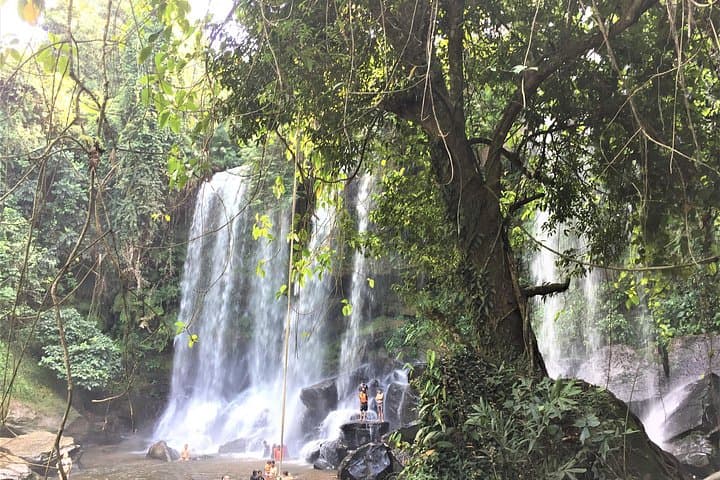
A full-day private uphill trek on Phnom Kulen takes you through sugar-palm villages and jungle to a soaring waterfall, riverbed Lingams, and a large reclining Buddha. Expect a steady 5 km climb, ritual sites, and swimming beneath clear cascades.
A full-day private uphill trek on Phnom Kulen takes you through sugar-palm villages and jungle to a soaring waterfall, riverbed Lingams, and a large reclining Buddha. Expect a steady 5 km climb, ritual sites, and swimming beneath clear cascades.
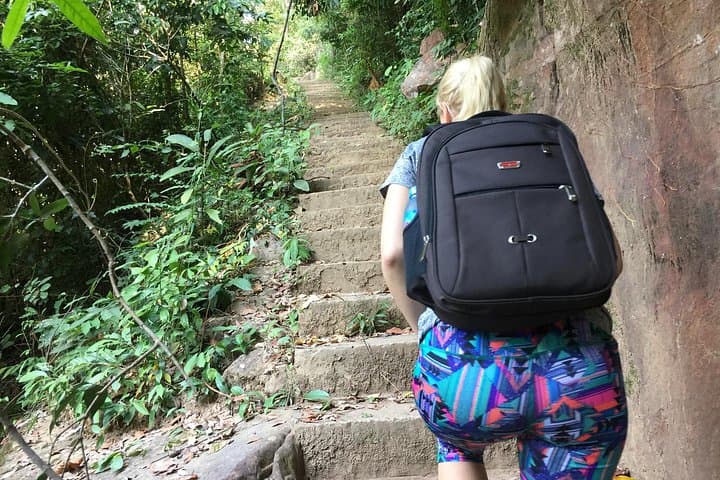
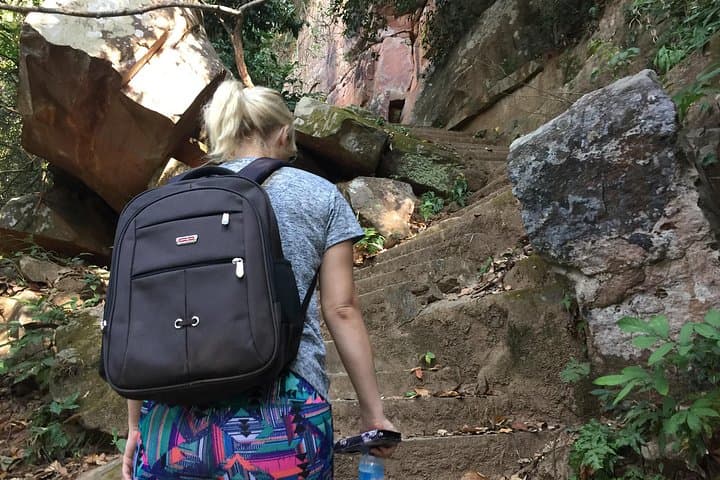
You emerge from the lowland road into heat and green — a sugar-palm village peels away as the track climbs toward Phnom Kulen. The jungle closes in, leaves scrape like pages, and the trail angles upward for a steady 5-kilometer push. Birdsong and insect percussion punctuate the ascent; every clearing gives a new frame of distant rice plains and the first glint of river stone.
Verified experiences and guided adventures in the surrounding area.
Operated by Naga Angkor Tour · Siem Reap, Siem Reap Province
You emerge from the lowland road into heat and green — a sugar-palm village peels away as the track climbs toward Phnom Kulen. The jungle closes in, leaves scrape like pages, and the trail angles upward for a steady 5-kilometer push. Birdsong and insect percussion punctuate the ascent; every clearing gives a new frame of distant rice plains and the first glint of river stone.
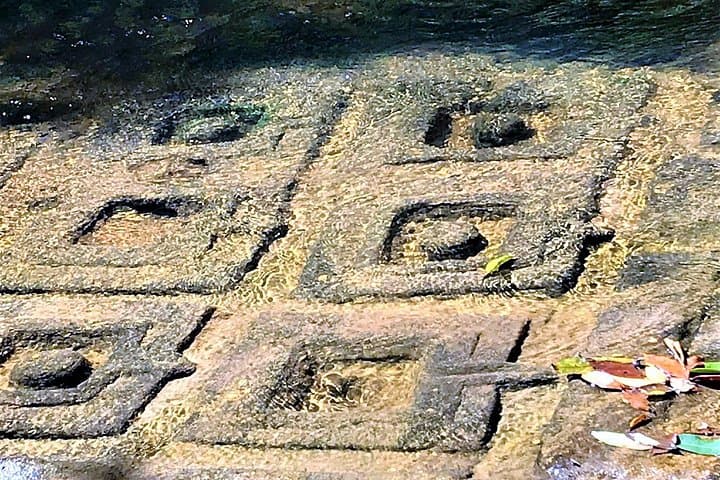
Phnom Kulen is more than a waterfall. This is the mountain where Jayavarman II held the Devaraja rite that helped found the Khmer polity; scattered sandstone relics and carved lingams in the riverbed record centuries of ritual. Geologically, the plateau is an ancient sandstone fold — river channels have smoothed thousand-year-old carvings into a mosaic on the riverbed and fed cascades that keep their pools clear year-round.
Culturally the site remains active: monks maintain the big reclining Buddha and villagers carry offerings along the route. Respectful behavior is expected at carved shrines and swimming areas.
Practical guidance: expect uneven, sometimes slippery trail underfoot and a roughly 5 km uphill return. Start early to avoid the midday heat and bring water, swimwear and a small towel if you plan to bathe in the pool beneath the falls. Guides handle tickets and local logistics; the climb is steady but suitable for most fit walkers who can manage basic uneven terrain.
Plan for seasonal shifts: heavy rains make sections slick and some pools fuller, while the dry season offers easier footing and clearer views of the carved lingams.
moderate.
8 hours (full day).
Suitable for people with regular walking fitness; you should be comfortable on uneven uphill trails for several hours and able to handle short steep sections.
The route is a steady 5 km uphill on mixed dirt and rock; it’s rated moderate and suitable for most people who are comfortable walking on uneven ground for several hours.
There is a park entrance ticket purchased at Phnom Kulen’s ticket office; the standard Angkor temple pass does not cover the national park, so buy the local ticket on arrival or via your operator.
Yes—there are natural pools beneath the falls where swimming is common; avoid using soap or sunscreen that can pollute the water and follow any local signage.
Private tours typically include pickup from Siem Reap in a vehicle with AC and an English-speaking guide who handles permits and local arrangements.
Phnom Kulen is historically significant as the site where Jayavarman II performed the Devaraja ritual that helped establish the Khmer kingdom; scattered lingams and temple ruins date to that era.
Phnom Kulen is a protected area—stay on marked trails, avoid littering, and do not remove or deface carvings; avoid soaps in streams to protect water quality.
Naga Angkor Tour operates guided outdoor trips and adventures with an emphasis on safety, stewardship, and memorable experiences.
You emerge from the lowland road into heat and green — a sugar-palm village peels away as the track climbs toward Phnom Kulen. The jungle closes in, leaves scrape like pages, and the trail angles upward for a steady 5-kilometer push. Birdsong and insect percussion punctuate the ascent; every clearing gives a new frame of distant rice plains and the first glint of river stone.
You emerge from the lowland road into heat and green — a sugar-palm village peels away as the track climbs toward Phnom Kulen. The jungle closes in, leaves scrape like pages, and the trail angles upward for a steady 5-kilometer push. Birdsong and insect percussion punctuate the ascent; every clearing gives a new frame of distant rice plains and the first glint of river stone.
Phnom Kulen is more than a waterfall. This is the mountain where Jayavarman II held the Devaraja rite that helped found the Khmer polity; scattered sandstone relics and carved lingams in the riverbed record centuries of ritual. Geologically, the plateau is an ancient sandstone fold — river channels have smoothed thousand-year-old carvings into a mosaic on the riverbed and fed cascades that keep their pools clear year-round.
Culturally the site remains active: monks maintain the big reclining Buddha and villagers carry offerings along the route. Respectful behavior is expected at carved shrines and swimming areas.
Practical guidance: expect uneven, sometimes slippery trail underfoot and a roughly 5 km uphill return. Start early to avoid the midday heat and bring water, swimwear and a small towel if you plan to bathe in the pool beneath the falls. Guides handle tickets and local logistics; the climb is steady but suitable for most fit walkers who can manage basic uneven terrain.
Plan for seasonal shifts: heavy rains make sections slick and some pools fuller, while the dry season offers easier footing and clearer views of the carved lingams.