THE ADVENTURE COLLECTIVE® · Independent discovery and booking for outdoor travel

Cross the Nile by private motorboat and explore Philae’s rescued temples at your own pace. Choose from self-guided, guide-included, or guide-and-tickets options for a comfortable half-day in Aswan.
Cross the Nile by private motorboat and explore Philae’s rescued temples at your own pace. Choose from self-guided, guide-included, or guide-and-tickets options for a comfortable half-day in Aswan.
The Nile opens like a bright ribbon as your motorboat slips away from Aswan’s docking stones; wind and river wash past, and the island silhouette of Philae grows clearer. The temple’s columns and reliefs stand framed against a low desert ridge—stone that has watched the Nile change course and empires rise.
Verified experiences and guided adventures in the surrounding area.
Operated by Eyes of Egypt · Aswan, Aswan Governorate
The Nile opens like a bright ribbon as your motorboat slips away from Aswan’s docking stones; wind and river wash past, and the island silhouette of Philae grows clearer. The temple’s columns and reliefs stand framed against a low desert ridge—stone that has watched the Nile change course and empires rise.
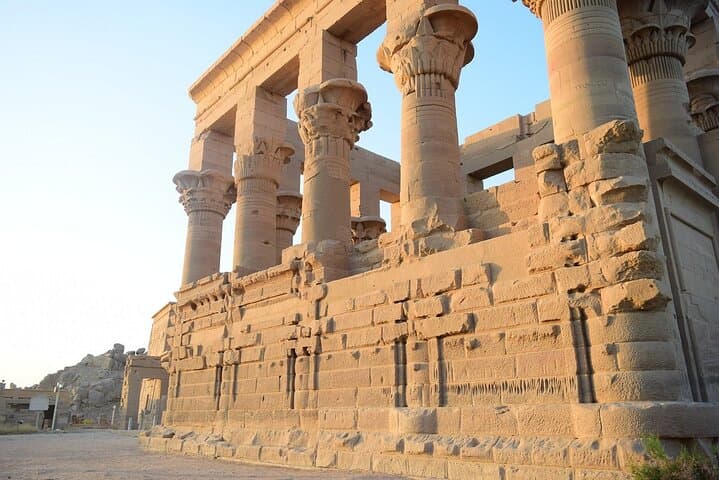
Philae’s modern story is as dramatic as its hieroglyphs: rescued from submersion after the Aswan High Dam project in the 1960s and reconstructed on Agilkia Island under UNESCO supervision. Geologically, the granite bedrock of the Aswan region makes for abrupt, sculpted banks and a calm river corridor that has supported Nile traffic for millennia. Culturally, Philae persisted as a pilgrimage site into the Coptic period; look for Christian crosses cut into earlier stone.
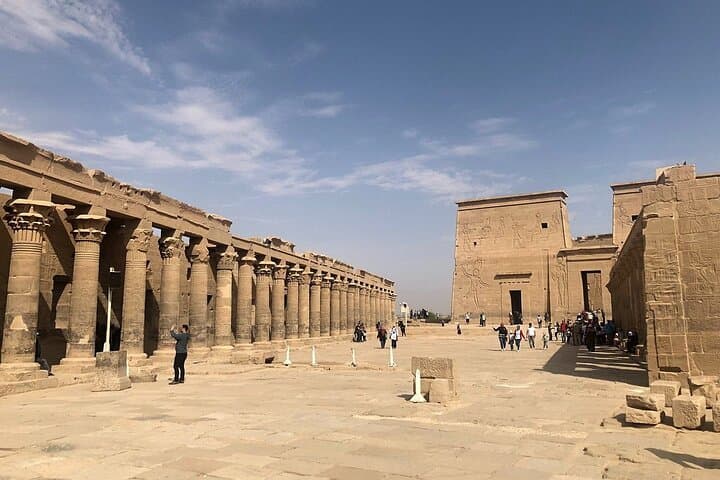
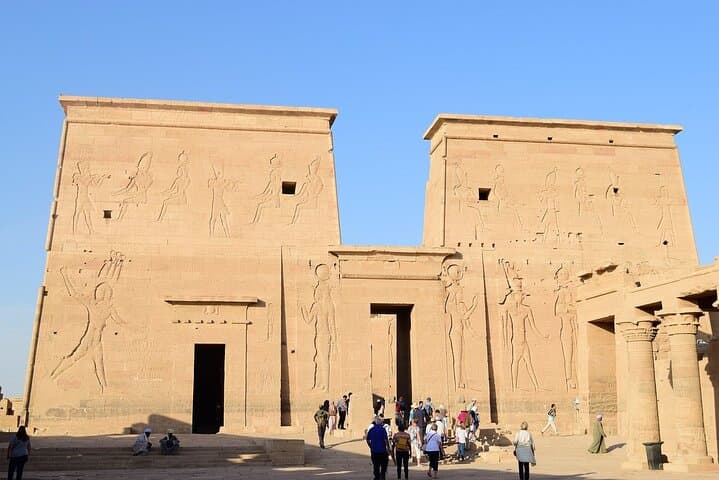
On a private tour you’ll move at your own pace—walk the Gateway of Nectanebo, study the Temple of Isis, and linger at the Nilometer while a guide (if selected) points out carved rituals and Roman additions. The boat crossing itself is part of the journey: feluccas and steamboats sit alongside motor launches while river birds wheel overhead.
Practical guidance: plan for 3–4 hours, avoid midday in summer, and choose the guide-and-tickets option to skip on-site lines. Wear sun protection and stable shoes; many surfaces are uneven and several short steps lead to viewing platforms. Photography is allowed but don’t touch reliefs. The private transfer model makes this accessible for families and visitors with limited time—book morning slots for cooler light and calmer crowds.
easy.
3–4 hours.
Minimal walking required but expect several short staircases and uneven surfaces; suitable for average fitness.
It depends on your booking choice—select the "Guide & Tickets" option to have temple entrance included; otherwise tickets can be paid on site.
The island and transport options note wheelchair accessibility, but some historic areas have steps and uneven paving; check specifics with your operator when booking.
The motorboat crossing from the mainland to Agilkia Island is short—typically 10–15 minutes depending on pickup location and water conditions.
Yes, infant seats are available and strollers are usable in many areas, but expect some steps; advise operators of needs at booking for tailored assistance.
Philae was relocated stone-by-stone to Agilkia Island in the 1960s to save it from flooding caused by the Aswan High Dam, a major UNESCO-led conservation effort.
Visitors are urged to stay on marked paths and avoid touching carved surfaces; tour revenues support local guides and conservation programs.
Eyes of Egypt operates guided outdoor trips and adventures with an emphasis on safety, stewardship, and memorable experiences.
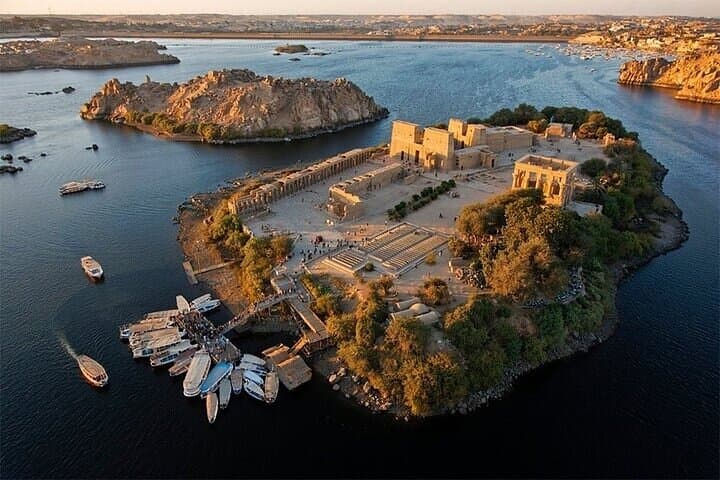
The Nile opens like a bright ribbon as your motorboat slips away from Aswan’s docking stones; wind and river wash past, and the island silhouette of Philae grows clearer. The temple’s columns and reliefs stand framed against a low desert ridge—stone that has watched the Nile change course and empires rise.
The Nile opens like a bright ribbon as your motorboat slips away from Aswan’s docking stones; wind and river wash past, and the island silhouette of Philae grows clearer. The temple’s columns and reliefs stand framed against a low desert ridge—stone that has watched the Nile change course and empires rise.
Philae’s modern story is as dramatic as its hieroglyphs: rescued from submersion after the Aswan High Dam project in the 1960s and reconstructed on Agilkia Island under UNESCO supervision. Geologically, the granite bedrock of the Aswan region makes for abrupt, sculpted banks and a calm river corridor that has supported Nile traffic for millennia. Culturally, Philae persisted as a pilgrimage site into the Coptic period; look for Christian crosses cut into earlier stone.
On a private tour you’ll move at your own pace—walk the Gateway of Nectanebo, study the Temple of Isis, and linger at the Nilometer while a guide (if selected) points out carved rituals and Roman additions. The boat crossing itself is part of the journey: feluccas and steamboats sit alongside motor launches while river birds wheel overhead.
Practical guidance: plan for 3–4 hours, avoid midday in summer, and choose the guide-and-tickets option to skip on-site lines. Wear sun protection and stable shoes; many surfaces are uneven and several short steps lead to viewing platforms. Photography is allowed but don’t touch reliefs. The private transfer model makes this accessible for families and visitors with limited time—book morning slots for cooler light and calmer crowds.