THE ADVENTURE COLLECTIVE® · Independent discovery and booking for outdoor travel

Board a motorized barge and move through recreated canals where bakers, weavers and papyrus makers bring ancient Egyptian routines to life. This private, family-friendly tour mixes demonstrations with a guide-led cultural overview and hotel pickup.
Board a motorized barge and move through recreated canals where bakers, weavers and papyrus makers bring ancient Egyptian routines to life. This private, family-friendly tour mixes demonstrations with a guide-led cultural overview and hotel pickup.
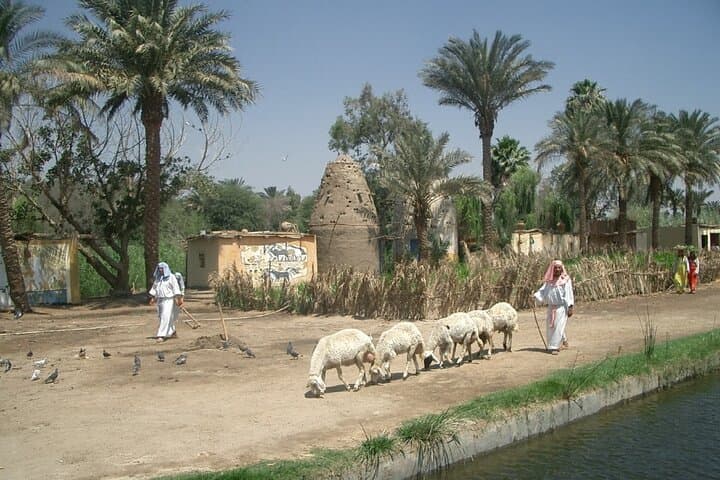
You step off an air-conditioned minivan into a pocket of living history where narrow canals cut through reed beds and motorized barges push you past scenes that feel rehearsed by time. The water dares you to slow down; craftsmen raise voices and hands in demonstrations that make the past feel functional rather than distant.
Verified experiences and guided adventures in the surrounding area.
Operated by Pyramids Land Private Tours · Cairo, Cairo
You step off an air-conditioned minivan into a pocket of living history where narrow canals cut through reed beds and motorized barges push you past scenes that feel rehearsed by time. The water dares you to slow down; craftsmen raise voices and hands in demonstrations that make the past feel functional rather than distant.
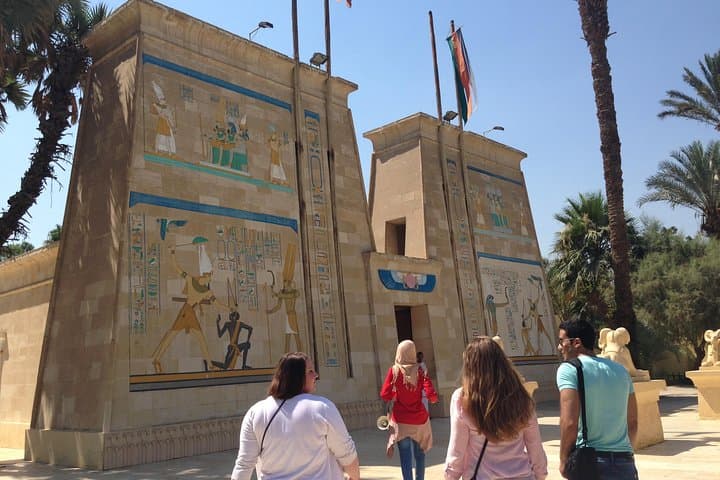
The Pharaonic Village recreates roughly 5,000 years of Egyptian daily life: papyrus being beaten and dried, bakeries pulling hot loaves, brewers stirring vats, and weavers at looms. Replicas range from a nobleman’s house to a modest mud-brick workshop and a scaled copy of Tutankhamun’s tomb with faithful reproductions of its treasures. The site is a curated blend of archaeology, theatrical set pieces, and hands-on demonstrations designed for families and educators.
Geologically, the Nile’s floodplain defined these livelihoods—mud for bricks, papyrus for boats and paper, and irrigation channels for fields. Culturally, the village interprets rituals and crafts rather than presenting original artifacts, so the emphasis is on technique and context rather than provenance.
Practically: tours run about four hours and typically include hotel pickup and drop-off, bottled water, a welcome drink, Wi‑Fi in the van, and an Egyptologist guide. Wear comfortable, closed-toe shoes for uneven walkways; bring sun protection and a small daypack for cameras and snacks. Summer heat can be intense—plan for early starts or late afternoons. Children are welcome and the experience is largely accessible, but confirm specific mobility needs in advance. The village is best experienced as an interactive, family-friendly primer on how the Nile shaped ancient daily life.
easy.
4 hours.
Suitable for all fitness levels; involves light walking and standing during demonstrations
Yes—this private tour is family-friendly with hands-on demonstrations and exhibits designed to engage kids; children must be accompanied by an adult.
Yes—hotel pickup and drop-off, transport by air-conditioned minivan, bottled water and a welcome drink are listed as inclusions; confirm any additional fees for special activities or photos on arrival.
The fixed duration is four hours and standard pickup is at 9:00 AM; check your booking confirmation for exact timing and pickup point.
Wear comfortable, closed-toe shoes and sun protection; bring a small amount of local currency for souvenirs and a camera for photos—some areas have uneven ground.
The Pharaonic Village is a living-history attraction that reconstructs aspects of ancient Egyptian daily life—crafts, agriculture and domestic scenes—designed to teach how the Nile’s floodplain shaped civilization.
Visitors are encouraged to respect replicas and demonstrations; minimal-impact practices like disposing of litter and avoiding touching fragile exhibits help preserve the interpretive site.
Pyramids Land Private Tours operates guided outdoor trips and adventures with an emphasis on safety, stewardship, and memorable experiences.
You step off an air-conditioned minivan into a pocket of living history where narrow canals cut through reed beds and motorized barges push you past scenes that feel rehearsed by time. The water dares you to slow down; craftsmen raise voices and hands in demonstrations that make the past feel functional rather than distant.
You step off an air-conditioned minivan into a pocket of living history where narrow canals cut through reed beds and motorized barges push you past scenes that feel rehearsed by time. The water dares you to slow down; craftsmen raise voices and hands in demonstrations that make the past feel functional rather than distant.
The Pharaonic Village recreates roughly 5,000 years of Egyptian daily life: papyrus being beaten and dried, bakeries pulling hot loaves, brewers stirring vats, and weavers at looms. Replicas range from a nobleman’s house to a modest mud-brick workshop and a scaled copy of Tutankhamun’s tomb with faithful reproductions of its treasures. The site is a curated blend of archaeology, theatrical set pieces, and hands-on demonstrations designed for families and educators.
Geologically, the Nile’s floodplain defined these livelihoods—mud for bricks, papyrus for boats and paper, and irrigation channels for fields. Culturally, the village interprets rituals and crafts rather than presenting original artifacts, so the emphasis is on technique and context rather than provenance.
Practically: tours run about four hours and typically include hotel pickup and drop-off, bottled water, a welcome drink, Wi‑Fi in the van, and an Egyptologist guide. Wear comfortable, closed-toe shoes for uneven walkways; bring sun protection and a small daypack for cameras and snacks. Summer heat can be intense—plan for early starts or late afternoons. Children are welcome and the experience is largely accessible, but confirm specific mobility needs in advance. The village is best experienced as an interactive, family-friendly primer on how the Nile shaped ancient daily life.