THE ADVENTURE COLLECTIVE® · Independent discovery and booking for outdoor travel

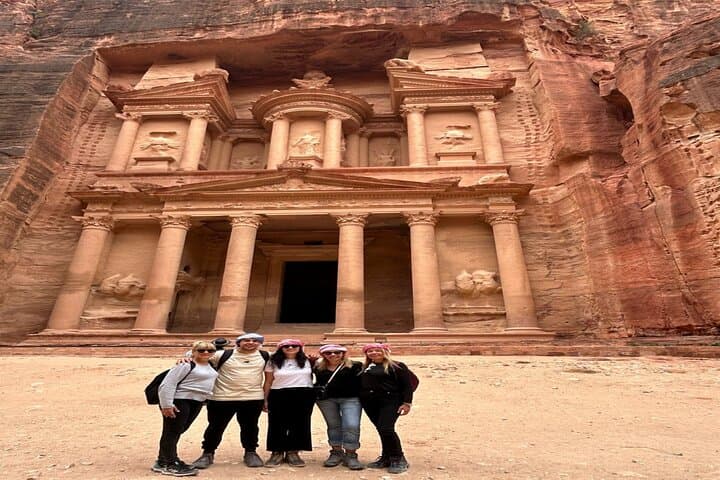
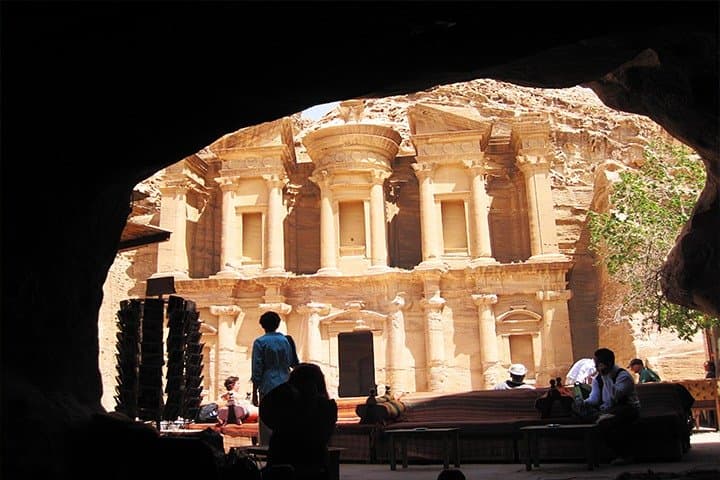
Leave Aqaba at dawn for a private day trip to Petra and Little Petra. Walk the 1.2 km Siq, stand before the Treasury, and, if you choose, climb to the Monastery—this itinerary packs UNESCO history and desert geology into a full, accessible day.
Leave Aqaba at dawn for a private day trip to Petra and Little Petra. Walk the 1.2 km Siq, stand before the Treasury, and, if you choose, climb to the Monastery—this itinerary packs UNESCO history and desert geology into a full, accessible day.
Morning light slices across a dusty highway as the vehicle leaves Aqaba and climbs toward the high desert. By the time the road drops into the Petra valley, the city’s red sandstone walls glow; the Siq’s narrow throat waits like a gate that insists you slow down and look.
Verified experiences and guided adventures in the surrounding area.
Operated by Zaid Tours and Travel · Wadi Musa, Ma'an Governorate
Morning light slices across a dusty highway as the vehicle leaves Aqaba and climbs toward the high desert. By the time the road drops into the Petra valley, the city’s red sandstone walls glow; the Siq’s narrow throat waits like a gate that insists you slow down and look.
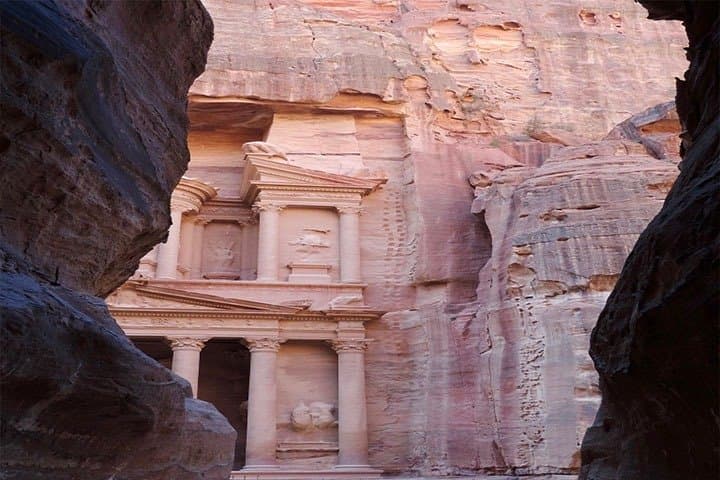
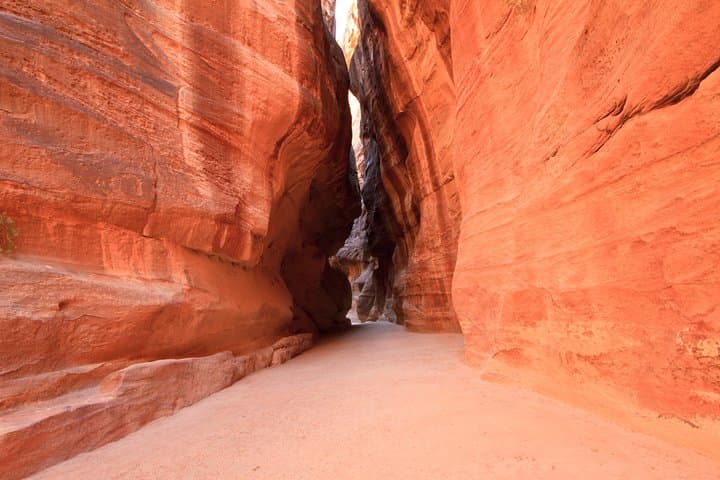
Petra sits at roughly 800–900 meters above sea level, carved by the Nabataeans more than 2,000 years ago at a crossroads of ancient trade routes. The guided route begins with a 1.2-kilometer walk through the Siq, the cleft canyon whose carved walls funnel you to the Treasury’s sudden reveal. Beyond the Treasury, Petra widens into a carved cityscape: the 3,000-seat Roman-era theater, the Royal Tombs stacked into cliffs, and the Byzantine church mosaics. Little Petra—a quieter, rock-cut annex—offers a taste of the everyday spaces that supported the main city.
Geology is visible on an intimate scale: cross-bedding, iron-rich streaks that stain the rock red, and softer layers that have eroded into steps and ledges. Culture here is layered too—the Nabataeans’ hydraulic engineering, later Roman additions, and modern Bedouin presence who still guide horses and offer water.
Practical guidance: expect a long day (about 8–10 hours including a roughly 125 km round trip from Aqaba). Wear sturdy walking shoes, carry at least 2–3 liters of water, and bring sun protection and small change for extras like a short horse ride before the Siq. If you plan the Monastery climb, prepare for roughly 800 steps and steeper terrain. Buy or confirm Jordan Pass coverage ahead of time and aim for an early start to avoid mid-day heat and peak crowds.
moderate.
8–10 hours (including travel).
Suitable for those who can walk several kilometers and manage steep stair climbs if attempting the Monastery; otherwise basic fitness is fine.
Entrance is included if you select the option that covers it; otherwise bring proof of a Jordan Pass or be prepared to pay entrance at the site.
Expect roughly 1.5–2 hours each way (about 125 km round trip), depending on traffic and stops en route.
Yes—if time and fitness allow; the climb is steep with around 800 steps and adds a strenuous hour or more round-trip.
The tour is provided in English by default; other languages (Spanish/French) are available on request subject to availability.
Petra was the capital of the Nabataean kingdom and became wealthy as a trade hub; its water-management and rock-carving techniques defined its longevity.
Petra’s sandstone is porous and erodes easily—stay on marked paths, avoid touching reliefs, and limit single-use plastics to reduce impact on this fragile World Heritage site.
Zaid Tours and Travel operates guided outdoor trips and adventures with an emphasis on safety, stewardship, and memorable experiences.
Morning light slices across a dusty highway as the vehicle leaves Aqaba and climbs toward the high desert. By the time the road drops into the Petra valley, the city’s red sandstone walls glow; the Siq’s narrow throat waits like a gate that insists you slow down and look.
Morning light slices across a dusty highway as the vehicle leaves Aqaba and climbs toward the high desert. By the time the road drops into the Petra valley, the city’s red sandstone walls glow; the Siq’s narrow throat waits like a gate that insists you slow down and look.
Petra sits at roughly 800–900 meters above sea level, carved by the Nabataeans more than 2,000 years ago at a crossroads of ancient trade routes. The guided route begins with a 1.2-kilometer walk through the Siq, the cleft canyon whose carved walls funnel you to the Treasury’s sudden reveal. Beyond the Treasury, Petra widens into a carved cityscape: the 3,000-seat Roman-era theater, the Royal Tombs stacked into cliffs, and the Byzantine church mosaics. Little Petra—a quieter, rock-cut annex—offers a taste of the everyday spaces that supported the main city.
Geology is visible on an intimate scale: cross-bedding, iron-rich streaks that stain the rock red, and softer layers that have eroded into steps and ledges. Culture here is layered too—the Nabataeans’ hydraulic engineering, later Roman additions, and modern Bedouin presence who still guide horses and offer water.
Practical guidance: expect a long day (about 8–10 hours including a roughly 125 km round trip from Aqaba). Wear sturdy walking shoes, carry at least 2–3 liters of water, and bring sun protection and small change for extras like a short horse ride before the Siq. If you plan the Monastery climb, prepare for roughly 800 steps and steeper terrain. Buy or confirm Jordan Pass coverage ahead of time and aim for an early start to avoid mid-day heat and peak crowds.