THE ADVENTURE COLLECTIVE® · Independent discovery and booking for outdoor travel

In 90 minutes you can ride Kotor Bay, step onto a man-made island crowned with a tiny church, and walk the Venetian 17th-century streets of Perast. This private boat tour packs local history, clear water, and photo-ready views into a short, easy outing.
In 90 minutes you can ride Kotor Bay, step onto a man-made island crowned with a tiny church, and walk the Venetian 17th-century streets of Perast. This private boat tour packs local history, clear water, and photo-ready views into a short, easy outing.
The boat slips away from Kotor’s stone quay and the bay exhales; buildings of the old city recede as you slide into a glassy corridor of water. Salty wind tugs at your hair, gulls wheel, and the skipper eases into a steady route that contours the bay’s steep limestone arms. Twenty minutes later a tiny man-made island rises — its white church and low stone walls bright against deep blue — a human interruption in a sea that seems intent on reclaiming everything.
Verified experiences and guided adventures in the surrounding area.
Operated by Tide and Wave · Perast, Kotor Municipality
The boat slips away from Kotor’s stone quay and the bay exhales; buildings of the old city recede as you slide into a glassy corridor of water. Salty wind tugs at your hair, gulls wheel, and the skipper eases into a steady route that contours the bay’s steep limestone arms. Twenty minutes later a tiny man-made island rises — its white church and low stone walls bright against deep blue — a human interruption in a sea that seems intent on reclaiming everything.
Our Lady of the Rocks (Gospa od Škrpjela) began as a votive project: generations of Perast sailors sinking stones and offering icons until rock became island. The church holds votive paintings and silver ex-votos, artifacts from a seafaring culture that thrived under Venetian rule in the 17th and 18th centuries. Nearby Perast itself is a compact slice of that era — narrow, cobbled streets, carved stone facades, and Baroque palaces leaning toward the water as if listening for ships.
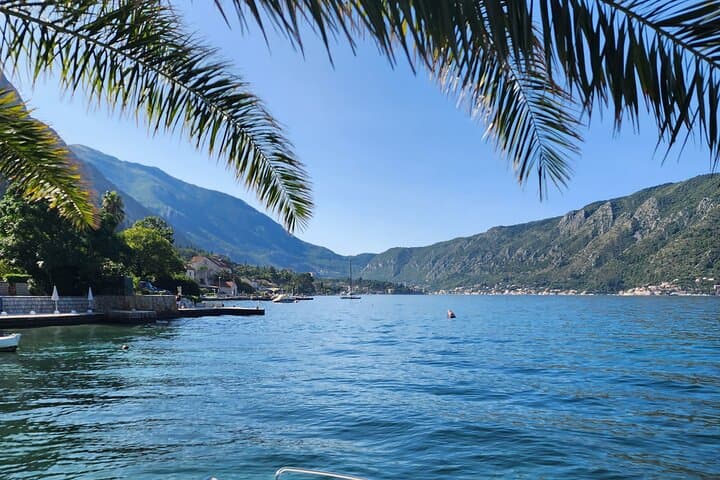
Geology shapes the trip as much as history. The Bay of Kotor is a submerged river canyon whose fjord-like inlets and sheer cliffs focus light and wind; water here moves with intent, and the bay’s calm inlets contrast with sudden, narrow channels where current picks up. On clear days you’ll see the Dinaric Alps stepping down to the shoreline, karst ridges scarred with caves and terraces where olives still cling.
Culturally this is maritime Montenegro: a place where church bells, boat horns and small-town gossip mark time. The tour emphasizes that human and natural history are inseparable — the island itself is a communal memory built stone-by-stone.
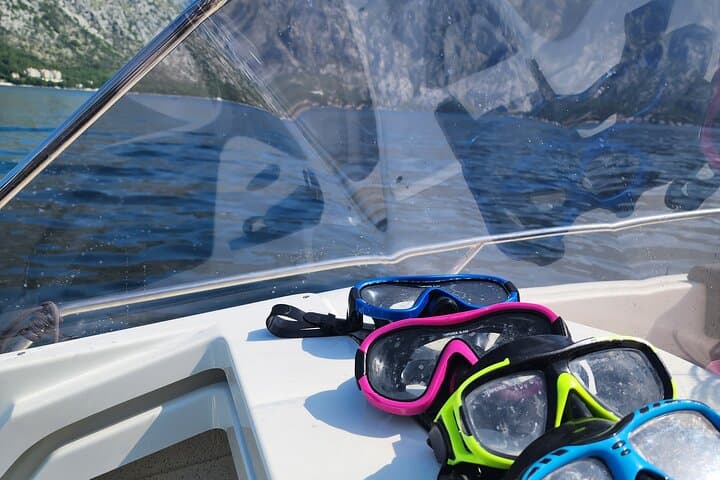
Practical details: the trip runs 90 minutes total — roughly 20 minutes at Our Lady of the Rocks and 30 minutes ashore in Perast, with two short scenic stretches by boat. Entrance to the island is free; the church and small museum charge about €3 each and the island toilet ~€1.50, so bring cash. The operator supplies bottled water and snorkeling masks if you want to take a quick dip off the boat. Meet at Kotor’s seaside park at least 15 minutes early — parking and narrow streets make punctuality wise.
Packing and timing matter: light layers and non-slip shoes for wet decks, sun protection, and a small amount of cash. If you’re prone to motion sickness, sit mid-boat and keep your eyes on the horizon. Early morning or late afternoon gives the best light for photos and the smallest crowds on the island.
This is a short trip but a concentrated one: history, geology and seaside living compressed into an hour and a half of wind, stone and water — a fast, intimate way to read the Bay of Kotor at a sailor’s pace.
easy.
1.5 hours (90 minutes).
Suitable for most fitness levels; requires short walks on uneven stone streets and boarding a small boat
Meet at Kotor’s city park by the sea where the boats are moored; look for the Tide and Wave sign or ask for Aleksa and be there 15 minutes early.
Yes — the skipper provides snorkeling masks and you can swim off the boat during the tour when conditions allow; bring swimwear and a towel.
The island and Perast have stairs and uneven stone paths; while infants in strollers are allowed, full wheelchair access is limited.
Exploring the island is free but the church and museum charge about €3 each; the tour provides bottled water and snorkeling gear but not museum tickets.
If you’re prone to motion sickness, sit mid-boat, face forward, take preventative medication before departure, and keep hydrated.
Pickups are possible only near the sea; you’ll need to come down to the shoreline or meet at the designated quay listed in your booking.
Perast flourished as a maritime town under Venetian influence; Our Lady of the Rocks was created by mariners tossing stones after successful voyages.
Boaters are encouraged to avoid anchoring on sensitive seabed and carry out waste; supporting local museums and cafes helps fund preservation of Perast’s historic fabric.
Tide and Wave operates guided outdoor trips and adventures with an emphasis on safety, stewardship, and memorable experiences.
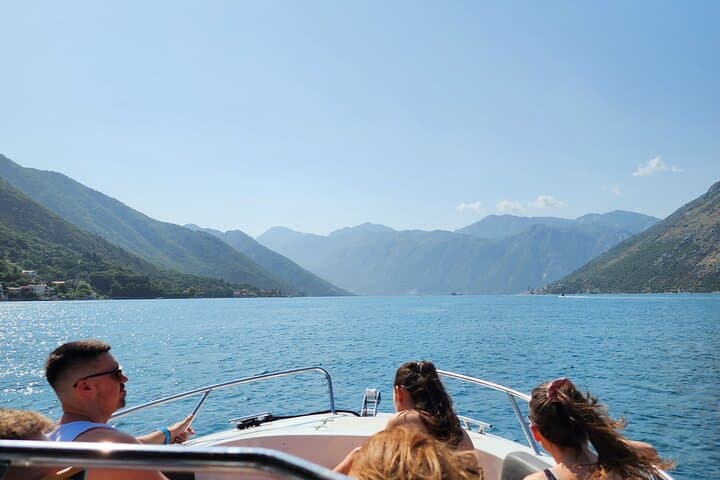
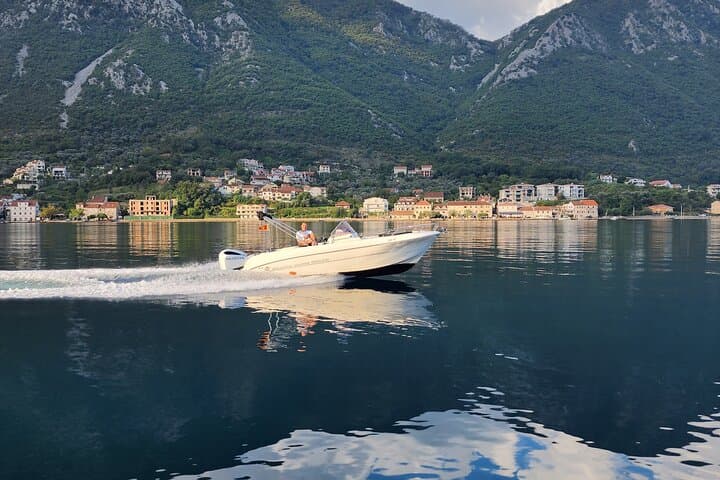
The boat slips away from Kotor’s stone quay and the bay exhales; buildings of the old city recede as you slide into a glassy corridor of water. Salty wind tugs at your hair, gulls wheel, and the skipper eases into a steady route that contours the bay’s steep limestone arms. Twenty minutes later a tiny man-made island rises — its white church and low stone walls bright against deep blue — a human interruption in a sea that seems intent on reclaiming everything.
The boat slips away from Kotor’s stone quay and the bay exhales; buildings of the old city recede as you slide into a glassy corridor of water. Salty wind tugs at your hair, gulls wheel, and the skipper eases into a steady route that contours the bay’s steep limestone arms. Twenty minutes later a tiny man-made island rises — its white church and low stone walls bright against deep blue — a human interruption in a sea that seems intent on reclaiming everything.
Our Lady of the Rocks (Gospa od Škrpjela) began as a votive project: generations of Perast sailors sinking stones and offering icons until rock became island. The church holds votive paintings and silver ex-votos, artifacts from a seafaring culture that thrived under Venetian rule in the 17th and 18th centuries. Nearby Perast itself is a compact slice of that era — narrow, cobbled streets, carved stone facades, and Baroque palaces leaning toward the water as if listening for ships.
Geology shapes the trip as much as history. The Bay of Kotor is a submerged river canyon whose fjord-like inlets and sheer cliffs focus light and wind; water here moves with intent, and the bay’s calm inlets contrast with sudden, narrow channels where current picks up. On clear days you’ll see the Dinaric Alps stepping down to the shoreline, karst ridges scarred with caves and terraces where olives still cling.
Culturally this is maritime Montenegro: a place where church bells, boat horns and small-town gossip mark time. The tour emphasizes that human and natural history are inseparable — the island itself is a communal memory built stone-by-stone.
Practical details: the trip runs 90 minutes total — roughly 20 minutes at Our Lady of the Rocks and 30 minutes ashore in Perast, with two short scenic stretches by boat. Entrance to the island is free; the church and small museum charge about €3 each and the island toilet ~€1.50, so bring cash. The operator supplies bottled water and snorkeling masks if you want to take a quick dip off the boat. Meet at Kotor’s seaside park at least 15 minutes early — parking and narrow streets make punctuality wise.
Packing and timing matter: light layers and non-slip shoes for wet decks, sun protection, and a small amount of cash. If you’re prone to motion sickness, sit mid-boat and keep your eyes on the horizon. Early morning or late afternoon gives the best light for photos and the smallest crowds on the island.
This is a short trip but a concentrated one: history, geology and seaside living compressed into an hour and a half of wind, stone and water — a fast, intimate way to read the Bay of Kotor at a sailor’s pace.