THE ADVENTURE COLLECTIVE® · Independent discovery and booking for outdoor travel

Spend four focused hours in Kathmandu’s spiritual core: witness Hindu rites at Pashupatinath and Buddhist devotion around Boudhanath Stupa. This private tour pairs close-up cultural encounters with practical logistics—hotel pickup, admissions and a local guide.
Spend four focused hours in Kathmandu’s spiritual core: witness Hindu rites at Pashupatinath and Buddhist devotion around Boudhanath Stupa. This private tour pairs close-up cultural encounters with practical logistics—hotel pickup, admissions and a local guide.
You step from a narrow Kathmandu street into a courtyard of smoke, prayer flags and low bells. The Bagmati River threads past Pashupatinath’s cremation ghats while saffron-clad priests move through the courtyards; a short drive east brings you to Boudhanath, where a white dome and painted eyes watch pilgrims rotate prayer wheels and offer butter lamps.
Verified experiences and guided adventures in the surrounding area.
Operated by Liberty Holidays · Kathmandu, Bagmati Province
You step from a narrow Kathmandu street into a courtyard of smoke, prayer flags and low bells. The Bagmati River threads past Pashupatinath’s cremation ghats while saffron-clad priests move through the courtyards; a short drive east brings you to Boudhanath, where a white dome and painted eyes watch pilgrims rotate prayer wheels and offer butter lamps.
Both sites are UNESCO World Heritage Sites listed in 1979 and reflect Kathmandu Valley’s layered past — Licchavi-era foundations, later Newar and Tibetan influences, and recent restoration after the 2015 quake. Geologically the valley sits in an intermontane basin about 1,350–1,450 m above sea level; narrow alleys, cobbled courtyards and low temple platforms define walking terrain rather than long climbs.
Culturally the contrasts are immediate: at Pashupatinath, Hindu rituals and riverside cremations are public and solemn; at Boudhanath, Tibetan Buddhist circumambulation and rooftop vistas invite quieter observation. Both demand respectful behavior — modest dress, quiet voices, and attention to signage about photography.
Practical guidance: the private tour runs about four hours with hotel pickup and drop-off, and includes monument entrance and an English-speaking guide. Expect light walking (roughly 0.5–1 km of on-foot exploring per site), steps and uneven ground; comfortable shoes and a water bottle make the visit easier. Aim for an early or late start to avoid mid-day heat and heavy traffic. Carry small cash for offerings, and leave time afterward for a rooftop tea at Boudha or a quick market detour — both are easy additions to a short, immersive half-day in Kathmandu’s spiritual core.
easy.
4 hours.
Suitable for most fitness levels; involves short walks on uneven ground and negotiating steps
The tour includes hotel pickup/drop-off inside Kathmandu, transportation in a private deluxe vehicle, monument entrance fees, and an English-speaking guide.
Yes—photography is generally permitted around the exteriors but is restricted inside inner sanctums and at some cremation areas; follow guide instructions and posted signs.
The tour is marked easy but involves steps and uneven surfaces; infants must sit on laps and the operator lists minimum age 13 for participants—check accessibility needs with the provider.
Start times are typically 10:30am or 1:30pm; cancel at least 24 hours in advance for a full refund per the standard policy.
Pashupatinath and Boudhanath both date back to Licchavi times; their current forms reflect centuries of Newar and Tibetan patronage and restoration after the 2015 earthquake.
The Bagmati River and temple complexes face urban pollution and crowds; minimize single-use plastics, avoid disturbing ritual spaces, and follow local guidance to help preserve these sites.
Liberty Holidays operates guided outdoor trips and adventures with an emphasis on safety, stewardship, and memorable experiences.
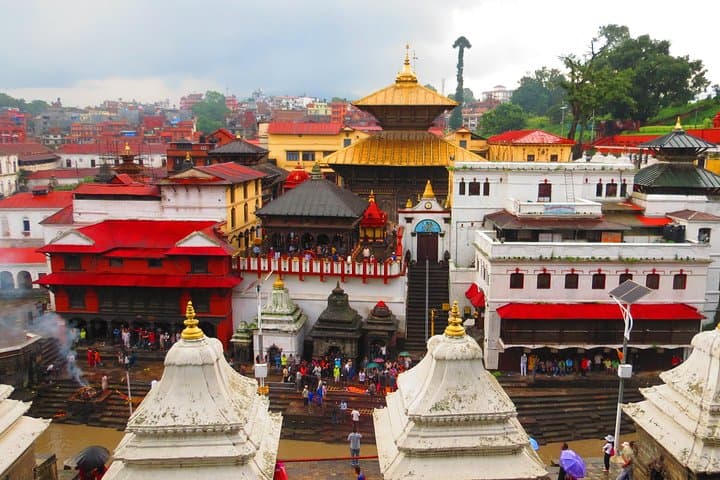
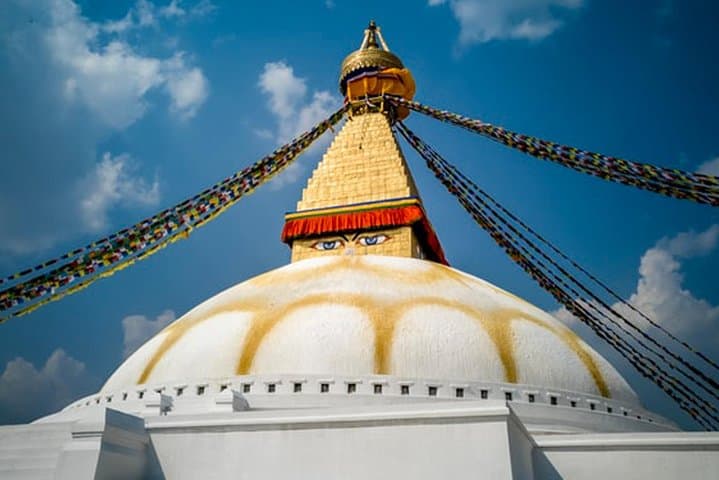
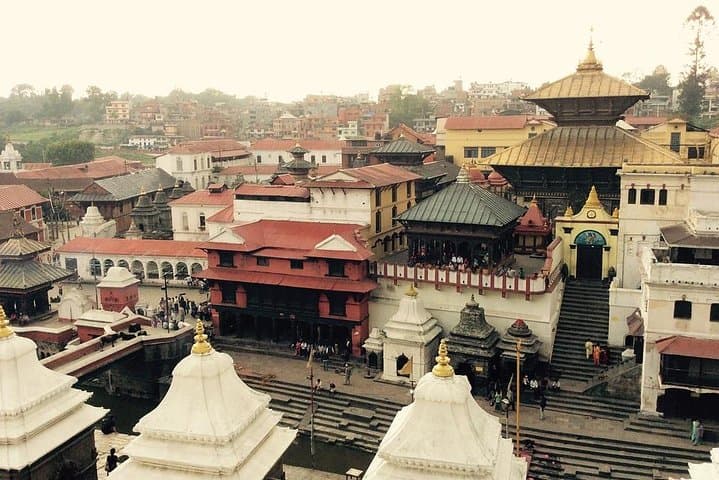
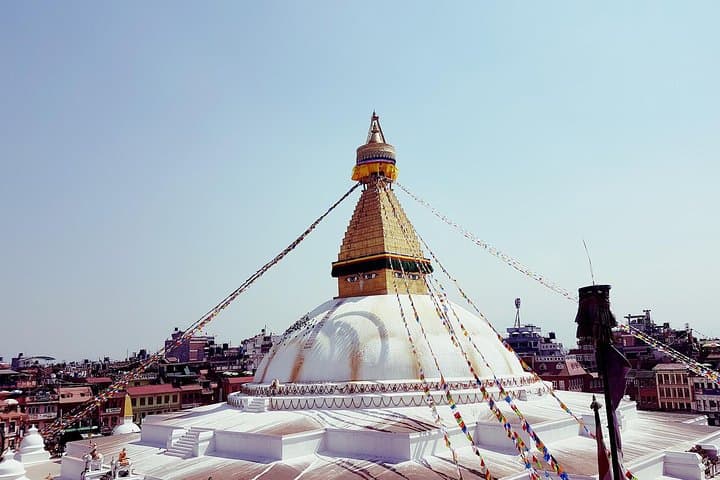
You step from a narrow Kathmandu street into a courtyard of smoke, prayer flags and low bells. The Bagmati River threads past Pashupatinath’s cremation ghats while saffron-clad priests move through the courtyards; a short drive east brings you to Boudhanath, where a white dome and painted eyes watch pilgrims rotate prayer wheels and offer butter lamps.
You step from a narrow Kathmandu street into a courtyard of smoke, prayer flags and low bells. The Bagmati River threads past Pashupatinath’s cremation ghats while saffron-clad priests move through the courtyards; a short drive east brings you to Boudhanath, where a white dome and painted eyes watch pilgrims rotate prayer wheels and offer butter lamps.
Both sites are UNESCO World Heritage Sites listed in 1979 and reflect Kathmandu Valley’s layered past — Licchavi-era foundations, later Newar and Tibetan influences, and recent restoration after the 2015 quake. Geologically the valley sits in an intermontane basin about 1,350–1,450 m above sea level; narrow alleys, cobbled courtyards and low temple platforms define walking terrain rather than long climbs.
Culturally the contrasts are immediate: at Pashupatinath, Hindu rituals and riverside cremations are public and solemn; at Boudhanath, Tibetan Buddhist circumambulation and rooftop vistas invite quieter observation. Both demand respectful behavior — modest dress, quiet voices, and attention to signage about photography.
Practical guidance: the private tour runs about four hours with hotel pickup and drop-off, and includes monument entrance and an English-speaking guide. Expect light walking (roughly 0.5–1 km of on-foot exploring per site), steps and uneven ground; comfortable shoes and a water bottle make the visit easier. Aim for an early or late start to avoid mid-day heat and heavy traffic. Carry small cash for offerings, and leave time afterward for a rooftop tea at Boudha or a quick market detour — both are easy additions to a short, immersive half-day in Kathmandu’s spiritual core.