THE ADVENTURE COLLECTIVE® · Independent discovery and booking for outdoor travel

Visit Pamukkale’s otherworldly white terraces and the ancient spa city of Hierapolis on a private day trip from Kuşadası. Expect thermal pools, a Roman theater and the chance to swim among submerged ruins at Cleopatra Pool.
Visit Pamukkale’s otherworldly white terraces and the ancient spa city of Hierapolis on a private day trip from Kuşadası. Expect thermal pools, a Roman theater and the chance to swim among submerged ruins at Cleopatra Pool.
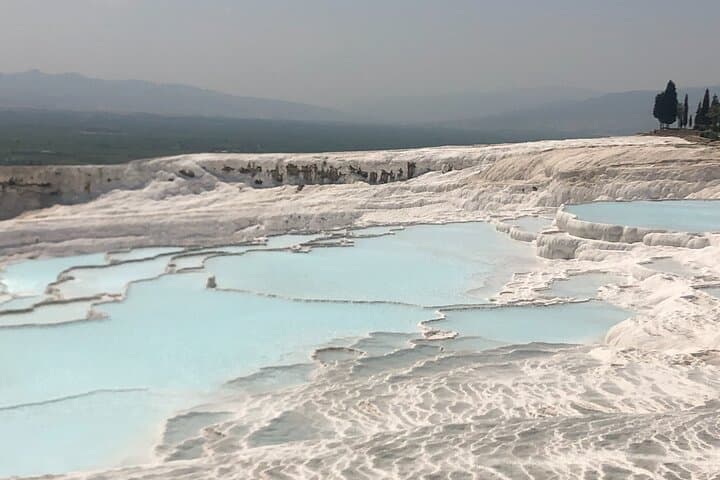
You step onto a shelf of bone-white travertine, the thermal water cooling where it spills in thin, glassy sheets; the terraces seem to hold memory in their compacted calcium, daring you to trace a finger along a rim shaped over millennia.
Verified experiences and guided adventures in the surrounding area.
Operated by Guide of Ephesus · Pamukkale, Denizli Province
You step onto a shelf of bone-white travertine, the thermal water cooling where it spills in thin, glassy sheets; the terraces seem to hold memory in their compacted calcium, daring you to trace a finger along a rim shaped over millennia.
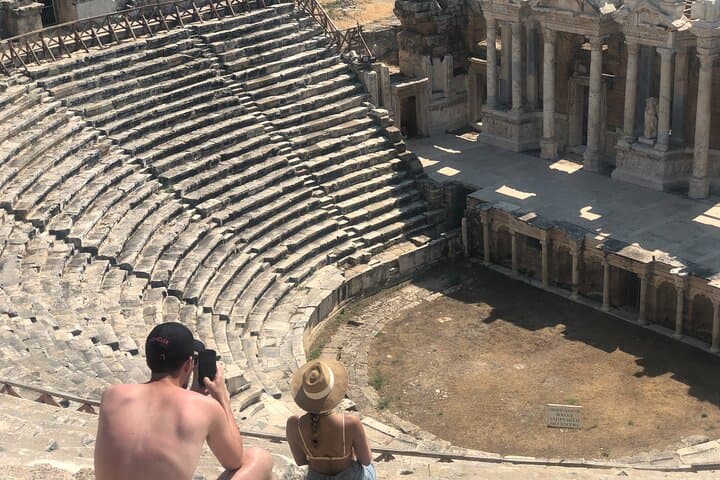
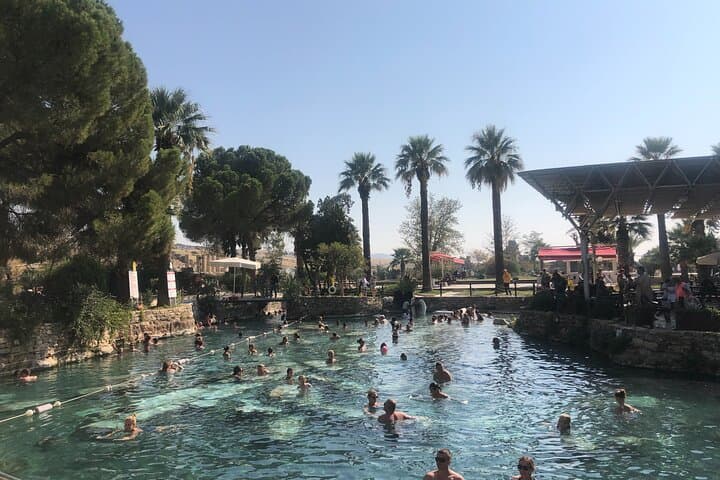
Pamukkale and its neighbor Hierapolis pair natural spectacle with classical ruins: the travertine terraces are the result of mineral-rich hot springs depositing calcium carbonate, while Hierapolis was founded as a Greco-Roman spa town in the 2nd century BCE. The Roman theater, necropolis and the Cleopatra Pool — where submerged columns lie beneath warm water — map centuries of human use of these springs.
Local life in Denizli Province mixes agriculture with small-scale thermal tourism; villages like Karahayıt nearby host iron-rich red springs and quieter bathing pools. Geologically, the terraces are living features — water flow and management determine where new crust forms and where it erodes — so visitor behavior shapes the landscape.
Practically: the private tour from Kuşadası runs about 9–10 hours door-to-door and is roughly a three‑hour drive each way, so expect early pickup. Wear light, sturdy sandals you can remove: terraces require bare feet or socks to protect the travertine. Bring swimwear and cash for the Cleopatra Pool fee, sun protection, and plenty of water; springs are thermal, not scalding, but midday heat on exposed white rock is intense. Guides can arrange skip-the-line tickets and time visits to avoid cruise-ship crowds. Mobility can be limited in archaeological zones; plan extra time for photography and a relaxed pace to savor both the white terraces and the layered history above them.
moderate.
9–10 hours.
Moderate fitness for walking on uneven surfaces and climbing short stair sections; not strenuous but requires stamina for a long day.
Expect roughly three hours each way by road depending on traffic; private tours include hotel or port pickup and return.
Yes — swimming in the Cleopatra Pool requires a small fee; other pools on the terraces are not for bathing to protect the formations.
Yes, Pamukkale and Hierapolis are open year-round, though hours and conditions vary seasonally; some areas may be wet or restricted for conservation.
Yes—this private option coordinates return times to meet ship schedules, but allow flexibility for traffic and docking delays.
Hierapolis was established as a Roman-era spa town in the 2nd century BCE; the site grew around therapeutic thermal springs and later Roman public works.
The travertine terraces are fragile; staying on designated paths, following barefoot rules and avoiding soap or lotions in thermal water helps preserve deposition patterns.
Guide of Ephesus operates guided outdoor trips and adventures with an emphasis on safety, stewardship, and memorable experiences.
You step onto a shelf of bone-white travertine, the thermal water cooling where it spills in thin, glassy sheets; the terraces seem to hold memory in their compacted calcium, daring you to trace a finger along a rim shaped over millennia.
You step onto a shelf of bone-white travertine, the thermal water cooling where it spills in thin, glassy sheets; the terraces seem to hold memory in their compacted calcium, daring you to trace a finger along a rim shaped over millennia.
Pamukkale and its neighbor Hierapolis pair natural spectacle with classical ruins: the travertine terraces are the result of mineral-rich hot springs depositing calcium carbonate, while Hierapolis was founded as a Greco-Roman spa town in the 2nd century BCE. The Roman theater, necropolis and the Cleopatra Pool — where submerged columns lie beneath warm water — map centuries of human use of these springs.
Local life in Denizli Province mixes agriculture with small-scale thermal tourism; villages like Karahayıt nearby host iron-rich red springs and quieter bathing pools. Geologically, the terraces are living features — water flow and management determine where new crust forms and where it erodes — so visitor behavior shapes the landscape.
Practically: the private tour from Kuşadası runs about 9–10 hours door-to-door and is roughly a three‑hour drive each way, so expect early pickup. Wear light, sturdy sandals you can remove: terraces require bare feet or socks to protect the travertine. Bring swimwear and cash for the Cleopatra Pool fee, sun protection, and plenty of water; springs are thermal, not scalding, but midday heat on exposed white rock is intense. Guides can arrange skip-the-line tickets and time visits to avoid cruise-ship crowds. Mobility can be limited in archaeological zones; plan extra time for photography and a relaxed pace to savor both the white terraces and the layered history above them.