THE ADVENTURE COLLECTIVE® · Independent discovery and booking for outdoor travel

Walk barefoot across glowing white travertine, swim amid submerged Roman columns and roam Hierapolis’s ancient streets on a private full-day trip from Side. This guide covers what to expect, when to go, and how to prepare for a long but rewarding day in Pamukkale and nearby ruins.
Walk barefoot across glowing white travertine, swim amid submerged Roman columns and roam Hierapolis’s ancient streets on a private full-day trip from Side. This guide covers what to expect, when to go, and how to prepare for a long but rewarding day in Pamukkale and nearby ruins.
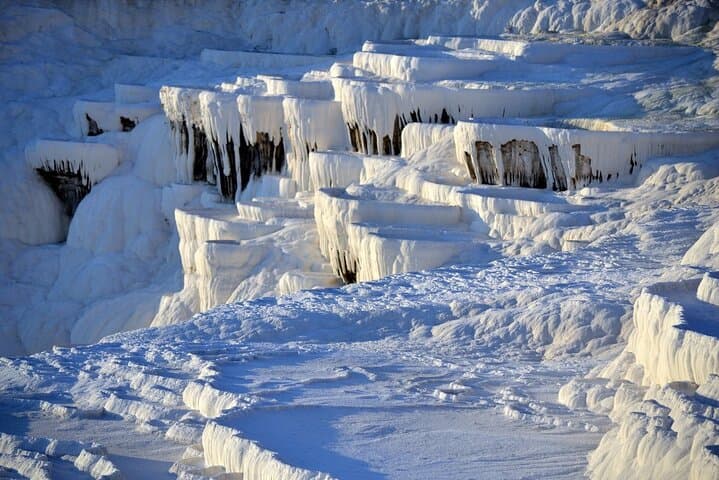
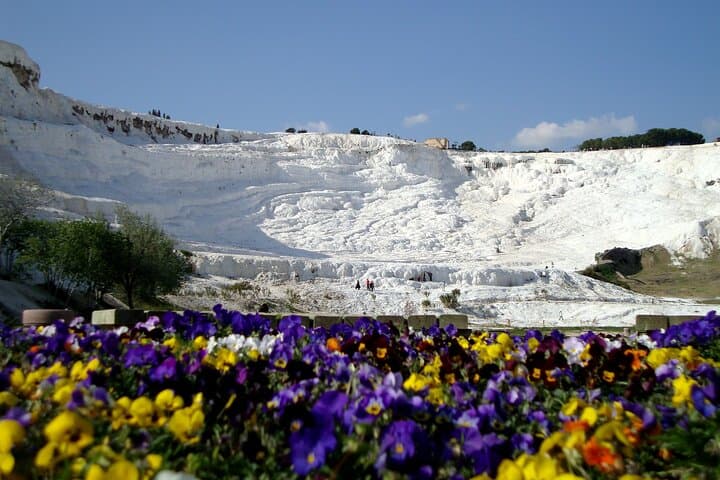
You step off the air-conditioned minivan into a white world that feels like another climate: warm calcite underfoot, steam rising in thin veils from bubbling pools, and the limestone slopes of Pamukkale glinting like a place the sun keeps to itself.
Verified experiences and guided adventures in the surrounding area.
Operated by Köprülü Turistik Işl.Eml.Inş.Tarım taş.Pet.Turz ve Tic Ltd.Şti. · Pamukkale, Denizli Province
You step off the air-conditioned minivan into a white world that feels like another climate: warm calcite underfoot, steam rising in thin veils from bubbling pools, and the limestone slopes of Pamukkale glinting like a place the sun keeps to itself.
This landscape began as mineral-rich waters deposited over millennia—travertine terraces that hosted Roman spas and the once-thriving city of Hierapolis. Hierapolis’s colonnaded streets, necropolis and theatre map a patchwork of Phrygian, Hellenistic and Roman eras; Laodikeia nearby speaks to the region’s role on ancient trade and pilgrimage routes. The Lykos river still threads the valley, daring reedbeds and raptors to claim its margins.
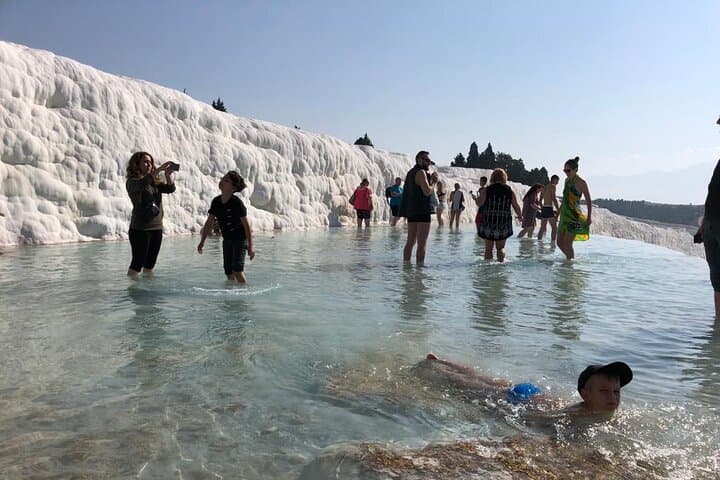
Expect a mix of soft, barefoot walking across designated travertine slopes, steeper cobbled paths through ruins, and the curated calm of Cleopatra’s antique pool where columns lie like fallen sentries. Culture and geology meet at every turn: the white terraces are living geology, and the ruins are history still readable in stone.
Practical guide: plan for a long day—most private transfers from Side/Antalya make this a 12–14 hour excursion. Bring sturdy sandals or shoes that are easy to remove, sun protection, and a small towel if you intend to bathe. Temperatures climb in summer; mornings and late afternoons offer softer light for photography and cooler walking. Follow signs and staff directions to protect fragile travertine and respect restricted zones—many areas require bare feet to avoid damage. A private guide can tailor the pace, add Laodikeia or Karahayit, and help you read the layers of history between a steaming pool and an ancient street.
easy.
12–14 hours.
Light to moderate fitness — able to walk uneven terrain and stand for periods
Yes — in many parts of Pamukkale visitors remove shoes to protect the travertine; bring footwear that’s quick to take off.
Designated bathing areas such as the antique pool allow swimming, sometimes for an additional fee and subject to site rules.
Some flat areas and museum sections are accessible, but terraces and many ruins involve steps and uneven surfaces; check specifics with your operator.
A private transfer from Side/Antalya typically makes it a full-day outing—expect 3–4 hours each way depending on traffic and stops.
Hierapolis was refounded in the Hellenistic period and flourished under Rome as a spa city; layers of travertine cover earlier settlements.
The travertine is fragile—visitors must stick to boardwalks and bare-foot zones to prevent erosion; local management limits access to protect deposits.
Köprülü Turistik Işl.Eml.Inş.Tarım taş.Pet.Turz ve Tic Ltd.Şti. operates guided outdoor trips and adventures with an emphasis on safety, stewardship, and memorable experiences.
You step off the air-conditioned minivan into a white world that feels like another climate: warm calcite underfoot, steam rising in thin veils from bubbling pools, and the limestone slopes of Pamukkale glinting like a place the sun keeps to itself.
You step off the air-conditioned minivan into a white world that feels like another climate: warm calcite underfoot, steam rising in thin veils from bubbling pools, and the limestone slopes of Pamukkale glinting like a place the sun keeps to itself.
This landscape began as mineral-rich waters deposited over millennia—travertine terraces that hosted Roman spas and the once-thriving city of Hierapolis. Hierapolis’s colonnaded streets, necropolis and theatre map a patchwork of Phrygian, Hellenistic and Roman eras; Laodikeia nearby speaks to the region’s role on ancient trade and pilgrimage routes. The Lykos river still threads the valley, daring reedbeds and raptors to claim its margins.
Expect a mix of soft, barefoot walking across designated travertine slopes, steeper cobbled paths through ruins, and the curated calm of Cleopatra’s antique pool where columns lie like fallen sentries. Culture and geology meet at every turn: the white terraces are living geology, and the ruins are history still readable in stone.
Practical guide: plan for a long day—most private transfers from Side/Antalya make this a 12–14 hour excursion. Bring sturdy sandals or shoes that are easy to remove, sun protection, and a small towel if you intend to bathe. Temperatures climb in summer; mornings and late afternoons offer softer light for photography and cooler walking. Follow signs and staff directions to protect fragile travertine and respect restricted zones—many areas require bare feet to avoid damage. A private guide can tailor the pace, add Laodikeia or Karahayit, and help you read the layers of history between a steaming pool and an ancient street.