THE ADVENTURE COLLECTIVE® · Independent discovery and booking for outdoor travel

Cover two of western Turkey’s highlight attractions in a single private itinerary: walk the monumental streets of Ephesus on day one and stand on Pamukkale’s white travertines on day two. This two-day private tour mixes archaeology, thermal geology and village culture with guided logistics to make the most of limited time.
Cover two of western Turkey’s highlight attractions in a single private itinerary: walk the monumental streets of Ephesus on day one and stand on Pamukkale’s white travertines on day two. This two-day private tour mixes archaeology, thermal geology and village culture with guided logistics to make the most of limited time.
Morning dust rises off sun-warmed marble as the guide opens a gate into the colonnaded avenue of Ephesus. Walkers move between broad Roman streets and the shadow of the Library of Celsus; voices drop to take in carved facades and a theater that once held 25,000 people.
Verified experiences and guided adventures in the surrounding area.
Operated by Moira Travel Agency · Selçuk, İzmir Province
Morning dust rises off sun-warmed marble as the guide opens a gate into the colonnaded avenue of Ephesus. Walkers move between broad Roman streets and the shadow of the Library of Celsus; voices drop to take in carved facades and a theater that once held 25,000 people.
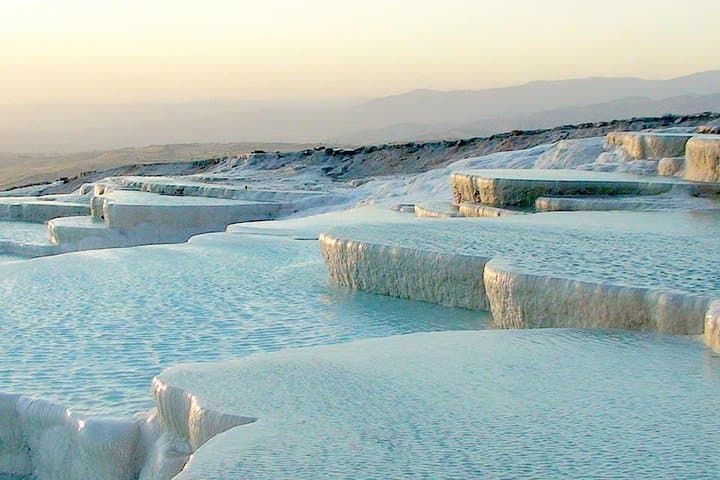
The itinerary pivots between human stories and geological spectacle. On day one the group moves through Ephesus—first-century urban planning, the footprint of the Temple of Artemis nearby and the quietly venerated House of the Virgin Mary above the valley. Day two travels inland to Pamukkale and Hierapolis where calcium-rich thermal springs deposited travertine terraces that hardened into bright white steps and shallow pools; here geology turns water into architecture over millennia.
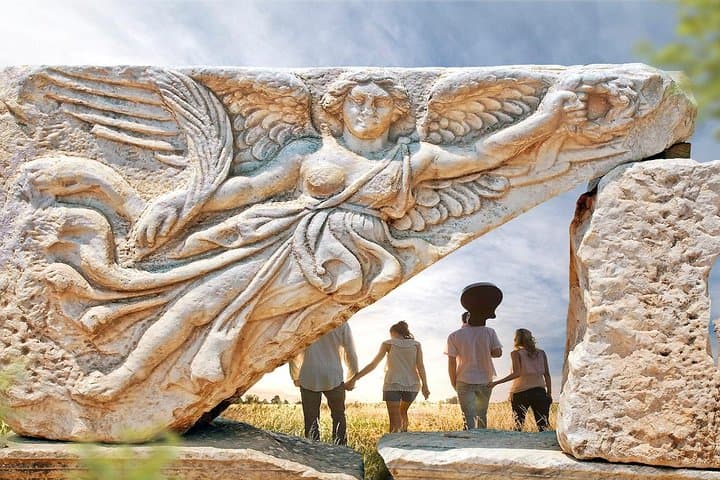
Culturally the route threads Roman, Byzantine and Ottoman layers: steles, basilicas and village life in Şirince, where fruit wines and tiled streets offer a slower counterpoint to the ruins. Geologically, the travertines are living formations—active, fragile and managed to balance tourism with preservation.
Practicalities matter: expect long drives (Selçuk to Pamukkale ≈ 190 km/2.5–3 hours), a lot of walking on uneven stone, and strong sun in summer. Bring supportive shoes, sun protection, and a refillable bottle. Guides cover logistics and skip-the-line access at several sites, but entry fees to Ephesus and Hierapolis are typically paid on arrival. Plan two full days: sunrise or late afternoon at Pamukkale avoids the hottest hours and gives better light for photos. This private tour compresses iconic Aegean antiquity and thermal landscape into an efficient, on-the-ground experience.
moderate.
2 days (full days of touring; ~8–10 hours each day including transport).
Suitable for travelers who can walk 3–5 miles across uneven terrain, climb steps and stand for extended periods.
No; admission to Ephesus and Hierapolis/Pamukkale is typically paid on arrival—your private guide will advise on current prices and where to purchase tickets.
Some sites provide partial wheelchair access but many ancient areas have uneven ground and steps; the operator notes wheelchair accessibility but contact them with specific needs to confirm arrangements.
Driving distance is roughly 190 km and takes about 2.5–3 hours each way depending on traffic and stops en route.
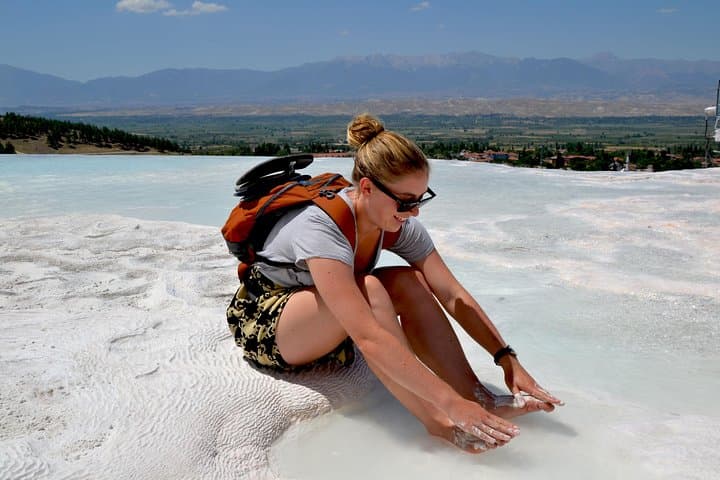
Swimming in the restored Antique Pool (Cleopatra’s Pool) is allowed for a separate fee at the on-site facility; swimming on the terraces themselves is prohibited to protect the travertine.
Ephesus was a major Ionian port and Roman metropolis famous for its Library of Celsus and the Temple of Artemis; Pamukkale/Hierapolis developed as a thermal spa town since Hellenistic times and became a Roman healing center.
Both sites are UNESCO-listed and managed to limit damage: follow marked paths, avoid walking on sensitive travertine areas and respect signs that restrict footwear and access.
Moira Travel Agency operates guided outdoor trips and adventures with an emphasis on safety, stewardship, and memorable experiences.
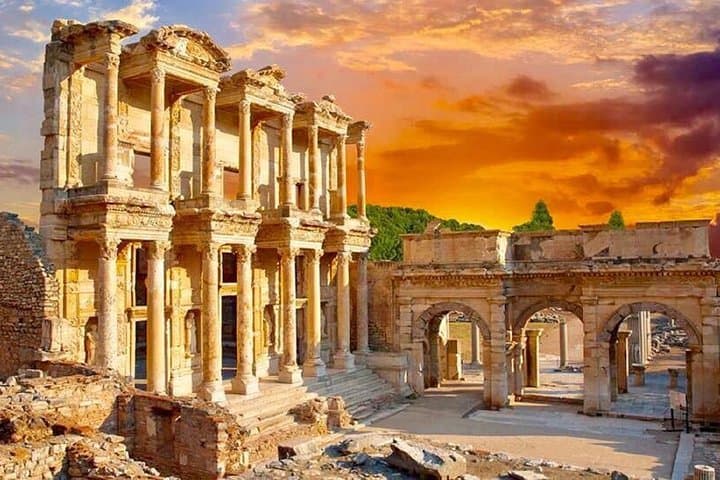
Morning dust rises off sun-warmed marble as the guide opens a gate into the colonnaded avenue of Ephesus. Walkers move between broad Roman streets and the shadow of the Library of Celsus; voices drop to take in carved facades and a theater that once held 25,000 people.
Morning dust rises off sun-warmed marble as the guide opens a gate into the colonnaded avenue of Ephesus. Walkers move between broad Roman streets and the shadow of the Library of Celsus; voices drop to take in carved facades and a theater that once held 25,000 people.
The itinerary pivots between human stories and geological spectacle. On day one the group moves through Ephesus—first-century urban planning, the footprint of the Temple of Artemis nearby and the quietly venerated House of the Virgin Mary above the valley. Day two travels inland to Pamukkale and Hierapolis where calcium-rich thermal springs deposited travertine terraces that hardened into bright white steps and shallow pools; here geology turns water into architecture over millennia.
Culturally the route threads Roman, Byzantine and Ottoman layers: steles, basilicas and village life in Şirince, where fruit wines and tiled streets offer a slower counterpoint to the ruins. Geologically, the travertines are living formations—active, fragile and managed to balance tourism with preservation.
Practicalities matter: expect long drives (Selçuk to Pamukkale ≈ 190 km/2.5–3 hours), a lot of walking on uneven stone, and strong sun in summer. Bring supportive shoes, sun protection, and a refillable bottle. Guides cover logistics and skip-the-line access at several sites, but entry fees to Ephesus and Hierapolis are typically paid on arrival. Plan two full days: sunrise or late afternoon at Pamukkale avoids the hottest hours and gives better light for photos. This private tour compresses iconic Aegean antiquity and thermal landscape into an efficient, on-the-ground experience.