THE ADVENTURE COLLECTIVE® · Independent discovery and booking for outdoor travel

Walk among some of the world’s best-preserved Greek temples with a PhD archaeologist who brings Paestum’s stones to life. This private 2.5-hour tour mixes close architectural study with museum context for a compact, scholarly experience.
Walk among some of the world’s best-preserved Greek temples with a PhD archaeologist who brings Paestum’s stones to life. This private 2.5-hour tour mixes close architectural study with museum context for a compact, scholarly experience.
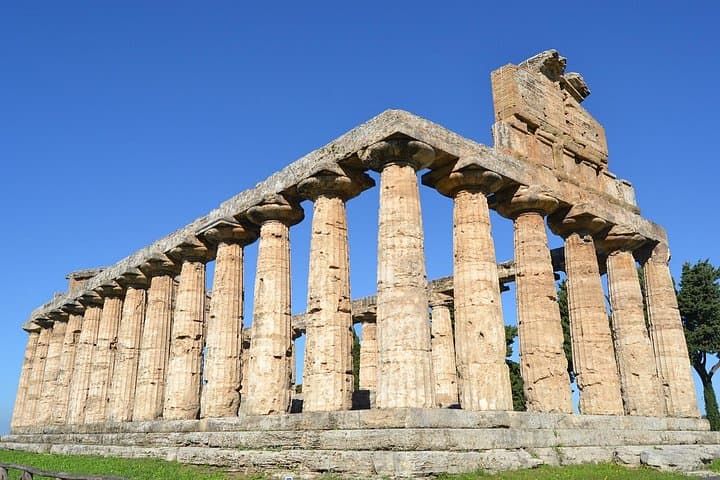
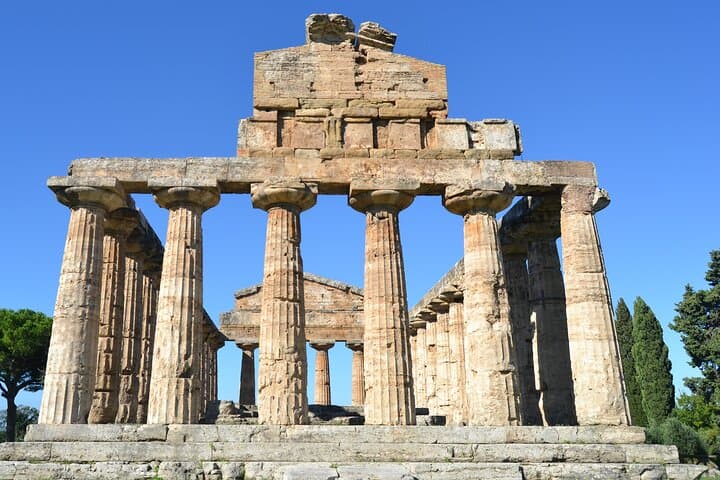
You enter under a blue Italian sky and the columns of the Temple of Hera rise like an ordered forest—sunlight traveling down weathered grooves while dry grass sighs at your feet. A PhD archaeologist leads the way, voice steady, pointing out cuts and tool marks that still speak after 2,500 years. This is Paestum: an ancient Greek colony that kept its shape long enough for Romans, medieval builders, and modern scholars to leave visible layers.
Verified experiences and guided adventures in the surrounding area.
Operated by Archeo Tours · Capaccio, Campania
You enter under a blue Italian sky and the columns of the Temple of Hera rise like an ordered forest—sunlight traveling down weathered grooves while dry grass sighs at your feet. A PhD archaeologist leads the way, voice steady, pointing out cuts and tool marks that still speak after 2,500 years. This is Paestum: an ancient Greek colony that kept its shape long enough for Romans, medieval builders, and modern scholars to leave visible layers.
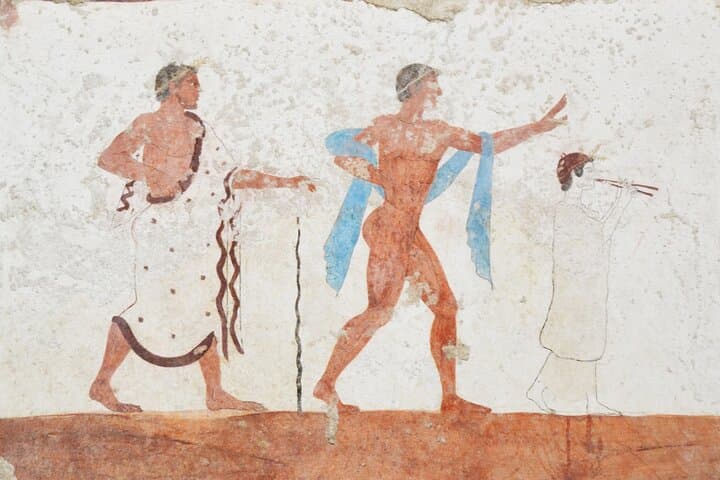
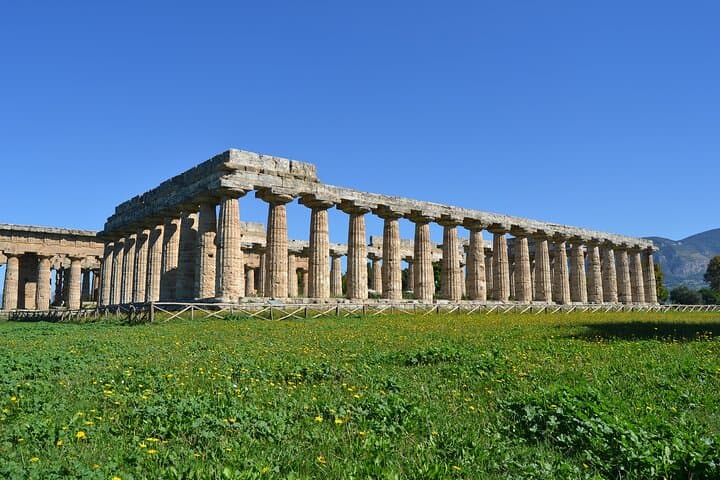
Founded as Poseidonia in the 6th century BC, Paestum grew on fertile coastal plain and trade routes; its Doric temples—Hera, Athena, Neptune—are among the best-preserved in the world, built from local limestone and arranged with an architectural clarity that still reads at a glance. Nearby the Roman forum, amphitheater, and city walls add a second chapter to the story; the onsite museum houses the Tomb of the Diver, a rare painted grave that hints at funerary beliefs and artistic skill in Magna Graecia.
The guided visit balances sweeping site interpretation with close readings of stone, metopes, and urban layout. Expect 2.5 hours of mostly level walking across packed earth and stone; the guide can tailor commentary to art history, architecture, or daily life in antiquity. Practicalities: bring sun protection and comfortable shoes, plan for heat in summer, and allow time afterward to sit in a café and watch the olive trees move like slow breath across the plain.
This private format is ideal for focused questions, photography without crowds, and deeper context than standard group tours.
easy.
2–3 hours.
Suitable for most fitness levels; involves standing and walking over uneven ground for up to 90–120 minutes.
The private tour lasts about 2.5 hours and includes expert archaeological commentary, entrance to the ruins and museum, and optional private transport if arranged.
The tour listing notes wheelchair accessibility for main areas and transport options, though some ancient surfaces remain uneven—ask the operator about exact access needs in advance.
Yes—this private format is designed to be tailored; request emphasis on architecture, funerary art, or regional history when booking.
Admission is included with the tour; this private visit typically reduces wait times but is not formally a skip-the-line ticket.
Paestum began as Greek Poseidonia in the 6th century BC, later falling under Lucanian and Roman control; its continuous occupation created layered urban fabric still visible today.
Site managers balance visitor access with conservation of soft limestone and archaeological deposits; stick to paths and avoid touching carved surfaces to minimize wear.
Archeo Tours operates guided outdoor trips and adventures with an emphasis on safety, stewardship, and memorable experiences.
You enter under a blue Italian sky and the columns of the Temple of Hera rise like an ordered forest—sunlight traveling down weathered grooves while dry grass sighs at your feet. A PhD archaeologist leads the way, voice steady, pointing out cuts and tool marks that still speak after 2,500 years. This is Paestum: an ancient Greek colony that kept its shape long enough for Romans, medieval builders, and modern scholars to leave visible layers.
You enter under a blue Italian sky and the columns of the Temple of Hera rise like an ordered forest—sunlight traveling down weathered grooves while dry grass sighs at your feet. A PhD archaeologist leads the way, voice steady, pointing out cuts and tool marks that still speak after 2,500 years. This is Paestum: an ancient Greek colony that kept its shape long enough for Romans, medieval builders, and modern scholars to leave visible layers.
Founded as Poseidonia in the 6th century BC, Paestum grew on fertile coastal plain and trade routes; its Doric temples—Hera, Athena, Neptune—are among the best-preserved in the world, built from local limestone and arranged with an architectural clarity that still reads at a glance. Nearby the Roman forum, amphitheater, and city walls add a second chapter to the story; the onsite museum houses the Tomb of the Diver, a rare painted grave that hints at funerary beliefs and artistic skill in Magna Graecia.
The guided visit balances sweeping site interpretation with close readings of stone, metopes, and urban layout. Expect 2.5 hours of mostly level walking across packed earth and stone; the guide can tailor commentary to art history, architecture, or daily life in antiquity. Practicalities: bring sun protection and comfortable shoes, plan for heat in summer, and allow time afterward to sit in a café and watch the olive trees move like slow breath across the plain.
This private format is ideal for focused questions, photography without crowds, and deeper context than standard group tours.