THE ADVENTURE COLLECTIVE® · Independent discovery and booking for outdoor travel

Drive from Edinburgh through the Firth of Forth corridor to visit Linlithgow Palace, Culross, Midhope (Lallybroch) and Blackness Castle—the real-life settings that brought Outlander to the screen. This private tour mixes royal history, on-location stories and easy walks between cinematic sites.
Drive from Edinburgh through the Firth of Forth corridor to visit Linlithgow Palace, Culross, Midhope (Lallybroch) and Blackness Castle—the real-life settings that brought Outlander to the screen. This private tour mixes royal history, on-location stories and easy walks between cinematic sites.
A damp road lifts into pale light as your minivan slips away from Edinburgh’s granite tenements and into the patchwork fields of the Central Belt.
Verified experiences and guided adventures in the surrounding area.
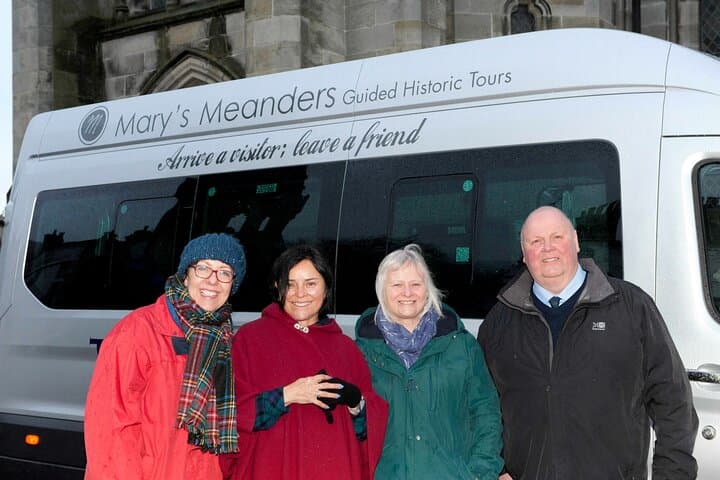
Operated by Mary's Meanders · Linlithgow, Scotland
A damp road lifts into pale light as your minivan slips away from Edinburgh’s granite tenements and into the patchwork fields of the Central Belt.
The tour drops you at Linlithgow Palace first, where wind-swept courtyards and a royal ruin frame the birthplace of Mary, Queen of Scots and the site used for Wentworth Prison. From there the landscape alternates between broad river estuary and low-rolling farmland, a setting that the Outlander cameras used to turn ordinary streets and castles into the Highlands-on-screen.
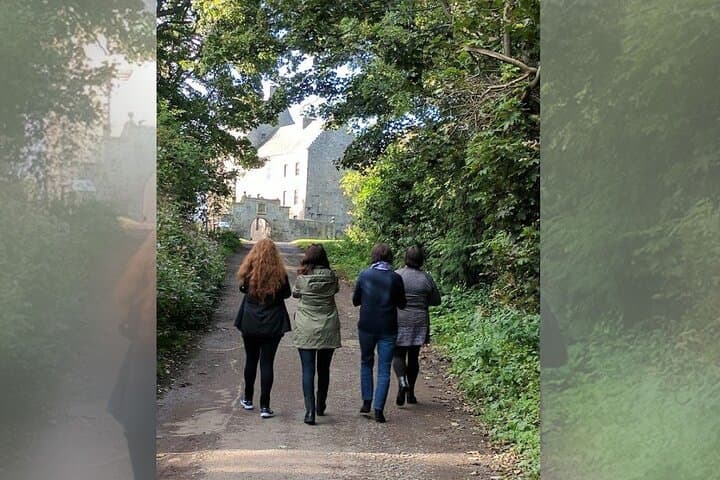
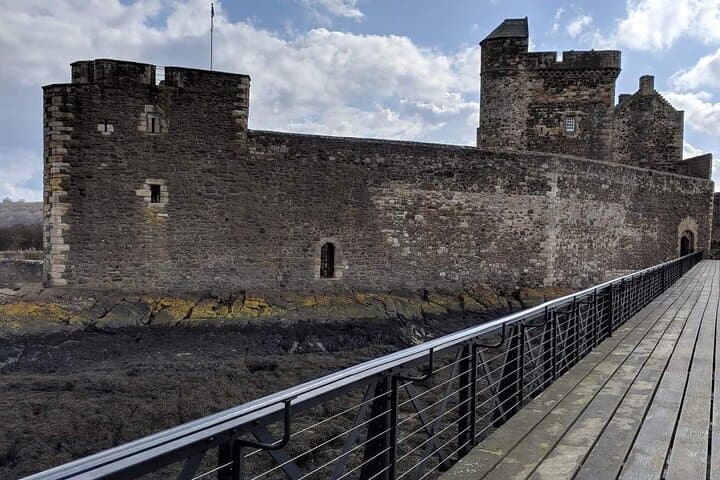
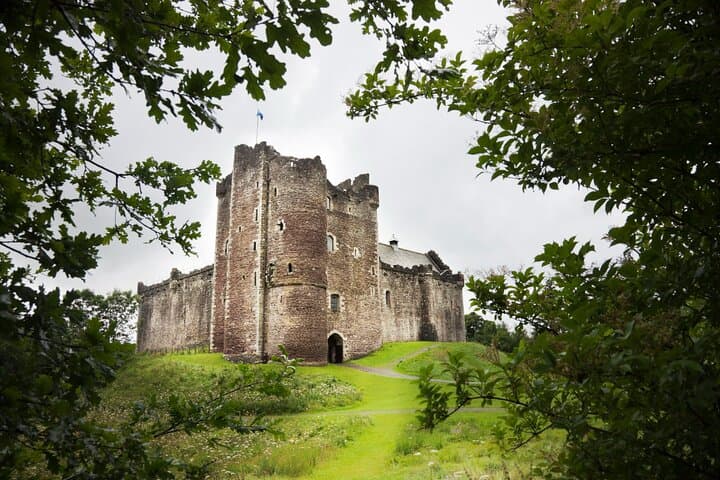
Doune Castle, sighted through a quick photo stop, is a 14th-century stronghold with massive curtain walls; Culross offers intact 17th-century streets and the stepped garden that stood in for Cranesmuir. Midhope (Lallybroch) delivers the farmhouse stairs that fans recognize instantly, and Blackness Castle looms at the water’s edge, its gunports staring across the Firth of Forth.
The geology here is practical: low-lying sedimentary shores at Blackness, glacially-sculpted river valleys inland, and compact, cobbled town centers that demand steady footing. Cultural notes thread through each stop—royal history at Linlithgow, mercantile Culross, and clan echoes at Doune—offered by guides who blend production anecdotes with local context.
Practical guidance: expect multiple short walks (5–30 minutes) on uneven surfaces and staircases; total tour time is flexible from one to eight hours. Wear waterproof layers and grippy shoes, bring a daypack and spare battery for photos. Aim for morning departures to avoid afternoon crowds and allow time for flexible stops and photography.
moderate.
1–8 hours.
Moderate fitness—able to walk short distances on uneven ground and climb stairs multiple times
Admissions are not included; some sites like Doune may be closed to interior access so this itinerary focuses on external visits and photography.
Pickups are offered from Edinburgh, Stirling and Glasgow areas—confirm your pickup point at booking for exact times.
There are staircases and uneven surfaces at most stops; guides can provide videos of upstairs rooms for those who cannot manage stairs.
Yes—children are welcome, but be prepared for short walks and historic sites that have limited facilities and exposed areas.
This corridor of central Scotland stitches medieval royal sites, mercantile 17th-century towns and fortified castles together— Linlithgow was a royal residence, Doune a medieval fortress later used for film productions.
Many sites are managed by Historic Environment Scotland or local trusts—stick to marked paths, respect fragile stonework and avoid climbing on ruins to reduce wear.
Mary's Meanders operates guided outdoor trips and adventures with an emphasis on safety, stewardship, and memorable experiences.
A damp road lifts into pale light as your minivan slips away from Edinburgh’s granite tenements and into the patchwork fields of the Central Belt.
A damp road lifts into pale light as your minivan slips away from Edinburgh’s granite tenements and into the patchwork fields of the Central Belt.
The tour drops you at Linlithgow Palace first, where wind-swept courtyards and a royal ruin frame the birthplace of Mary, Queen of Scots and the site used for Wentworth Prison. From there the landscape alternates between broad river estuary and low-rolling farmland, a setting that the Outlander cameras used to turn ordinary streets and castles into the Highlands-on-screen.
Doune Castle, sighted through a quick photo stop, is a 14th-century stronghold with massive curtain walls; Culross offers intact 17th-century streets and the stepped garden that stood in for Cranesmuir. Midhope (Lallybroch) delivers the farmhouse stairs that fans recognize instantly, and Blackness Castle looms at the water’s edge, its gunports staring across the Firth of Forth.
The geology here is practical: low-lying sedimentary shores at Blackness, glacially-sculpted river valleys inland, and compact, cobbled town centers that demand steady footing. Cultural notes thread through each stop—royal history at Linlithgow, mercantile Culross, and clan echoes at Doune—offered by guides who blend production anecdotes with local context.
Practical guidance: expect multiple short walks (5–30 minutes) on uneven surfaces and staircases; total tour time is flexible from one to eight hours. Wear waterproof layers and grippy shoes, bring a daypack and spare battery for photos. Aim for morning departures to avoid afternoon crowds and allow time for flexible stops and photography.