THE ADVENTURE COLLECTIVE® · Independent discovery and booking for outdoor travel

Spend a full day exploring three distinct Khmer sites—Beng Mealea's jungle-wrapped corridors, Koh Ker's pyramid and Preah Vihear's cliff-top galleries—on a private tour from Siem Reap. Expect long drives, uneven stonework and rich historical context delivered by an English-speaking guide.
Spend a full day exploring three distinct Khmer sites—Beng Mealea's jungle-wrapped corridors, Koh Ker's pyramid and Preah Vihear's cliff-top galleries—on a private tour from Siem Reap. Expect long drives, uneven stonework and rich historical context delivered by an English-speaking guide.
The day opens before dawn as your driver slips out of Siem Reap and the road unwinds toward jungle-scarred sandstone. By midmorning the forest breathes against the stones of Beng Mealea: a ruined complex where tree roots tug at door lintels and a wooden walkway runs through collapsed corridors, guiding you over mossed blocks and into light.
Verified experiences and guided adventures in the surrounding area.
Operated by Private Tour Guide-Phnom Penh · Siem Reap, Siem Reap Province
The day opens before dawn as your driver slips out of Siem Reap and the road unwinds toward jungle-scarred sandstone. By midmorning the forest breathes against the stones of Beng Mealea: a ruined complex where tree roots tug at door lintels and a wooden walkway runs through collapsed corridors, guiding you over mossed blocks and into light.
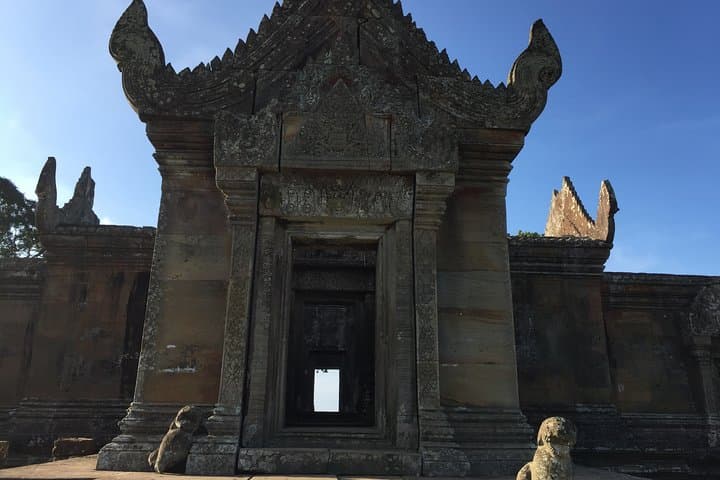
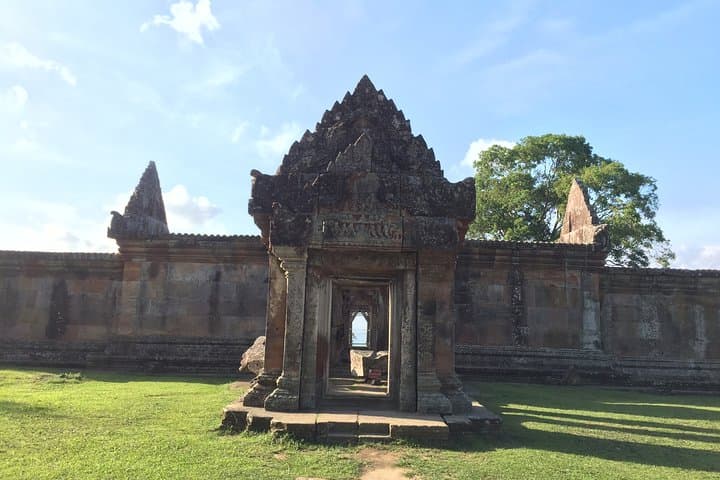
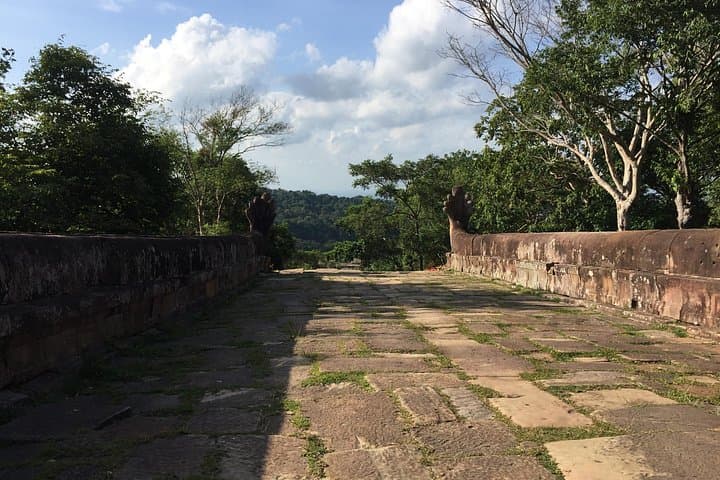
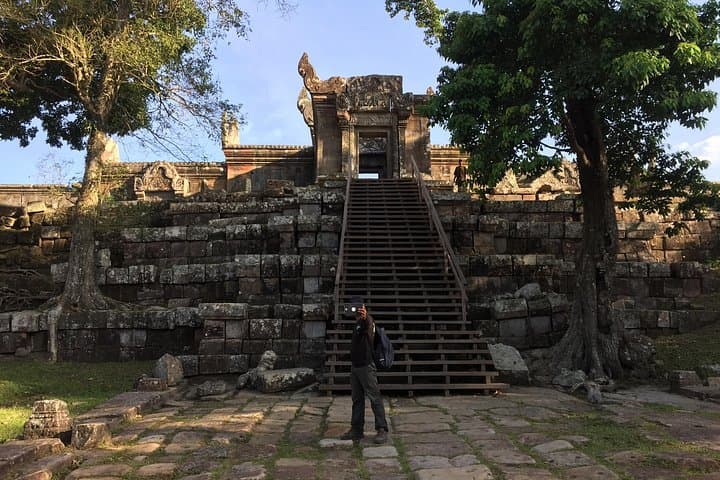
These sites sit on the spine of Khmer history. Beng Mealea is a 12th‑century temple with mixed Buddhist and Hindu iconography. Koh Ker was briefly the Khmer capital (928–944 CE), notable for its Prasat Thom pyramid and monolithic stones. Perched on a 52‑meter cliff, Preah Vihear surveys the Dongrek range and marks centuries of ritual approaches along its 800‑meter axis. Geology here is sandstone sculpted by monsoon and time; culture is layered in bas‑reliefs, stairways and the occasional votive shrine still tended by locals.
Expect long drives between sites, uneven stone steps and short walks across exposed terraces. Weather shapes the visit: wet season can bring dramatic greenery and slippery rock, dry season makes for clearer vistas. Guides provide context—inscriptions, city planning and royal rivalry—that turns ruins into a readable landscape.
Practical notes: carry your Angkor ticket for Beng Mealea, wear sturdy shoes for uneven surfaces, bring sun protection and at least 2 liters of water, and plan an early start to avoid midday heat. Respect restricted zones and local worship; photography rules apply at some shrines. This is a full, layered day for travelers who want Khmer architecture away from the busiest circuits.
moderate.
7–9 hours.
Suitable for travelers in average fitness; requires repeated short walks, climbing stone steps and some standing on uneven ground.
Yes — Beng Mealea is within the Angkor World Heritage area and requires a valid Angkor pass; carry your pass and ID to present at checkpoints.
Expect long transfers: the full loop from Siem Reap covers several hours of driving round-trip, with time on rough rural roads to reach Koh Ker and Preah Vihear.
The tour is advertised as suitable for all fitness levels, but temple terrain includes steps and uneven surfaces which can be challenging for limited mobility; consult the operator for vehicle-accessible stops.
Admission is typically not included; confirm with the operator and have cash (local currency) ready for site fees if required.
These complexes reflect the expansion and rivalry of the Khmer Empire between the 10th and 12th centuries, with Koh Ker briefly serving as capital under King Jayavarman IV.
Visitor fees and respectful routing help fund conservation; stay on designated paths, avoid climbing fragile carvings and support local guides to reduce impact.
Private Tour Guide-Phnom Penh operates guided outdoor trips and adventures with an emphasis on safety, stewardship, and memorable experiences.
The day opens before dawn as your driver slips out of Siem Reap and the road unwinds toward jungle-scarred sandstone. By midmorning the forest breathes against the stones of Beng Mealea: a ruined complex where tree roots tug at door lintels and a wooden walkway runs through collapsed corridors, guiding you over mossed blocks and into light.
The day opens before dawn as your driver slips out of Siem Reap and the road unwinds toward jungle-scarred sandstone. By midmorning the forest breathes against the stones of Beng Mealea: a ruined complex where tree roots tug at door lintels and a wooden walkway runs through collapsed corridors, guiding you over mossed blocks and into light.
These sites sit on the spine of Khmer history. Beng Mealea is a 12th‑century temple with mixed Buddhist and Hindu iconography. Koh Ker was briefly the Khmer capital (928–944 CE), notable for its Prasat Thom pyramid and monolithic stones. Perched on a 52‑meter cliff, Preah Vihear surveys the Dongrek range and marks centuries of ritual approaches along its 800‑meter axis. Geology here is sandstone sculpted by monsoon and time; culture is layered in bas‑reliefs, stairways and the occasional votive shrine still tended by locals.
Expect long drives between sites, uneven stone steps and short walks across exposed terraces. Weather shapes the visit: wet season can bring dramatic greenery and slippery rock, dry season makes for clearer vistas. Guides provide context—inscriptions, city planning and royal rivalry—that turns ruins into a readable landscape.
Practical notes: carry your Angkor ticket for Beng Mealea, wear sturdy shoes for uneven surfaces, bring sun protection and at least 2 liters of water, and plan an early start to avoid midday heat. Respect restricted zones and local worship; photography rules apply at some shrines. This is a full, layered day for travelers who want Khmer architecture away from the busiest circuits.