THE ADVENTURE COLLECTIVE® · Independent discovery and booking for outdoor travel

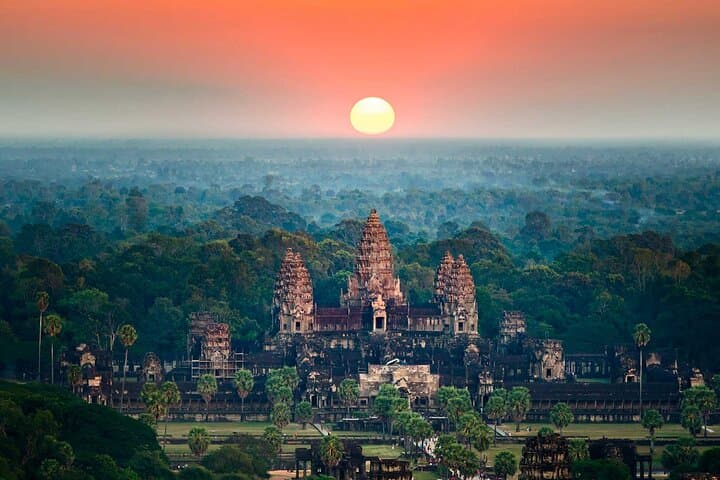
Spend a day with a private, English-speaking guide through Angkor’s major monuments—Angkor Thom, Bayon, Ta Prohm and Angkor Wat. This focused tour combines context, comfortable transport and a local lunch to maximize a single-day visit.
Spend a day with a private, English-speaking guide through Angkor’s major monuments—Angkor Thom, Bayon, Ta Prohm and Angkor Wat. This focused tour combines context, comfortable transport and a local lunch to maximize a single-day visit.
You step out of your air-conditioned car and the heat of the lowland plains meets you like a living thing—warm wind pressing against the temples’ moss-dark stones as sun cuts shafts through the canopy.
Verified experiences and guided adventures in the surrounding area.
Operated by Global Travel & Tours Asia · Siem Reap, Siem Reap Province
You step out of your air-conditioned car and the heat of the lowland plains meets you like a living thing—warm wind pressing against the temples’ moss-dark stones as sun cuts shafts through the canopy.
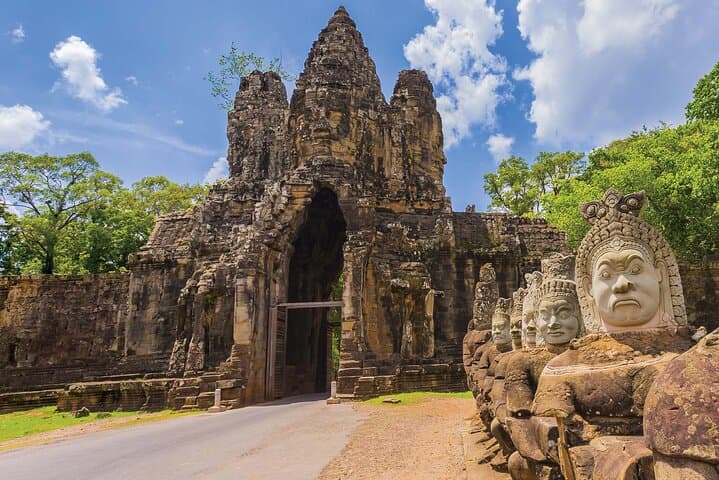
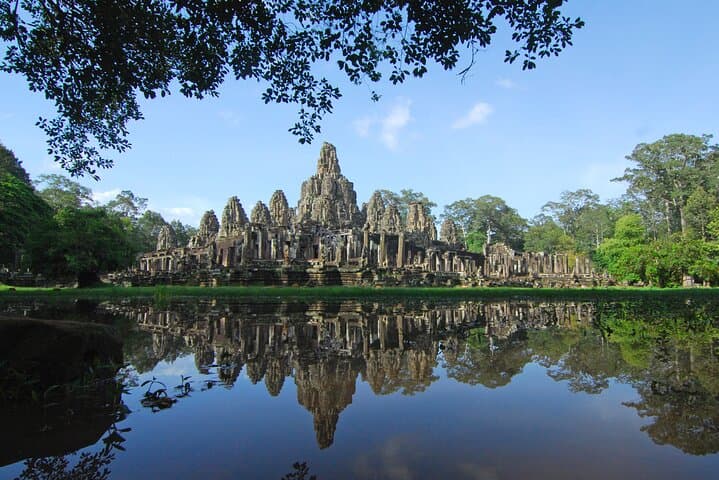
Your guide leads you along the causeway into Angkor Thom where carved devas and asuras still seem engaged in that eternal tug-of-war. The Bayon’s many stone faces watch in quiet repetition; later, Ta Prohm’s strangler figs will pull column and lintel into new forms, roots daring you to look closer.
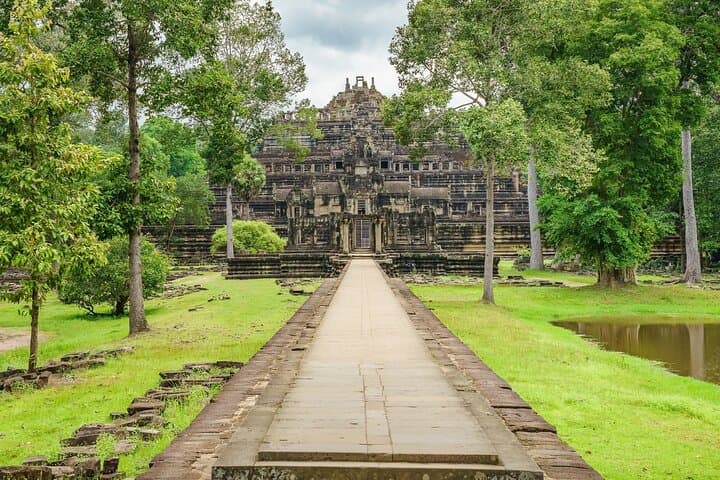
Built between the 9th and 13th centuries, the Angkor complex is the product of the Khmer Empire’s engineering and religious ambition. Jayavarman VII’s Mahayana Buddhist monuments sit beside earlier Hindu temple-mountains; sandstone blocks, laterite cores and intricate bas-reliefs tell stories of warfare, procession and rice-field life. The geology—soft sandstone over brittle foundations—helps explain why conservation is ongoing and why careful foot traffic matters.
Culturally, Cambodian guides often mix archaeology with oral memory: local festivals, monastic life, and the continuing role of these temples as living religious sites.
Practical guidance: expect 7–9 hours of touring with multiple short walks, uneven stone steps and humid heat. Wear sturdy closed shoes, sun protection, and a quick-dry shirt; bring a one-day temple pass (included) and a compact daypack. Plan your start before mid-morning to avoid the hottest hours and large crowds at Ta Prohm and Angkor Wat.
This private format gives pacing control—so you can linger at a carving, ask about a relief, or pause beneath a banyan as humidity and history press close.
moderate.
7–9 hours.
Basic walking fitness required; able to climb uneven stone steps and stand for guided explanations.
Yes — the one-day temple pass is included in this tour’s listed inclusions.
Expect several short to moderate walks at each temple, plus stairs; total walking distance varies but plan for intermittent standing and 1–3 km of on-foot exploration spread across the day.
Most monuments have uneven steps and rough paths; full accessibility is limited—travelers with mobility issues should contact the operator to discuss options and pickup points.
Early morning and late afternoon offer cooler temperatures and softer light; sunrise at Angkor Wat is popular but can be crowded—your private tour can be timed to avoid the busiest windows.
Angkor was the seat of the Khmer Empire; major builders like Jayavarman VII reshaped the landscape with temple-mountains and hydraulic systems between the 9th and 13th centuries.
Visitor fees and UNESCO status support conservation, but sandstone erosion and visitor pressure require managed routes and respectful behavior to protect carvings and foundations.
Global Travel & Tours Asia operates guided outdoor trips and adventures with an emphasis on safety, stewardship, and memorable experiences.
You step out of your air-conditioned car and the heat of the lowland plains meets you like a living thing—warm wind pressing against the temples’ moss-dark stones as sun cuts shafts through the canopy.
You step out of your air-conditioned car and the heat of the lowland plains meets you like a living thing—warm wind pressing against the temples’ moss-dark stones as sun cuts shafts through the canopy.
Your guide leads you along the causeway into Angkor Thom where carved devas and asuras still seem engaged in that eternal tug-of-war. The Bayon’s many stone faces watch in quiet repetition; later, Ta Prohm’s strangler figs will pull column and lintel into new forms, roots daring you to look closer.
Built between the 9th and 13th centuries, the Angkor complex is the product of the Khmer Empire’s engineering and religious ambition. Jayavarman VII’s Mahayana Buddhist monuments sit beside earlier Hindu temple-mountains; sandstone blocks, laterite cores and intricate bas-reliefs tell stories of warfare, procession and rice-field life. The geology—soft sandstone over brittle foundations—helps explain why conservation is ongoing and why careful foot traffic matters.
Culturally, Cambodian guides often mix archaeology with oral memory: local festivals, monastic life, and the continuing role of these temples as living religious sites.
Practical guidance: expect 7–9 hours of touring with multiple short walks, uneven stone steps and humid heat. Wear sturdy closed shoes, sun protection, and a quick-dry shirt; bring a one-day temple pass (included) and a compact daypack. Plan your start before mid-morning to avoid the hottest hours and large crowds at Ta Prohm and Angkor Wat.
This private format gives pacing control—so you can linger at a carving, ask about a relief, or pause beneath a banyan as humidity and history press close.