THE ADVENTURE COLLECTIVE® · Independent discovery and booking for outdoor travel

Skip the crowds and experience Angkor with a private guide on a focused one-day circuit. Visit Angkor Wat, Bayon’s face towers and Ta Prohm’s root-entangled ruins while learning the history and practical tips for a full day of walking.
Skip the crowds and experience Angkor with a private guide on a focused one-day circuit. Visit Angkor Wat, Bayon’s face towers and Ta Prohm’s root-entangled ruins while learning the history and practical tips for a full day of walking.
You step out of the air-conditioned van into sticky Siem Reap air and walk toward rows of sandstone towers rising from a green moat. Morning light slants across lotus ponds; long causeways lead into chambers where stone faces watch without blinking. This private one-day circuit puts Angkor Wat, Bayon and Ta Prohm within easy reach, with a local guide translating inscriptions, pointing to invisible carving details and steering you past the busiest photo spots.
Verified experiences and guided adventures in the surrounding area.
Operated by Private Tour Guide-Cambodia · Siem Reap, Siem Reap Province
You step out of the air-conditioned van into sticky Siem Reap air and walk toward rows of sandstone towers rising from a green moat. Morning light slants across lotus ponds; long causeways lead into chambers where stone faces watch without blinking. This private one-day circuit puts Angkor Wat, Bayon and Ta Prohm within easy reach, with a local guide translating inscriptions, pointing to invisible carving details and steering you past the busiest photo spots.
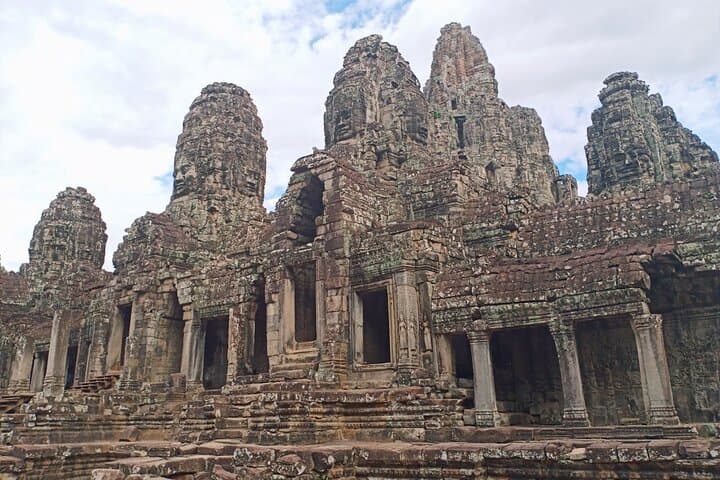
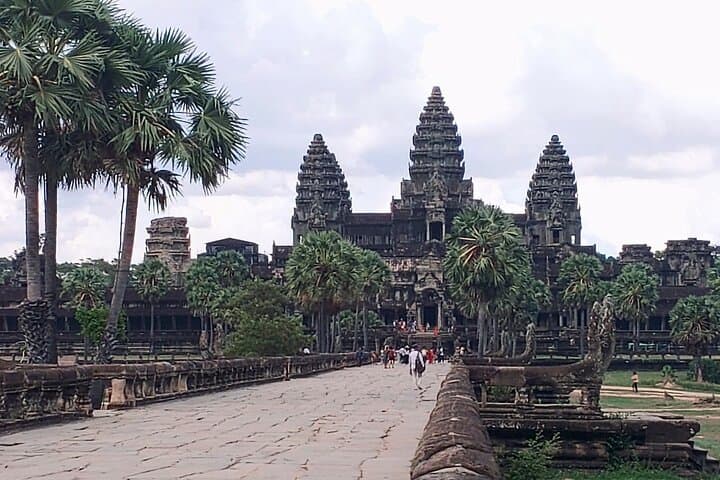
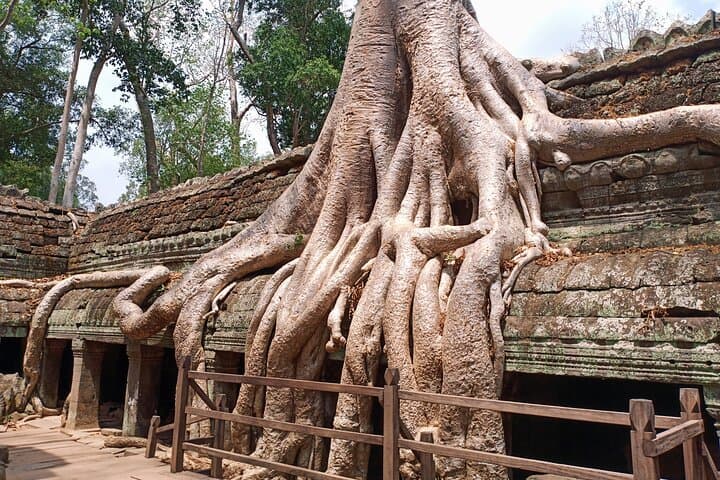
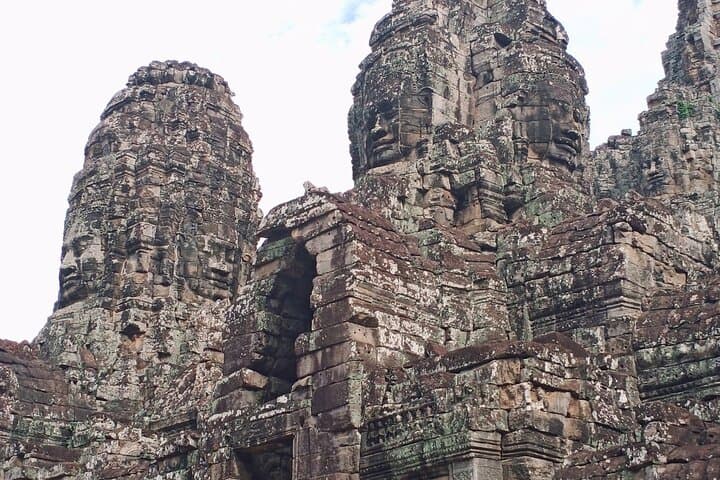
The ruins are relics of the 9th–13th century Khmer empire: Angkor Wat’s concentric galleries, Bayon’s 216 carved faces, and Ta Prohm’s trees that have pulled themselves around pillars. The geology is laterite and sandstone—soft to sculpt, brittle in places—so many walls have been repaired, reassembled and conserved across the last century.
Local culture surrounds the complex: rice fields that fed royal capitals, village artisans who still carve sandstone, and a living rhythm of festivals that animate the region. Your guide will translate temple bas-reliefs that map war, water management and divine kingship, giving context that an audio guide doesn’t.
Practical notes: expect 6–7 hours on foot with short stairs and uneven stone underfoot. Start early to avoid heat, carry refillable water and wear a respectful dress—shoulders and knees covered—required at major temples. Photography is allowed but avoid tripods in crowded areas and never climb on fragile carvings.
Take breaks in shaded gallery alcoves, watch for macaques near Ta Prohm, and allow extra time at Angkor Wat to wander upper galleries. With a private guide and A/C transport, this is a day of concentrated history, tactile ruins and the slow, patient reclaiming of stone by jungle roots.
moderate.
6–7 hours.
Moderate fitness for walking on uneven ground and climbing short stone staircases; able to keep pace for a full day outdoors.
Yes—entry to Angkor Archaeological Park requires a ticket (1-, 3- or 7-day). The guide or operator can advise where to purchase it before entering.
Most major temples have uneven stone and stairs; while some areas near the park entrance are flat, full accessibility is limited—contact the operator about tailored options.
Photography is generally allowed, but avoid tripods in busy areas and never climb on carvings or structures; some inner sanctums may have restrictions during ceremonies.
Families can join, but it involves long periods of walking and stair climbing—younger children may tire quickly, so plan rest breaks and consider shorter routes.
Angkor was the political and religious heart of the Khmer empire from the 9th to the 15th century; Angkor Wat was built in the early 12th century as a Hindu, later Buddhist, state temple.
High visitor numbers stress ancient stones and forest growth—follow paths, don’t touch carvings and avoid feeding wildlife to limit human impact.
Private Tour Guide-Cambodia operates guided outdoor trips and adventures with an emphasis on safety, stewardship, and memorable experiences.
You step out of the air-conditioned van into sticky Siem Reap air and walk toward rows of sandstone towers rising from a green moat. Morning light slants across lotus ponds; long causeways lead into chambers where stone faces watch without blinking. This private one-day circuit puts Angkor Wat, Bayon and Ta Prohm within easy reach, with a local guide translating inscriptions, pointing to invisible carving details and steering you past the busiest photo spots.
You step out of the air-conditioned van into sticky Siem Reap air and walk toward rows of sandstone towers rising from a green moat. Morning light slants across lotus ponds; long causeways lead into chambers where stone faces watch without blinking. This private one-day circuit puts Angkor Wat, Bayon and Ta Prohm within easy reach, with a local guide translating inscriptions, pointing to invisible carving details and steering you past the busiest photo spots.
The ruins are relics of the 9th–13th century Khmer empire: Angkor Wat’s concentric galleries, Bayon’s 216 carved faces, and Ta Prohm’s trees that have pulled themselves around pillars. The geology is laterite and sandstone—soft to sculpt, brittle in places—so many walls have been repaired, reassembled and conserved across the last century.
Local culture surrounds the complex: rice fields that fed royal capitals, village artisans who still carve sandstone, and a living rhythm of festivals that animate the region. Your guide will translate temple bas-reliefs that map war, water management and divine kingship, giving context that an audio guide doesn’t.
Practical notes: expect 6–7 hours on foot with short stairs and uneven stone underfoot. Start early to avoid heat, carry refillable water and wear a respectful dress—shoulders and knees covered—required at major temples. Photography is allowed but avoid tripods in crowded areas and never climb on fragile carvings.
Take breaks in shaded gallery alcoves, watch for macaques near Ta Prohm, and allow extra time at Angkor Wat to wander upper galleries. With a private guide and A/C transport, this is a day of concentrated history, tactile ruins and the slow, patient reclaiming of stone by jungle roots.