THE ADVENTURE COLLECTIVE® · Independent discovery and booking for outdoor travel

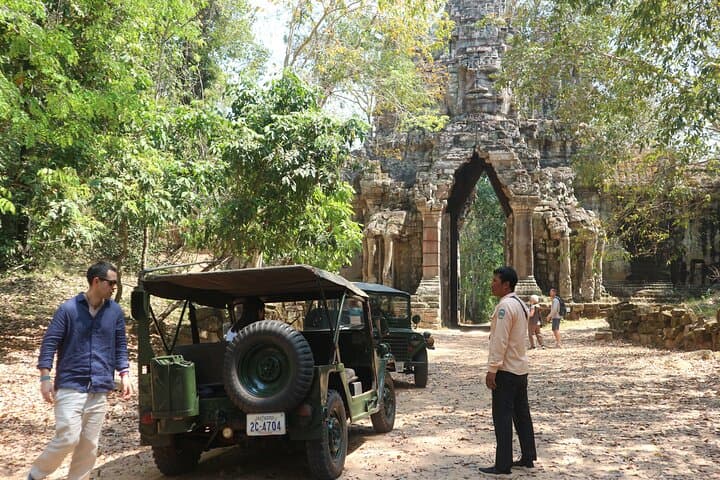
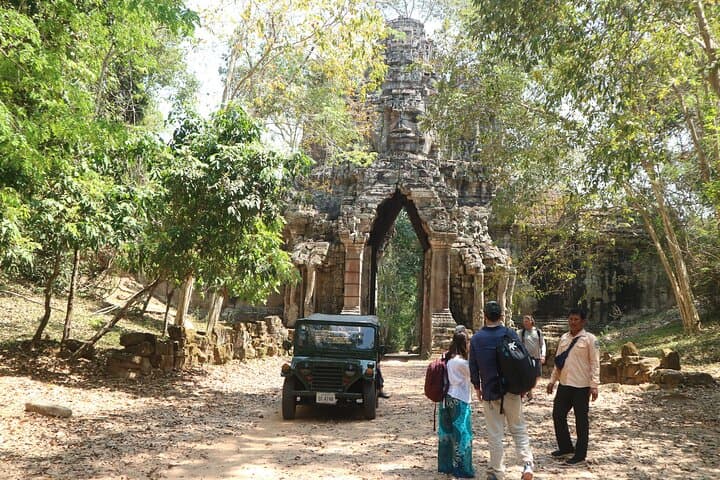
Ride an open vintage jeep off the main roads to see Angkor Wat, Bayon’s stone faces and Ta Prohm’s root-choked galleries with fewer crowds. This private 6–7 hour tour blends big-name monuments with quieter backroad temples and local village scenes.
Ride an open vintage jeep off the main roads to see Angkor Wat, Bayon’s stone faces and Ta Prohm’s root-choked galleries with fewer crowds. This private 6–7 hour tour blends big-name monuments with quieter backroad temples and local village scenes.
Dawn breaks low over the Cambodian plain and an open vintage jeep chugs across rutted red earth, the air warm and fragrant with green coconut and wet stone.
Verified experiences and guided adventures in the surrounding area.
Operated by Siem Reap Locals · Siem Reap, Siem Reap Province
Dawn breaks low over the Cambodian plain and an open vintage jeep chugs across rutted red earth, the air warm and fragrant with green coconut and wet stone.
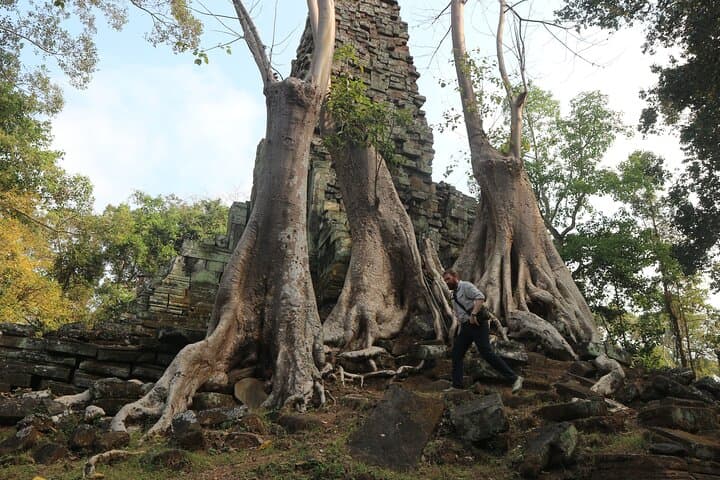
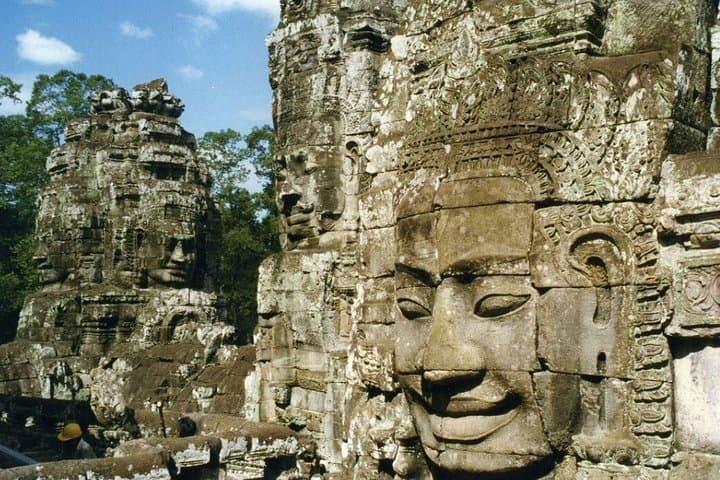
The vehicle threads narrow backroads, passing rice paddies where water buffalo lift lazy heads, until the first silhouette of Angkor Wat rises—towering sandstone crowns against pale sky. From there the day unfolds: the carved bas-reliefs of Angkor Wat, Bayon’s many-stoned faces staring impassive as a crowd moves below, and Ta Prohm’s strangling kapok roots that give the site a wild, cinematic edge.
These monuments come from the Khmer Empire’s high point in the 12th century, built in sandstone with hydraulic systems that once controlled the Tonle Sap basin. The tour pairs that history with present-day life—you’ll cut through villages and country tracks less taken by the big buses, stopping at quieter ruins such as Ta Nei and a small countryside temple few visitors see.
Practicalities are straightforward: this private, roughly 6–7 hour outing uses an open jeep and includes a local English-speaking guide and bottled water. Expect several short walks on uneven, sometimes slippery stone and steep stair sections at main temples. Bring sun protection, insect repellent, and modest clothing for temple entry; a lightweight jacket or scarf helps for early morning wind in an open vehicle.
Timing matters—early starts avoid heat and crowds—while respectful behavior around carvings and local communities keeps the site healthy for future visitors.
easy.
6–7 hours.
Light to moderate—tour involves multiple short walks over uneven stone and some stair climbing; no sustained hiking required
Yes—entry to Angkor Archaeological Park requires a valid Angkor Pass (sold at the park ticket office). The tour price often excludes this pass.
This private jeep tour description notes admissions are not included, so plan to buy passes separately on arrival.
Child-friendly seating can be arranged, but the tour is not recommended for infants without prior discussion due to open-vehicle exposure.
Yes—standard itineraries include Ta Prohm and lesser-visited sites like Ta Nei and a small countryside temple, accessed via backroads.
Angkor’s core monuments were built during the Khmer Empire’s 9th–13th centuries; Angkor Wat was completed in the early 12th century under King Suryavarman II.
Angkor is a UNESCO World Heritage Site—stay on marked paths, avoid touching bas-reliefs, and support community-run businesses to reduce visitor pressure.
Siem Reap Locals operates guided outdoor trips and adventures with an emphasis on safety, stewardship, and memorable experiences.
Dawn breaks low over the Cambodian plain and an open vintage jeep chugs across rutted red earth, the air warm and fragrant with green coconut and wet stone.
Dawn breaks low over the Cambodian plain and an open vintage jeep chugs across rutted red earth, the air warm and fragrant with green coconut and wet stone.
The vehicle threads narrow backroads, passing rice paddies where water buffalo lift lazy heads, until the first silhouette of Angkor Wat rises—towering sandstone crowns against pale sky. From there the day unfolds: the carved bas-reliefs of Angkor Wat, Bayon’s many-stoned faces staring impassive as a crowd moves below, and Ta Prohm’s strangling kapok roots that give the site a wild, cinematic edge.
These monuments come from the Khmer Empire’s high point in the 12th century, built in sandstone with hydraulic systems that once controlled the Tonle Sap basin. The tour pairs that history with present-day life—you’ll cut through villages and country tracks less taken by the big buses, stopping at quieter ruins such as Ta Nei and a small countryside temple few visitors see.
Practicalities are straightforward: this private, roughly 6–7 hour outing uses an open jeep and includes a local English-speaking guide and bottled water. Expect several short walks on uneven, sometimes slippery stone and steep stair sections at main temples. Bring sun protection, insect repellent, and modest clothing for temple entry; a lightweight jacket or scarf helps for early morning wind in an open vehicle.
Timing matters—early starts avoid heat and crowds—while respectful behavior around carvings and local communities keeps the site healthy for future visitors.