THE ADVENTURE COLLECTIVE® · Independent discovery and booking for outdoor travel

Explore Nubia’s rescued treasures on a private 2.5-hour tour of the Nubia Museum in Aswan with a qualified Egyptologist. Learn the story of the High Dam salvage, browse mummies, models and local architecture, and enjoy the museum’s garden terraces.
Explore Nubia’s rescued treasures on a private 2.5-hour tour of the Nubia Museum in Aswan with a qualified Egyptologist. Learn the story of the High Dam salvage, browse mummies, models and local architecture, and enjoy the museum’s garden terraces.
You step out of an air-conditioned minivan into the low, dry light of Aswan and walk toward a sand-colored building that speaks in straight, sun-proof lines. Water runs through a series of terraces; palm shadows cut across flagstones. Inside, an Egyptologist meets you and begins to unfold the story of Nubia — its rivers, temples and the objects rescued when the High Dam rose.
Verified experiences and guided adventures in the surrounding area.
Operated by Egypt Travel Deals · Aswan, Aswan Governorate
You step out of an air-conditioned minivan into the low, dry light of Aswan and walk toward a sand-colored building that speaks in straight, sun-proof lines. Water runs through a series of terraces; palm shadows cut across flagstones. Inside, an Egyptologist meets you and begins to unfold the story of Nubia — its rivers, temples and the objects rescued when the High Dam rose.
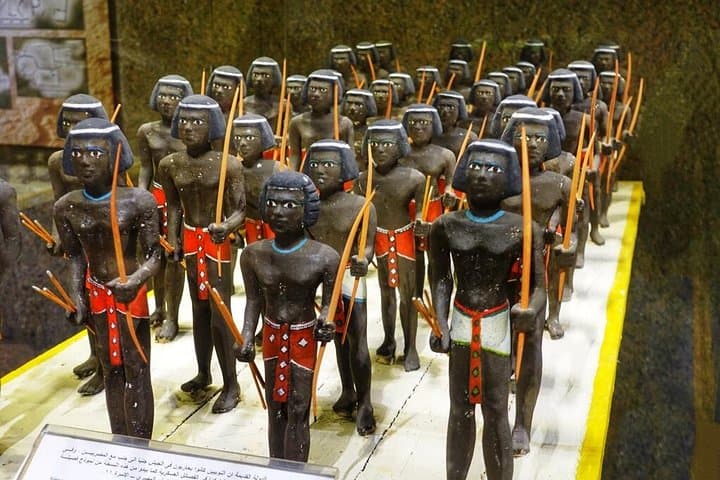
The Nubia Museum opened in 1997 after UNESCO-coordinated salvage work relocated temples, tombs and artifacts threatened by Lake Nasser. The museum’s design echoes traditional Nubian village forms and its landscaped garden includes waterfalls and an amphitheater that recall the Nile’s carved beds. Collections include pottery, jewelry, model boats, tomb relics and mummies recovered from sites upstream — a material record of a river civilization that negotiated stone, sand and seasonal flood for millennia.
Expect clear labels, curated sequences and a focus on context: the scale model of the Nile Valley gives practical perspective on where finds came from. The guide’s commentary usually ties objects to daily life, trade networks and the 1960s rescue campaigns.
Practical guidance: the visit is largely indoors and wheelchair accessible, making it a good option during Aswan heat. Allow about 2–3 hours to move at a comfortable pace and to spend time in the garden. Bring sun protection for the short walks between van and entrance, carry water, and set aside time to absorb the scale model and outdoor terraces — they’re as informative as the galleries.
easy.
2–3 hours.
Minimal walking and stairs; suitable for most fitness levels
Yes — the museum and transport options listed are wheelchair accessible; notify booking if you need assistance.
This private tour includes museum admission as part of the guided visit.
Photography is generally permitted in public galleries, but flash or tripods may be restricted — follow the Egyptologist’s guidance.
Yes — hotel/port pickup and drop-off by air-conditioned minivan are included in the tour price.
The museum was built following UNESCO-led salvage efforts after the construction of the Aswan High Dam; it opened in 1997 to house artifacts relocated from flooded Nubian sites.
The museum emphasizes documentation and conservation of re-located Nubian sites; visitors are encouraged to follow signage and avoid touching displays to protect fragile materials.
Egypt Travel Deals operates guided outdoor trips and adventures with an emphasis on safety, stewardship, and memorable experiences.


You step out of an air-conditioned minivan into the low, dry light of Aswan and walk toward a sand-colored building that speaks in straight, sun-proof lines. Water runs through a series of terraces; palm shadows cut across flagstones. Inside, an Egyptologist meets you and begins to unfold the story of Nubia — its rivers, temples and the objects rescued when the High Dam rose.
You step out of an air-conditioned minivan into the low, dry light of Aswan and walk toward a sand-colored building that speaks in straight, sun-proof lines. Water runs through a series of terraces; palm shadows cut across flagstones. Inside, an Egyptologist meets you and begins to unfold the story of Nubia — its rivers, temples and the objects rescued when the High Dam rose.
The Nubia Museum opened in 1997 after UNESCO-coordinated salvage work relocated temples, tombs and artifacts threatened by Lake Nasser. The museum’s design echoes traditional Nubian village forms and its landscaped garden includes waterfalls and an amphitheater that recall the Nile’s carved beds. Collections include pottery, jewelry, model boats, tomb relics and mummies recovered from sites upstream — a material record of a river civilization that negotiated stone, sand and seasonal flood for millennia.
Expect clear labels, curated sequences and a focus on context: the scale model of the Nile Valley gives practical perspective on where finds came from. The guide’s commentary usually ties objects to daily life, trade networks and the 1960s rescue campaigns.
Practical guidance: the visit is largely indoors and wheelchair accessible, making it a good option during Aswan heat. Allow about 2–3 hours to move at a comfortable pace and to spend time in the garden. Bring sun protection for the short walks between van and entrance, carry water, and set aside time to absorb the scale model and outdoor terraces — they’re as informative as the galleries.