THE ADVENTURE COLLECTIVE® · Independent discovery and booking for outdoor travel

Head into Lofoten's dark skies on a private evening hunt for the Aurora Borealis. With private transport, a bonfire, and hot drinks, this near-Svolvær tour focuses on comfort and maximizing viewing potential.
Head into Lofoten's dark skies on a private evening hunt for the Aurora Borealis. With private transport, a bonfire, and hot drinks, this near-Svolvær tour focuses on comfort and maximizing viewing potential.
A cold Arctic night opens to a ribbon of green and violet as a private minivan slips off the main road and into Lofoten's darker reaches. Guests step out to a wind-scoured shore; a guide builds a low bonfire, blankets are handed around, and the sky becomes the show. The experience is less about a single peak and more about patient watching—auroral curtains unfurling above fjords and serrated peaks.
Verified experiences and guided adventures in the surrounding area.
Operated by Lofoten Highlights · Svolvær, Nordland
A cold Arctic night opens to a ribbon of green and violet as a private minivan slips off the main road and into Lofoten's darker reaches. Guests step out to a wind-scoured shore; a guide builds a low bonfire, blankets are handed around, and the sky becomes the show. The experience is less about a single peak and more about patient watching—auroral curtains unfurling above fjords and serrated peaks.
Lofoten's islands are carved from ancient gneiss and shaped by glacial ice; the steep mountains that rise from the sea are remnants of that deep geology. Fishing has driven local culture for centuries—drying racks and red rorbuer (fishermen's cabins) remind visitors of the cod trade that defined these communities. Folklore about northern lights ranges from warnings to good omens; guides often share these stories while keeping the atmosphere relaxed and practical.
Practically, expect a 5–7 hour evening. Operators choose low light locations to maximize visibility; private transportation, hot drinks, and snacks are usually included. The walk to the viewing site is short and on level ground, so the tour suits a wide range of fitness levels. Photographing the aurora demands a tripod, spare batteries (cold drains power fast), and wide-aperture settings. Dress in thermal layers, waterproof outerwear, and insulated boots — comfort determines how long you'll stay outside.
Best months are late autumn through early spring, and clear, cold nights improve chances. While no tour can guarantee an aurora, a private outing into Lofoten's quiet darkness is the most straightforward way to stack the odds in your favor.
easy.
5–7 hours.
Suitable for most fitness levels; mostly short, level walks from vehicle to viewing site
Peak aurora season runs roughly from late September to early April; clear, cold nights away from moonlight give the best conditions.
Yes—travel is by private vehicle and walking is minimal, but bring warm clothing and check with the operator about infant seats if needed.
No tour can guarantee auroras; operators maximize your chances by choosing dark, low-light locations and monitoring forecasts.
Pack out all waste—operators typically follow Leave No Trace; used batteries should be taken back to town for proper disposal.
Lofoten's coastal communities grew around seasonal cod fisheries; the islands were a hub for stockfish trade dating back to the Viking Age.
Light pollution management and strict shoreline etiquette help protect local wildlife and preserve dark-sky conditions; follow guide instructions and pack out all waste.
Lofoten Highlights operates guided outdoor trips and adventures with an emphasis on safety, stewardship, and memorable experiences.
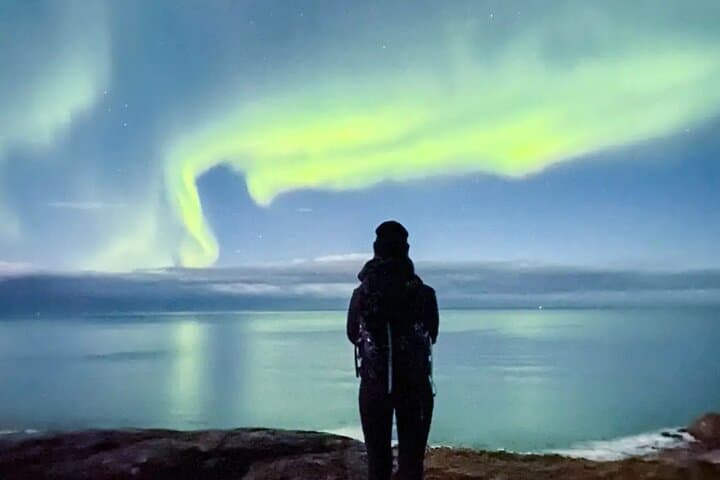
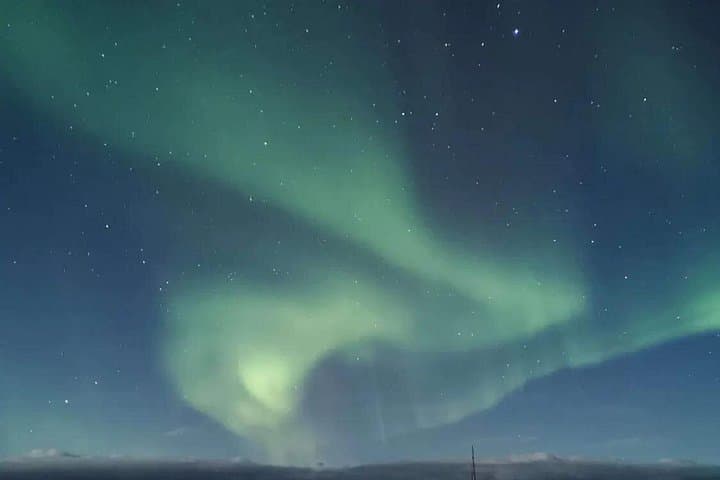
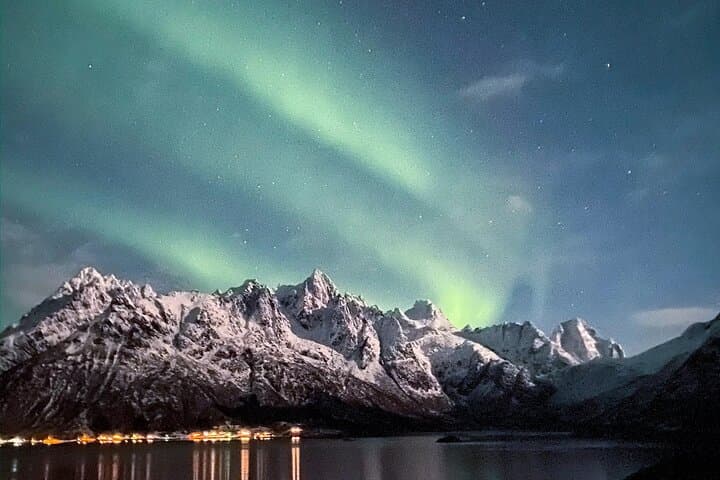
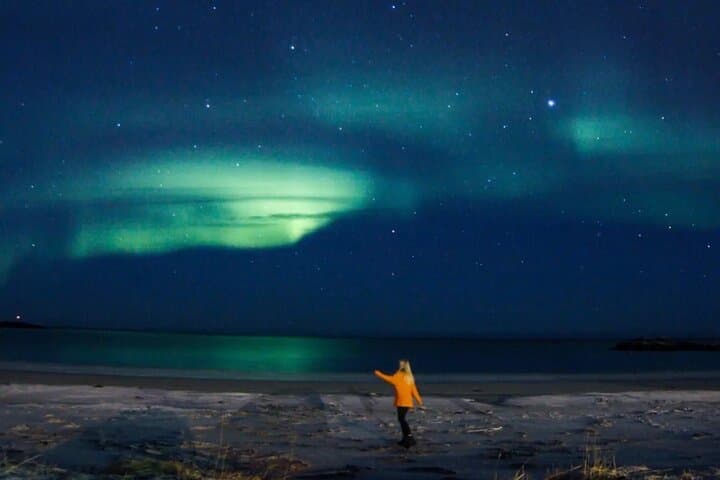
A cold Arctic night opens to a ribbon of green and violet as a private minivan slips off the main road and into Lofoten's darker reaches. Guests step out to a wind-scoured shore; a guide builds a low bonfire, blankets are handed around, and the sky becomes the show. The experience is less about a single peak and more about patient watching—auroral curtains unfurling above fjords and serrated peaks.
A cold Arctic night opens to a ribbon of green and violet as a private minivan slips off the main road and into Lofoten's darker reaches. Guests step out to a wind-scoured shore; a guide builds a low bonfire, blankets are handed around, and the sky becomes the show. The experience is less about a single peak and more about patient watching—auroral curtains unfurling above fjords and serrated peaks.
Lofoten's islands are carved from ancient gneiss and shaped by glacial ice; the steep mountains that rise from the sea are remnants of that deep geology. Fishing has driven local culture for centuries—drying racks and red rorbuer (fishermen's cabins) remind visitors of the cod trade that defined these communities. Folklore about northern lights ranges from warnings to good omens; guides often share these stories while keeping the atmosphere relaxed and practical.
Practically, expect a 5–7 hour evening. Operators choose low light locations to maximize visibility; private transportation, hot drinks, and snacks are usually included. The walk to the viewing site is short and on level ground, so the tour suits a wide range of fitness levels. Photographing the aurora demands a tripod, spare batteries (cold drains power fast), and wide-aperture settings. Dress in thermal layers, waterproof outerwear, and insulated boots — comfort determines how long you'll stay outside.
Best months are late autumn through early spring, and clear, cold nights improve chances. While no tour can guarantee an aurora, a private outing into Lofoten's quiet darkness is the most straightforward way to stack the odds in your favor.