THE ADVENTURE COLLECTIVE® · Independent discovery and booking for outdoor travel

Head west from Reykjavík for a private, guided hunt for the Aurora Borealis across lava fields and fjords. This three‑hour night tour combines local weather expertise with flexible route choices to maximize your chance of seeing the lights.
Head west from Reykjavík for a private, guided hunt for the Aurora Borealis across lava fields and fjords. This three‑hour night tour combines local weather expertise with flexible route choices to maximize your chance of seeing the lights.
A cold wind pushes across the black volcanic plain as the city lights of Reykjavík shrink behind you. The van threads west toward Borgarnes, headlights cutting through low cloud while guides scan the sky and weather models. When the aurora arrives it moves like a living curtain—green and sometimes purple—swelling and folding above lava fields and fjords that still hold the heat of ancient eruptions.
Verified experiences and guided adventures in the surrounding area.
Operated by Mercury Grail · Reykjavík, Capital Region
A cold wind pushes across the black volcanic plain as the city lights of Reykjavík shrink behind you. The van threads west toward Borgarnes, headlights cutting through low cloud while guides scan the sky and weather models. When the aurora arrives it moves like a living curtain—green and sometimes purple—swelling and folding above lava fields and fjords that still hold the heat of ancient eruptions.
Iceland’s dramatic geology—recent lava flows, glacial valleys and coastal fjords—frames every aurora sighting. The west coast around Borgarnes is where ocean, mountain and human settlement meet: fishing hamlets, sagas carved into the landscape, and lichen-scoured lava that records millennia of ice and fire.
Culturally, the Northern Lights are woven into folklore here; guides often pair practical science about solar storms with local stories that explain why the sky moves. Expect frequent stops to test new vantage points—guides monitor cloud cover and KP indices and choose quieter, darker stretches of road to maximize your chance of a show.
Practical notes: tours typically run about three hours with hotel pick-up and drop-off from Reykjavík. Dress in warm, layered clothing, bring a camera with manual settings or a tripod, and be ready for late nights—peak aurora viewing is often between 10pm and 2am. Weather is the wildcard; flexibility and patience are part of the adventure. If conditions are poor, operators often reschedule or offer full refunds. When the lights appear, the patience pays off: the sky becomes an active partner, daring you to keep watching.
easy.
3 hours.
Minimal fitness required; mostly seated transport with short exits for viewing and photos
Chances depend on solar activity and cloud cover; tours target clear, dark areas and guides monitor forecasts—many visitors see the lights, but sightings cannot be guaranteed.
Yes—hotel pick-up and drop-off in Reykjavík are included; tours are private but may be shared during poor weather or scheduling, with a maximum of 8 if shared.
Aurora season runs late September through mid‑April when nights are long and dark; peak hours are often 10pm–2am.
This specific tour lists wheelchair-accessible transportation and facilities, though passengers requiring assistance should arrange support in advance.
The west of Iceland has strong saga-era roots and fishing towns like Borgarnes grew where fjords allowed sheltered harbors—volcanic activity and glaciation shaped the coastline you’ll see on the drive.
Operators emphasize staying off fragile lava fields and packing out all waste; dark-sky etiquette helps protect nocturnal wildlife and preserve viewing conditions.
Mercury Grail operates guided outdoor trips and adventures with an emphasis on safety, stewardship, and memorable experiences.
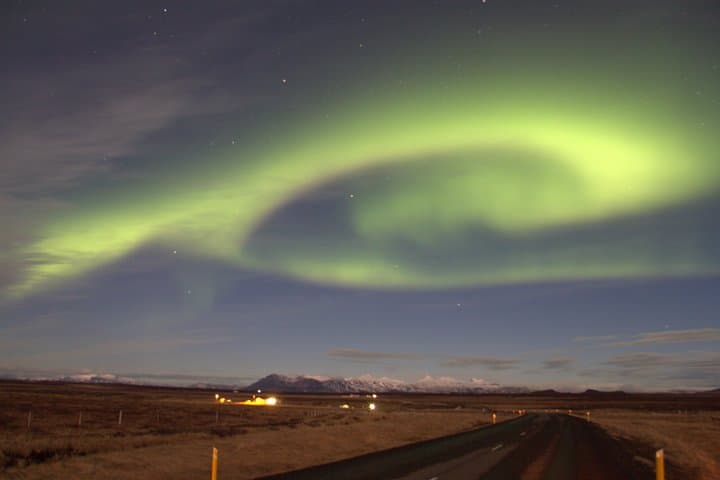
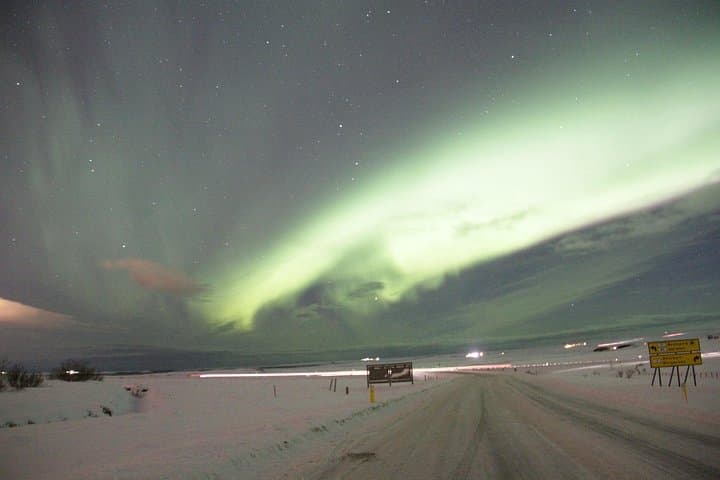
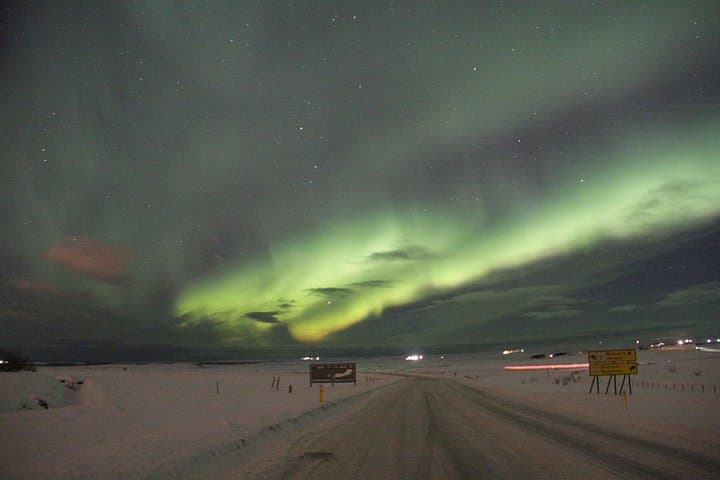
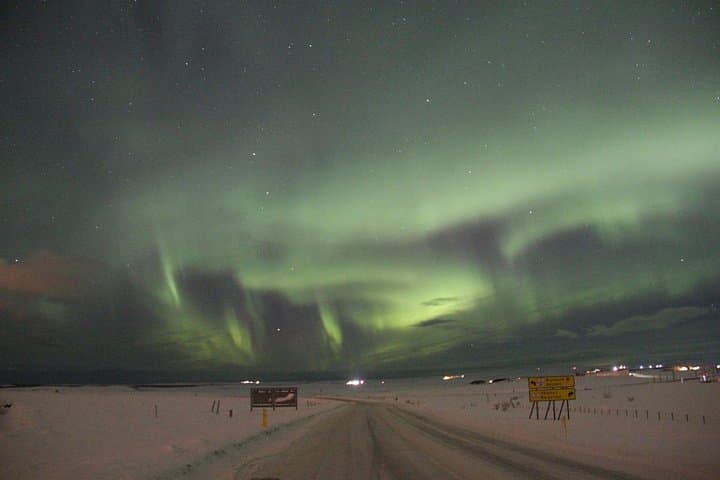
A cold wind pushes across the black volcanic plain as the city lights of Reykjavík shrink behind you. The van threads west toward Borgarnes, headlights cutting through low cloud while guides scan the sky and weather models. When the aurora arrives it moves like a living curtain—green and sometimes purple—swelling and folding above lava fields and fjords that still hold the heat of ancient eruptions.
A cold wind pushes across the black volcanic plain as the city lights of Reykjavík shrink behind you. The van threads west toward Borgarnes, headlights cutting through low cloud while guides scan the sky and weather models. When the aurora arrives it moves like a living curtain—green and sometimes purple—swelling and folding above lava fields and fjords that still hold the heat of ancient eruptions.
Iceland’s dramatic geology—recent lava flows, glacial valleys and coastal fjords—frames every aurora sighting. The west coast around Borgarnes is where ocean, mountain and human settlement meet: fishing hamlets, sagas carved into the landscape, and lichen-scoured lava that records millennia of ice and fire.
Culturally, the Northern Lights are woven into folklore here; guides often pair practical science about solar storms with local stories that explain why the sky moves. Expect frequent stops to test new vantage points—guides monitor cloud cover and KP indices and choose quieter, darker stretches of road to maximize your chance of a show.
Practical notes: tours typically run about three hours with hotel pick-up and drop-off from Reykjavík. Dress in warm, layered clothing, bring a camera with manual settings or a tripod, and be ready for late nights—peak aurora viewing is often between 10pm and 2am. Weather is the wildcard; flexibility and patience are part of the adventure. If conditions are poor, operators often reschedule or offer full refunds. When the lights appear, the patience pays off: the sky becomes an active partner, daring you to keep watching.