THE ADVENTURE COLLECTIVE® · Independent discovery and booking for outdoor travel

Climb from quiet Whyte Lake boardwalks to secret Donut Rock and the sweeping granite perch of Eagle Bluffs above Howe Sound. This private North Shore hike blends lush rainforest, light scrambling, and big-view payoff—guided by locals who know the terrain. Plan for a full, rewarding day with real elevation and real rewards.
Climb from quiet Whyte Lake boardwalks to secret Donut Rock and the sweeping granite perch of Eagle Bluffs above Howe Sound. This private North Shore hike blends lush rainforest, light scrambling, and big-view payoff—guided by locals who know the terrain. Plan for a full, rewarding day with real elevation and real rewards.
The day starts in the hush of West Vancouver’s rainforest, where the boardwalks of Whyte Lake thread through cedar and Douglas-fir that drink in the coastal mist. The trail wastes no time setting a rhythm: soft needles underfoot, creek murmurs at your elbow, and mossed-over logs that seem to beckon you deeper. The lake itself lies quiet and glassy, a cool-breathed pause before the route tilts upward and the forest dares you to climb.
Verified experiences and guided adventures in the surrounding area.
Operated by Vincent · West Vancouver, British Columbia
The day starts in the hush of West Vancouver’s rainforest, where the boardwalks of Whyte Lake thread through cedar and Douglas-fir that drink in the coastal mist. The trail wastes no time setting a rhythm: soft needles underfoot, creek murmurs at your elbow, and mossed-over logs that seem to beckon you deeper. The lake itself lies quiet and glassy, a cool-breathed pause before the route tilts upward and the forest dares you to climb.
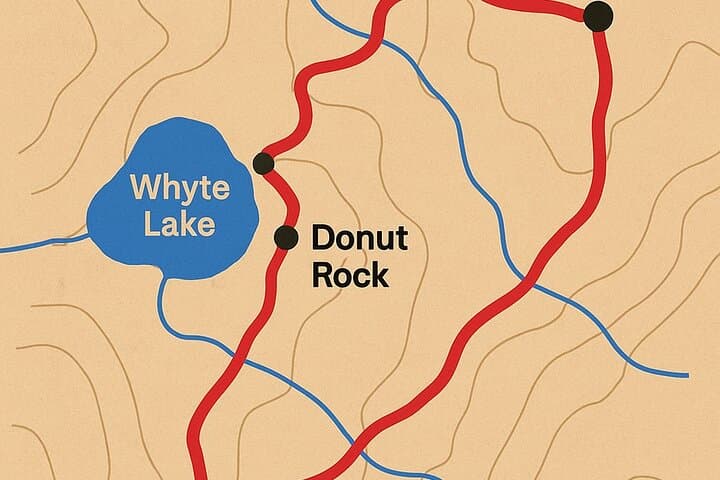
From here, your guide steers toward Donut Rock—an unofficial lookout with just enough scrambling to bump the heart rate. Roots act like rungs, granite grips back, and the canopy parts to offer a cheeky tease of Howe Sound and Bowen Island. It’s a secret many locals still whisper about, a stop that adds a wild-side flourish to the day.
Push higher along the Baden-Powell, a storied trail stitched across the North Shore in 1971 by Scouts and volunteers. The grade steepens and eases in waves, a cadence of short switchbacks, rocky ribs, and quiet flats where ferns crowd the path. This forest is older than the city below it, shaped by retreating ice that carved Howe Sound into the coast’s only true fjord—now a UNESCO Biosphere Region (Átl’ḵa7tsem). Bald eagles patrol the thermals here, ravens trade opinions overhead, and the wind shouldering through the treetops nudges you onward.
Eagle Bluffs finally arrives with a gasp of space—granite balcony, the highway a toy ribbon, ferries threading Horseshoe Bay, and the Tantalus Range icing the skyline to the north. On clear evenings, the light goes long and honeyed; the bluffs glow warm as the Sound turns slate and the islands sharpen their edges. It’s a perch that asks you to linger, but daylight is a negotiator, and the forest calls you back for the rolling return.
Plan for 12–15 km round-trip with 700–900 m of cumulative gain on mixed terrain: boardwalk, rooty singletrack, and short, hands-on scrambles near Donut Rock. Fit hikers will find the pace engaging without being rushed; guides adjust route and timing to conditions and group energy. Waterproof footwear matters—North Shore roots and rocks stay slick—and carrying layers is non-negotiable as weather can swing from sun to ocean-chilled wind in minutes. Cell coverage fades in pockets, so offline maps complement the guide’s local knowledge.
This is the North Shore at its best: raw, close, and constantly in motion. The forest pushes, the granite holds, and Howe Sound keeps pulling your gaze to the horizon.
challenging.
6–8 hours.
Comfortable hiking 12–15 km with 700–900 m gain on uneven, sometimes slippery terrain; steady pace with breaks.
Expect roughly 12–15 km round-trip with 700–900 m of cumulative gain, depending on route choices and conditions.
It’s best for fit, motivated hikers with some experience on uneven terrain; the light scramble to Donut Rock requires good footing and confidence.
Guides adjust routes, timing, or turn-back points for safety. Heavy storms or unsafe conditions may trigger rescheduling or a full refund per policy.
Bald eagles and ravens are frequent; black bears are possible but typically avoid groups. Guides carry knowledge of safe practices and local protocols.
Waterproof boots, layers, and 2L of water are essential. In shoulder seasons, traction devices may be recommended.
This route is best for teens and older who can manage distance, elevation, and short scrambles. Private tours can be tailored—ask about suitability.
The Baden-Powell Trail was built by Scouts and volunteers for B.C.’s 1971 centennial, linking Deep Cove to Horseshoe Bay across the North Shore mountains.
Átl’ḵa7tsem/Howe Sound is a UNESCO Biosphere Region—stay on trail to protect fragile soils and nurse logs, and pack out all waste to keep creeks clear.
Vincent operates guided outdoor trips and adventures with an emphasis on safety, stewardship, and memorable experiences.
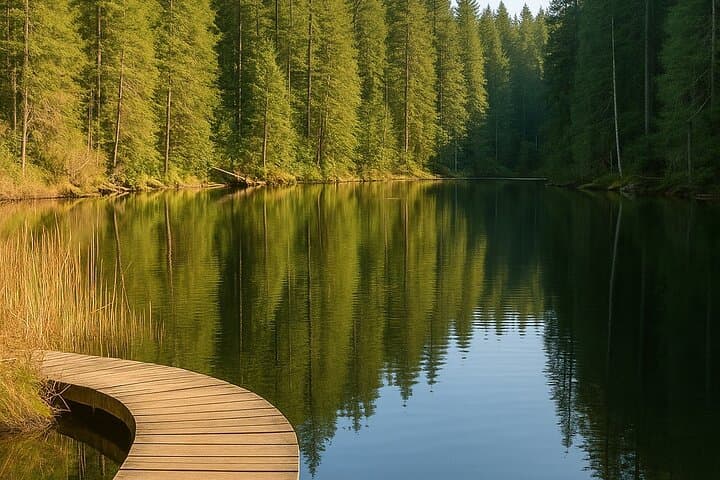
The day starts in the hush of West Vancouver’s rainforest, where the boardwalks of Whyte Lake thread through cedar and Douglas-fir that drink in the coastal mist. The trail wastes no time setting a rhythm: soft needles underfoot, creek murmurs at your elbow, and mossed-over logs that seem to beckon you deeper. The lake itself lies quiet and glassy, a cool-breathed pause before the route tilts upward and the forest dares you to climb.
The day starts in the hush of West Vancouver’s rainforest, where the boardwalks of Whyte Lake thread through cedar and Douglas-fir that drink in the coastal mist. The trail wastes no time setting a rhythm: soft needles underfoot, creek murmurs at your elbow, and mossed-over logs that seem to beckon you deeper. The lake itself lies quiet and glassy, a cool-breathed pause before the route tilts upward and the forest dares you to climb.
From here, your guide steers toward Donut Rock—an unofficial lookout with just enough scrambling to bump the heart rate. Roots act like rungs, granite grips back, and the canopy parts to offer a cheeky tease of Howe Sound and Bowen Island. It’s a secret many locals still whisper about, a stop that adds a wild-side flourish to the day.
Push higher along the Baden-Powell, a storied trail stitched across the North Shore in 1971 by Scouts and volunteers. The grade steepens and eases in waves, a cadence of short switchbacks, rocky ribs, and quiet flats where ferns crowd the path. This forest is older than the city below it, shaped by retreating ice that carved Howe Sound into the coast’s only true fjord—now a UNESCO Biosphere Region (Átl’ḵa7tsem). Bald eagles patrol the thermals here, ravens trade opinions overhead, and the wind shouldering through the treetops nudges you onward.
Eagle Bluffs finally arrives with a gasp of space—granite balcony, the highway a toy ribbon, ferries threading Horseshoe Bay, and the Tantalus Range icing the skyline to the north. On clear evenings, the light goes long and honeyed; the bluffs glow warm as the Sound turns slate and the islands sharpen their edges. It’s a perch that asks you to linger, but daylight is a negotiator, and the forest calls you back for the rolling return.
Plan for 12–15 km round-trip with 700–900 m of cumulative gain on mixed terrain: boardwalk, rooty singletrack, and short, hands-on scrambles near Donut Rock. Fit hikers will find the pace engaging without being rushed; guides adjust route and timing to conditions and group energy. Waterproof footwear matters—North Shore roots and rocks stay slick—and carrying layers is non-negotiable as weather can swing from sun to ocean-chilled wind in minutes. Cell coverage fades in pockets, so offline maps complement the guide’s local knowledge.
This is the North Shore at its best: raw, close, and constantly in motion. The forest pushes, the granite holds, and Howe Sound keeps pulling your gaze to the horizon.