THE ADVENTURE COLLECTIVE® · Independent discovery and booking for outdoor travel

Walk from Shinkyo Bridge beneath cedar giants to Toshogu’s carved gates on a private full‑day tour of Nikko’s World Heritage sites. This guide covers what you’ll see, how the landscape shaped the shrines, and practical tips for the 9‑hour outing.
Walk from Shinkyo Bridge beneath cedar giants to Toshogu’s carved gates on a private full‑day tour of Nikko’s World Heritage sites. This guide covers what you’ll see, how the landscape shaped the shrines, and practical tips for the 9‑hour outing.
A cool mountain breeze meets river spray as you step off the train and into Nikko’s cedar-shaded approach to Toshogu Shrine. The red lacquer of Shinkyo Bridge cuts a sharp line over the Daiya River, while a corridor of towering cedars guides you toward carved gates and gilt surfaces that still catch the sun.
Verified experiences and guided adventures in the surrounding area.
Operated by Toursnippon · Nikko, Tochigi Prefecture
A cool mountain breeze meets river spray as you step off the train and into Nikko’s cedar-shaded approach to Toshogu Shrine. The red lacquer of Shinkyo Bridge cuts a sharp line over the Daiya River, while a corridor of towering cedars guides you toward carved gates and gilt surfaces that still catch the sun.
This private day tour threads UNESCO-listed sites with the highland landscape that shaped them: Tokugawa-era artisans built lavish mausoleums and shrines here to harmonize with the surrounding mountains. Geologically, Nikko sits on volcanic foothills and granite outcrops; the local cedars and beeches cling to steep terraces, and river-carved valleys create sudden views when the forest parts.
Culturally, the area blends Shinto mountain worship and Tokugawa-era Buddhist patronage—see it in the ornate Yomeimon gate, the three wise monkeys, and the layered rituals at Rinnoji and Futarasan. Guides who grew up locally add context, telling stories about pilgrim routes and seasonal festivals.
Practical guidance: expect 4–6 km of walking on mixed surfaces—stone steps, compacted gravel and pavement—with roughly 150–250 m cumulative elevation gain between sites. Wear supportive walking shoes, carry 1–1.5 L of water, and bring a lightweight rain shell; weather in the foothills can change quickly. Many smaller museums and craft shops accept cash only. If you have a JR Pass, meeting options include Tokyo Station; otherwise Asakusa Tobu Station is common. Start early to avoid crowds at Toshogu and catch the bridge in softer morning light.
easy.
9 hours.
Suitable for most people who can walk 4–6 km with occasional stairs; light aerobic fitness recommended for a full day on foot.
Meeting is typically at Asakusa Tobu Station if you don’t have a JR Pass; if you do, Tokyo Station is a common meet-up—confirm with your guide the day before.
Most shrine and temple admissions are not included in standard private tours—bring cash for tickets, small museum entries and donations.
The operator notes strollers are accessible in some areas, but many shrine approaches have steps; infants may need to be carried for short sections.
Expect roughly 4–6 km of walking across paved, stone and gravel surfaces with about 150–250 m cumulative elevation gain between sites.
Nikko attracted Tokugawa rulers in the 17th century who funded lavish shrines and mausoleums; the Nikko monuments are now a UNESCO World Heritage cluster linking Shinto and Buddhist traditions.
Nikko’s forests are actively managed to protect ancient cedars and prevent erosion; visitors are encouraged to stay on paths, avoid feeding wildlife and use designated waste facilities.
Toursnippon operates guided outdoor trips and adventures with an emphasis on safety, stewardship, and memorable experiences.
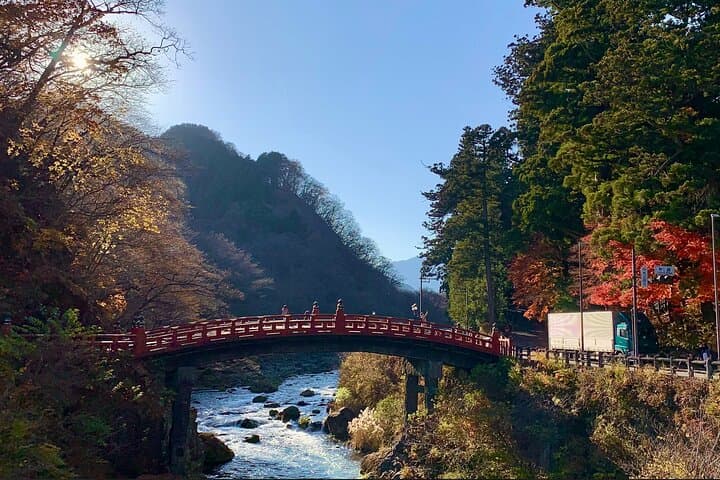


A cool mountain breeze meets river spray as you step off the train and into Nikko’s cedar-shaded approach to Toshogu Shrine. The red lacquer of Shinkyo Bridge cuts a sharp line over the Daiya River, while a corridor of towering cedars guides you toward carved gates and gilt surfaces that still catch the sun.
A cool mountain breeze meets river spray as you step off the train and into Nikko’s cedar-shaded approach to Toshogu Shrine. The red lacquer of Shinkyo Bridge cuts a sharp line over the Daiya River, while a corridor of towering cedars guides you toward carved gates and gilt surfaces that still catch the sun.
This private day tour threads UNESCO-listed sites with the highland landscape that shaped them: Tokugawa-era artisans built lavish mausoleums and shrines here to harmonize with the surrounding mountains. Geologically, Nikko sits on volcanic foothills and granite outcrops; the local cedars and beeches cling to steep terraces, and river-carved valleys create sudden views when the forest parts.
Culturally, the area blends Shinto mountain worship and Tokugawa-era Buddhist patronage—see it in the ornate Yomeimon gate, the three wise monkeys, and the layered rituals at Rinnoji and Futarasan. Guides who grew up locally add context, telling stories about pilgrim routes and seasonal festivals.
Practical guidance: expect 4–6 km of walking on mixed surfaces—stone steps, compacted gravel and pavement—with roughly 150–250 m cumulative elevation gain between sites. Wear supportive walking shoes, carry 1–1.5 L of water, and bring a lightweight rain shell; weather in the foothills can change quickly. Many smaller museums and craft shops accept cash only. If you have a JR Pass, meeting options include Tokyo Station; otherwise Asakusa Tobu Station is common. Start early to avoid crowds at Toshogu and catch the bridge in softer morning light.