THE ADVENTURE COLLECTIVE® · Independent discovery and booking for outdoor travel

Spend a private day moving from the carved calm of Akshardham to the imperial lawns of Rajpath and the Mughal masonry of Humayun’s Tomb and Qutub Minar. This 6–7 hour guided tour pairs strict temple protocols with accessible city sightseeing—ideal for travellers who want history, architecture and efficient logistics.
Spend a private day moving from the carved calm of Akshardham to the imperial lawns of Rajpath and the Mughal masonry of Humayun’s Tomb and Qutub Minar. This 6–7 hour guided tour pairs strict temple protocols with accessible city sightseeing—ideal for travellers who want history, architecture and efficient logistics.
You step out into Delhi’s morning heat as the city wakes—horns, vendors and the river Yamuna pushing a slow current at the city's edge. Your private car eases onto Rajpath, the broad avenue that frames power and memory, and within an hour you’re at Akshardham: a carved stone temple complex that commands attention without haste.
Verified experiences and guided adventures in the surrounding area.
Operated by SITA World Tours · New Delhi, Delhi
You step out into Delhi’s morning heat as the city wakes—horns, vendors and the river Yamuna pushing a slow current at the city's edge. Your private car eases onto Rajpath, the broad avenue that frames power and memory, and within an hour you’re at Akshardham: a carved stone temple complex that commands attention without haste.
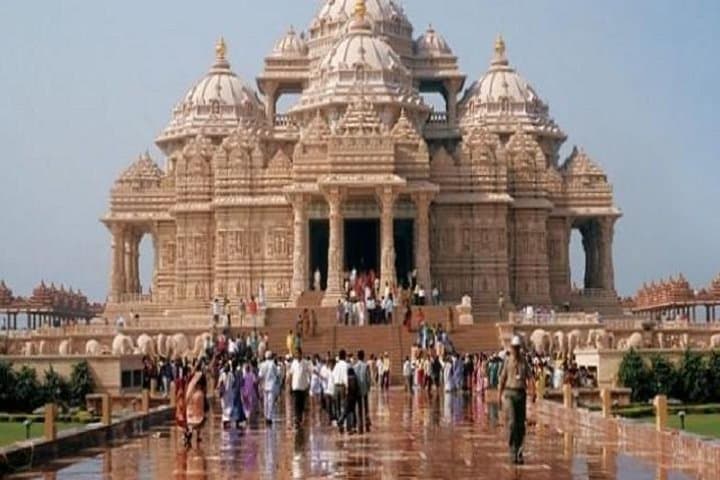
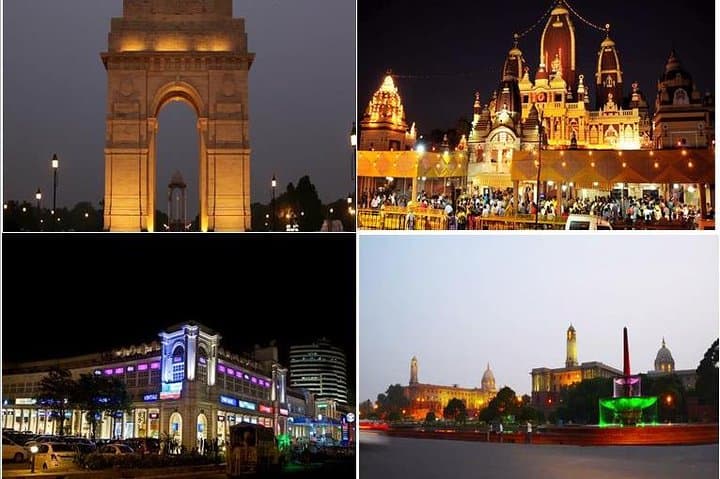
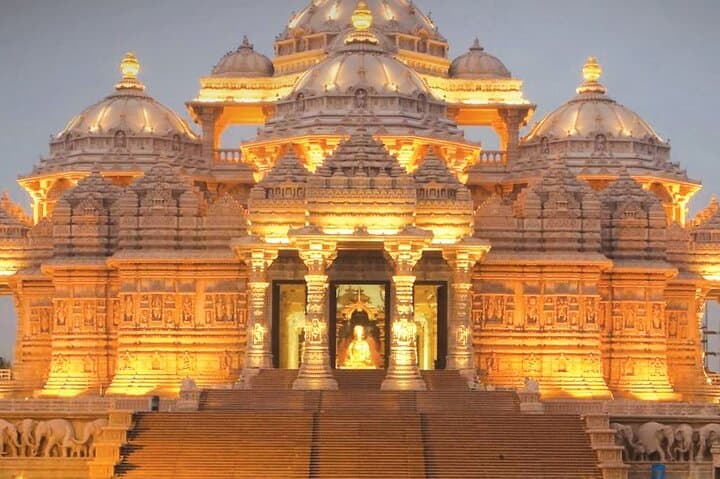
Akshardham (opened 2005 by the BAPS movement) is modern in construction but ancient in scale—234 carved pillars, an 11-foot statue of Swaminarayan and the Yagnapurush Kund step-well whose terraces recall older ritual architecture. From the temple the tour threads through the capital’s layered history: Humayun’s Tomb (16th-century Mughal masonry that prefigures the Taj Mahal), the 12th-century Qutub Minar and the civic ensemble of Parliament, Rashtrapati Bhawan and India Gate—sites where political geography and memory meet stone.
Expect mostly paved walking with short climbs across garden terraces and archaeological grounds; the day is visual and sensory rather than technically demanding. Guides typically narrate architecture, Mughal legacy and modern civic planning while pointing out conservation issues—visitor flow, restoration and the imperative to respect sacred spaces.
Practical notes: Akshardham enforces a strict dress and electronics policy and is closed Mondays—plan accordingly. The tour’s 6–7 hours include hotel pickup and an English-speaking guide; carry a refillable water bottle, sun protection and a light scarf if you prefer not to borrow a sarong. Time your visit early morning or late afternoon to avoid the heat and Delhi’s peak traffic, and leave room to linger at a quiet courtyard for a moment of perspective.
moderate.
6–7 hours.
Moderate—comfortable walking on paved paths with some stairs; suitable for most travelers without serious mobility issues
Akshardham Mandir is typically closed on Mondays; confirm the tour date and plan the route to avoid that day.
No—electronic devices including cameras and phones are not allowed inside the complex; use lockers or keep items in the vehicle.
Expect moderate walking across paved areas and some stairs—total walking spread through a 6–7 hour day with vehicle transfers between sites.
Yes—shoulders, chest, navel and upper arms must be covered and shorts/skirts should be below-knee; sarongs are available for non-compliant clothing for a refundable deposit.
The route stitches modern and medieval Delhi: Akshardham is a contemporary temple complex, Humayun’s Tomb (16th century) influenced Mughal funerary architecture, and Qutub Minar dates to the 12th century with Islamic-era mosque remains.
High visitor numbers stress fragile monuments—follow site rules, avoid litter and minimize plastic; respecting sacred spaces reduces wear on historic features.
SITA World Tours operates guided outdoor trips and adventures with an emphasis on safety, stewardship, and memorable experiences.

You step out into Delhi’s morning heat as the city wakes—horns, vendors and the river Yamuna pushing a slow current at the city's edge. Your private car eases onto Rajpath, the broad avenue that frames power and memory, and within an hour you’re at Akshardham: a carved stone temple complex that commands attention without haste.
You step out into Delhi’s morning heat as the city wakes—horns, vendors and the river Yamuna pushing a slow current at the city's edge. Your private car eases onto Rajpath, the broad avenue that frames power and memory, and within an hour you’re at Akshardham: a carved stone temple complex that commands attention without haste.
Akshardham (opened 2005 by the BAPS movement) is modern in construction but ancient in scale—234 carved pillars, an 11-foot statue of Swaminarayan and the Yagnapurush Kund step-well whose terraces recall older ritual architecture. From the temple the tour threads through the capital’s layered history: Humayun’s Tomb (16th-century Mughal masonry that prefigures the Taj Mahal), the 12th-century Qutub Minar and the civic ensemble of Parliament, Rashtrapati Bhawan and India Gate—sites where political geography and memory meet stone.
Expect mostly paved walking with short climbs across garden terraces and archaeological grounds; the day is visual and sensory rather than technically demanding. Guides typically narrate architecture, Mughal legacy and modern civic planning while pointing out conservation issues—visitor flow, restoration and the imperative to respect sacred spaces.
Practical notes: Akshardham enforces a strict dress and electronics policy and is closed Mondays—plan accordingly. The tour’s 6–7 hours include hotel pickup and an English-speaking guide; carry a refillable water bottle, sun protection and a light scarf if you prefer not to borrow a sarong. Time your visit early morning or late afternoon to avoid the heat and Delhi’s peak traffic, and leave room to linger at a quiet courtyard for a moment of perspective.