THE ADVENTURE COLLECTIVE® · Independent discovery and booking for outdoor travel

Make a full‑day run from Munich to Bavaria’s most photographed castle and a vertigo‑inducing suspension bridge on one private tour. Skip the lines at Neuschwanstein, cross Mary’s Bridge for postcard views, then feel the altitude on Highline 179 near the Austrian border.
Make a full‑day run from Munich to Bavaria’s most photographed castle and a vertigo‑inducing suspension bridge on one private tour. Skip the lines at Neuschwanstein, cross Mary’s Bridge for postcard views, then feel the altitude on Highline 179 near the Austrian border.
You step out of the minivan on a crisp Bavarian morning and a limestone ridge drops away below a fairy‑tale silhouette. Neuschwanstein’s white towers catch the light while the valley smells faintly of wet pine and road dust; the guide folds maps into stories about a king who built for dreams.
Verified experiences and guided adventures in the surrounding area.
Operated by Special Private Tours · Schwangau, Bavaria
You step out of the minivan on a crisp Bavarian morning and a limestone ridge drops away below a fairy‑tale silhouette. Neuschwanstein’s white towers catch the light while the valley smells faintly of wet pine and road dust; the guide folds maps into stories about a king who built for dreams.
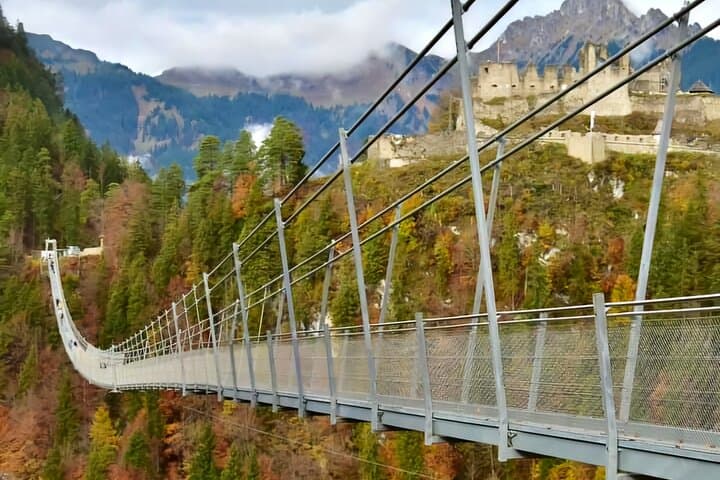
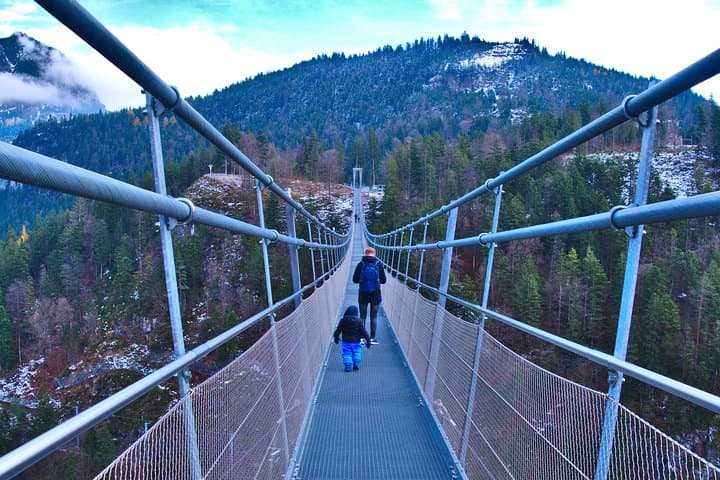
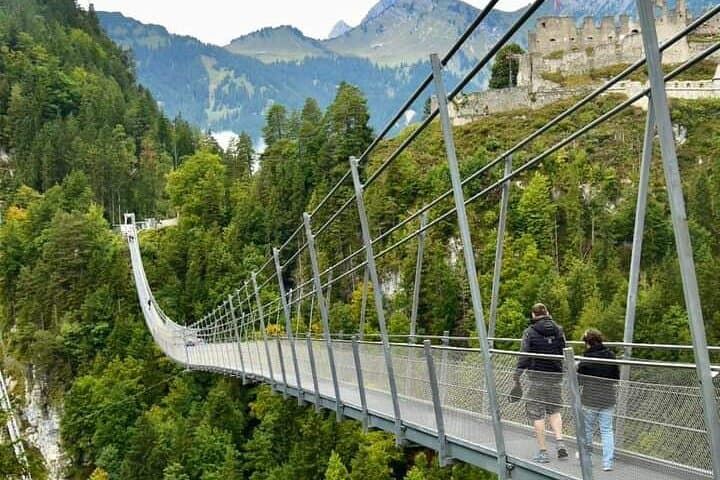
The route threads through Hohenschwangau and the Lech valley, a landscape shaped by glacial carving and limestone escarpments. Neuschwanstein was built by King Ludwig II between 1869 and 1886 as an escapist, theatrical residence; nearby Highline 179, a modern suspension bridge spanning 114 m above the valley, speaks to the engineering thrill of the region and the borderlands with Tyrol, Austria.
Culturally the area blends Bavarian village life and Alpine tourism: frescoed houses in Partenkirchen, Olympic history, and local alpine cheese stands. Expect cobbled streets, short uphill walks, and controlled-group entry inside the castle as per site policy.
Practical guidance: wear sturdy shoes — the castle approach is steep and sometimes muddy; allow a full day (9–10 hours) for pickup from Munich, the castle tour, a shuttle to Marienbrücke for the viewpoint, the Highline 179 visit near Reutte, and a stroll through Garmisch‑Partenkirchen. Bring photo ID for ticketing, cash for small vendors, and layered clothing — weather changes quickly at altitude. If Marienbrücke is closed in winter, the guide will route to alternate viewpoints.
This private tour packages transport, skip‑the‑line castle tickets, and a driver‑guide, making it efficient for travelers who want both historic interiors and a high‑altitude adrenaline walk without juggling logistics.
moderate.
9–10 hours.
Moderate — participants should be able to handle repeated short uphill walks and standing during guided tours.
Yes — the private tour includes hotel pickup and drop‑off in Munich; exact pickup time depends on your location and traffic.
You can walk from Hohenschwangau village to Marienbrücke and the castle, but many guests use the shuttle to the bridge then walk the uphill path; expect 15–30 minutes of uphill walking depending on pace.
If Marienbrücke is closed for safety (typically in winter), the guide will redirect to alternate viewpoints or adjust the schedule to visit other local highlights.
Neuschwanstein’s interior tour involves stairs and limited accessibility; the tour operator notes it’s not recommended for guests with significant spinal or heart conditions—contact them for special accommodations.
Neuschwanstein was commissioned by King Ludwig II in 1869 as a private retreat and homage to medieval legends; its dramatic construction reflects 19th‑century romantic historicism.
High visitation concentrates impacts—stay on marked paths, avoid trampling alpine vegetation, and use local waste facilities to reduce wear on fragile slopes.
Special Private Tours operates guided outdoor trips and adventures with an emphasis on safety, stewardship, and memorable experiences.
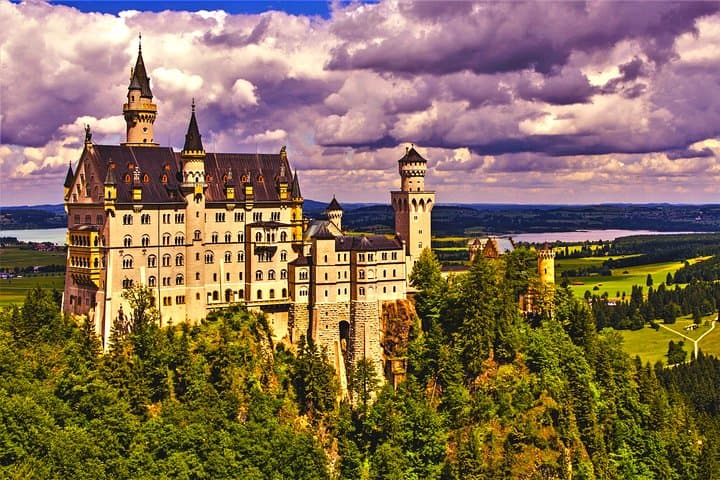
You step out of the minivan on a crisp Bavarian morning and a limestone ridge drops away below a fairy‑tale silhouette. Neuschwanstein’s white towers catch the light while the valley smells faintly of wet pine and road dust; the guide folds maps into stories about a king who built for dreams.
You step out of the minivan on a crisp Bavarian morning and a limestone ridge drops away below a fairy‑tale silhouette. Neuschwanstein’s white towers catch the light while the valley smells faintly of wet pine and road dust; the guide folds maps into stories about a king who built for dreams.
The route threads through Hohenschwangau and the Lech valley, a landscape shaped by glacial carving and limestone escarpments. Neuschwanstein was built by King Ludwig II between 1869 and 1886 as an escapist, theatrical residence; nearby Highline 179, a modern suspension bridge spanning 114 m above the valley, speaks to the engineering thrill of the region and the borderlands with Tyrol, Austria.
Culturally the area blends Bavarian village life and Alpine tourism: frescoed houses in Partenkirchen, Olympic history, and local alpine cheese stands. Expect cobbled streets, short uphill walks, and controlled-group entry inside the castle as per site policy.
Practical guidance: wear sturdy shoes — the castle approach is steep and sometimes muddy; allow a full day (9–10 hours) for pickup from Munich, the castle tour, a shuttle to Marienbrücke for the viewpoint, the Highline 179 visit near Reutte, and a stroll through Garmisch‑Partenkirchen. Bring photo ID for ticketing, cash for small vendors, and layered clothing — weather changes quickly at altitude. If Marienbrücke is closed in winter, the guide will route to alternate viewpoints.
This private tour packages transport, skip‑the‑line castle tickets, and a driver‑guide, making it efficient for travelers who want both historic interiors and a high‑altitude adrenaline walk without juggling logistics.