THE ADVENTURE COLLECTIVE® · Independent discovery and booking for outdoor travel

Explore Nazca’s archaeological core on a private, four-hour tour of Chauchilla cemetery, the Cahuachi ceremonial complex and the Achaco puquíos. A bilingual guide leads a focused, crowd-free visit with hotel pickup in Nazca.
Explore Nazca’s archaeological core on a private, four-hour tour of Chauchilla cemetery, the Cahuachi ceremonial complex and the Achaco puquíos. A bilingual guide leads a focused, crowd-free visit with hotel pickup in Nazca.
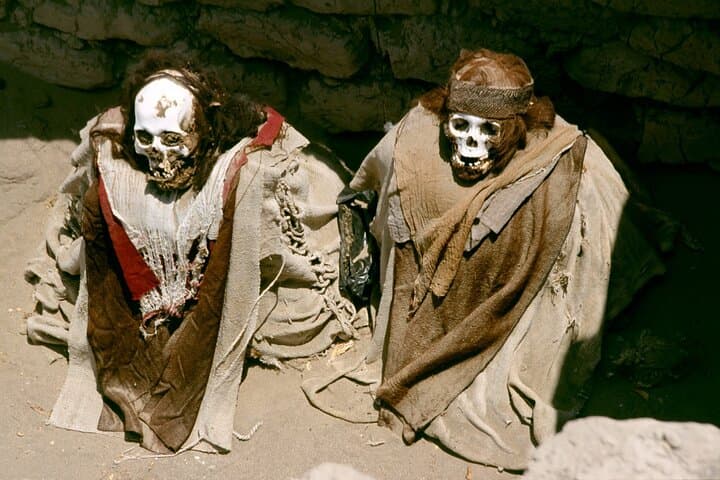
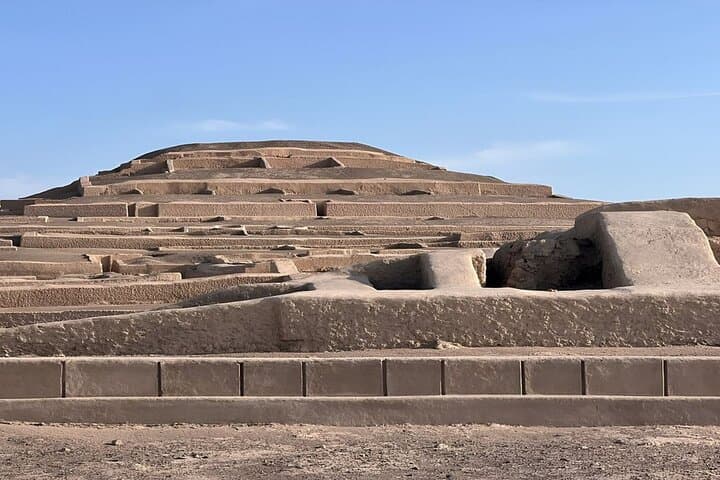
A low sun slices across the Nazca pampas, turning flat, ochre plains into a series of long shadows. Your private vehicle bumps off the Panamericana and into a quieter world where wind-polished clay meets the slow geometry of human work—burial mounds, ceremonial platforms and the stone mouths of ancient aqueducts. An expert local guide sets the pace, pointing out woven bands still clinging to mummies in the Chauchilla cemetery, and the spread of adobe platforms at Cahuachi where priests once moved between plazas.
Verified experiences and guided adventures in the surrounding area.
Operated by Kametsa Travel · Nazca, Ica
A low sun slices across the Nazca pampas, turning flat, ochre plains into a series of long shadows. Your private vehicle bumps off the Panamericana and into a quieter world where wind-polished clay meets the slow geometry of human work—burial mounds, ceremonial platforms and the stone mouths of ancient aqueducts. An expert local guide sets the pace, pointing out woven bands still clinging to mummies in the Chauchilla cemetery, and the spread of adobe platforms at Cahuachi where priests once moved between plazas.
The Nazca culture (ca. 200 BCE–600 CE) engineered both ritual space and water solutions: Cahuachi functioned as a ceremonial hub, while the Achaco puquíos are examples of gravity-fed underground aqueducts that still channel water. Geologically, the region is coastal desert—hardpan soils, wind-sculpted dunes and sporadic river terraces cut by seasonal runoff. The human imprint is layered: textiles and burials at Chauchilla, flattened plazas at Cahuachi, and ancient hydrology at Achaco.
Practically, this private four-hour tour balances close inspection with comfort: expect short walks on uneven desert and archaeological surfaces, a bilingual guide, and hotel pickup in Nazca. Wear closed shoes, sun protection and carry water; photography is allowed but handle archaeological areas respectfully. Timing matters—early morning light reveals texture on adobe platforms and keeps heat manageable. The experience pairs cultural discovery with a tactile sense of place: stones that held ceremonies and channels that still coax water through an arid landscape.
easy.
4 hours.
Suitable for most fitness levels; involves short walks on uneven ground.
Yes—tickets to Chauchilla cemetery and entrance to Cahuachi are included as listed in the tour inclusions.
Yes—private pickup and drop-off at hotels in Nazca are included.
The tour is suitable for most ages, but infants must sit on an adult’s lap during transport as noted in booking requirements.
An official bilingual (English–Spanish) guide is provided; other languages can be arranged with advance notice.
The Nazca culture created specialized ceremonial and funerary sites; Cahuachi served as a major ritual center while Chauchilla functioned as a formal cemetery with well-preserved textiles.
Archaeological sites are vulnerable to looting and erosion—stay on paths, do not touch remains, and heed guide instructions to minimize impact.
Kametsa Travel operates guided outdoor trips and adventures with an emphasis on safety, stewardship, and memorable experiences.

A low sun slices across the Nazca pampas, turning flat, ochre plains into a series of long shadows. Your private vehicle bumps off the Panamericana and into a quieter world where wind-polished clay meets the slow geometry of human work—burial mounds, ceremonial platforms and the stone mouths of ancient aqueducts. An expert local guide sets the pace, pointing out woven bands still clinging to mummies in the Chauchilla cemetery, and the spread of adobe platforms at Cahuachi where priests once moved between plazas.
A low sun slices across the Nazca pampas, turning flat, ochre plains into a series of long shadows. Your private vehicle bumps off the Panamericana and into a quieter world where wind-polished clay meets the slow geometry of human work—burial mounds, ceremonial platforms and the stone mouths of ancient aqueducts. An expert local guide sets the pace, pointing out woven bands still clinging to mummies in the Chauchilla cemetery, and the spread of adobe platforms at Cahuachi where priests once moved between plazas.
The Nazca culture (ca. 200 BCE–600 CE) engineered both ritual space and water solutions: Cahuachi functioned as a ceremonial hub, while the Achaco puquíos are examples of gravity-fed underground aqueducts that still channel water. Geologically, the region is coastal desert—hardpan soils, wind-sculpted dunes and sporadic river terraces cut by seasonal runoff. The human imprint is layered: textiles and burials at Chauchilla, flattened plazas at Cahuachi, and ancient hydrology at Achaco.
Practically, this private four-hour tour balances close inspection with comfort: expect short walks on uneven desert and archaeological surfaces, a bilingual guide, and hotel pickup in Nazca. Wear closed shoes, sun protection and carry water; photography is allowed but handle archaeological areas respectfully. Timing matters—early morning light reveals texture on adobe platforms and keeps heat manageable. The experience pairs cultural discovery with a tactile sense of place: stones that held ceremonies and channels that still coax water through an arid landscape.