THE ADVENTURE COLLECTIVE® · Independent discovery and booking for outdoor travel

Spend a full day away from Beijing’s bustle exploring two very different sections of the Great Wall. Start on the restored, accessible ramps of Mutianyu and finish with the raw, photogenic watchtowers of Jinshanling for a balanced, crowd-conscious experience.
Spend a full day away from Beijing’s bustle exploring two very different sections of the Great Wall. Start on the restored, accessible ramps of Mutianyu and finish with the raw, photogenic watchtowers of Jinshanling for a balanced, crowd-conscious experience.
You step out of the car as the valley exhales — cool mountain air carrying the scent of pine and damp stone. The Mutianyu section rises ahead: broad, repaired ramps of Ming brick that climb a green spine of ridgelines. Later, on a narrower track at Jinshanling, the Wall slips between restored towers and raw, crumbling battlements where the wind seems to push you forward, daring a longer gaze.
Verified experiences and guided adventures in the surrounding area.
Operated by China Fun Tours · Beijing, Beijing
You step out of the car as the valley exhales — cool mountain air carrying the scent of pine and damp stone. The Mutianyu section rises ahead: broad, repaired ramps of Ming brick that climb a green spine of ridgelines. Later, on a narrower track at Jinshanling, the Wall slips between restored towers and raw, crumbling battlements where the wind seems to push you forward, daring a longer gaze.
These two sections show contrasting chapters of the Great Wall’s story. Mutianyu was heavily restored and served as a guarded approach to the plains around Beijing during the Ming dynasty; Jinshanling retains long stretches of original masonry and ruined watchtowers, revealing construction methods and the rugged geology — granite outcrops and steep scarps — that shaped its route.
Local culture still threads through the hills: villagers selling sunflower seeds, guides pointing out restored embrasures, and photographers timing the light. The tour pairs easy access (cable cars and paved paths at Mutianyu) with wilderness hiking (2–3 hours across Jinshanling’s mixed restored and unrestored sections). Expect lots of stairs, uneven footing, and exposed ridge-top walking with panoramic views.
Practical guide: depart early to avoid Beijing traffic and midday crowds; carry 2–3 liters of water, layered clothing, sun protection, and a daypack for snacks and camera gear. The itinerary includes private transport, cable car tickets, and a guide; bring your passport for admission checks. Moderate fitness and steady footing are required — the reward is long, photogenic lines of wall snaking over mountain waves and a quieter sense of the Wall’s scale away from the city.
moderate.
10–11 hours.
Moderate — able to walk 4–5 hours over uneven stone, climb stairs repeatedly, and manage short ascents/descents.
The transfer is about 1.5 hours by private car depending on traffic and road conditions.
Yes — the tour includes round-trip cable car tickets for the sections that offer them; you can choose to walk instead at Mutianyu if you prefer.
Children are welcome, but infants must sit on an adult’s lap; families should be prepared for stairs and uneven paths, and Jinshanling is less stroller-friendly.
Yes — bring your passport for ticketing and admission checks at the Great Wall sites.
Both sections feature Ming-dynasty construction: Mutianyu was refurbished for strategic defense of the approaches to Beijing, while Jinshanling preserves original brickwork and ruined towers that reveal early fortification design.
High foot traffic causes erosion on exposed sections; stay on marked paths, avoid climbing fragile ruins, and support local conservation by following guide instructions.
China Fun Tours operates guided outdoor trips and adventures with an emphasis on safety, stewardship, and memorable experiences.
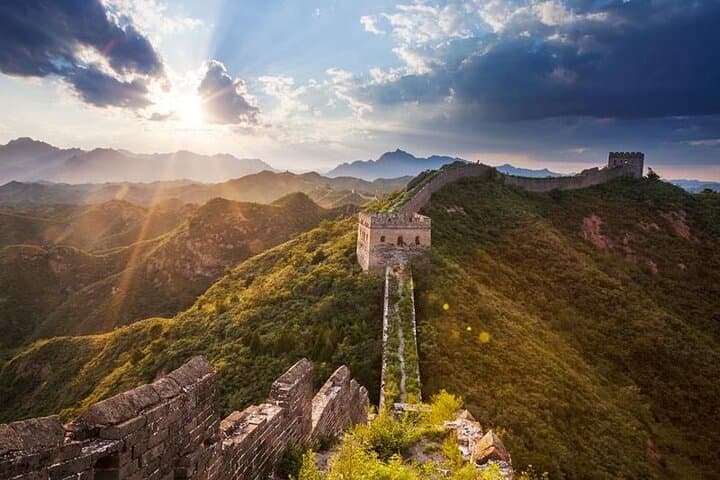
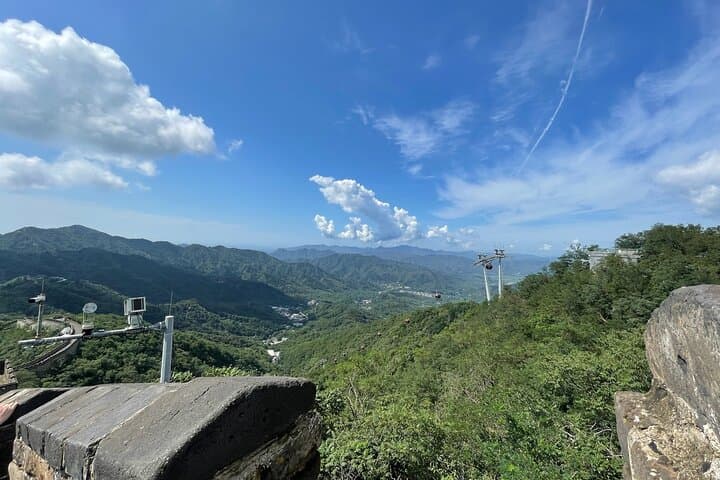
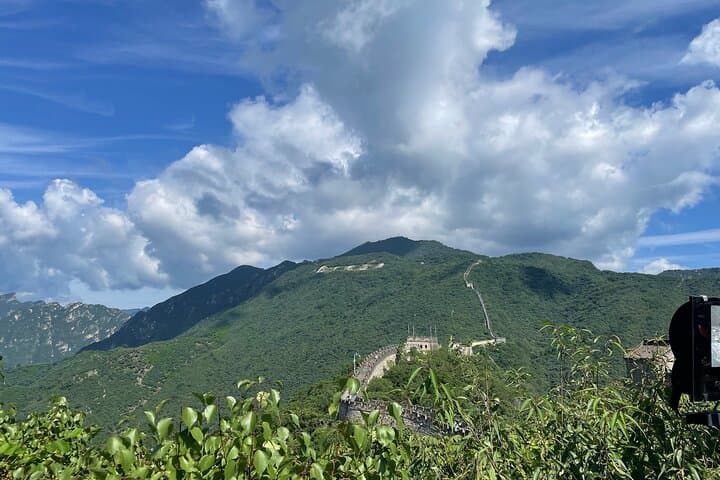
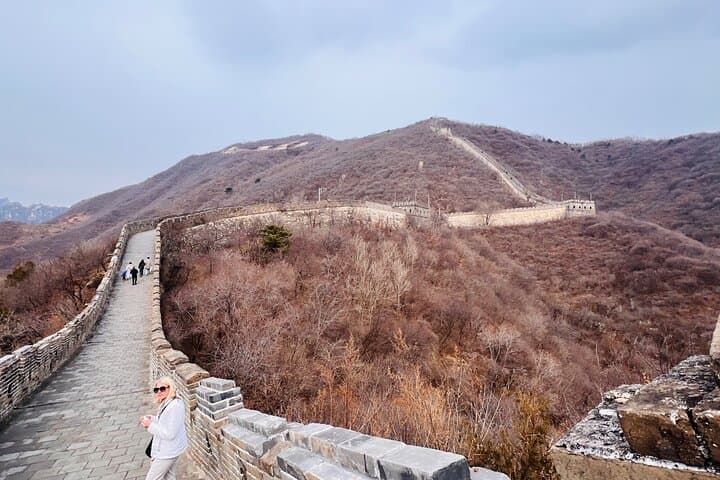
You step out of the car as the valley exhales — cool mountain air carrying the scent of pine and damp stone. The Mutianyu section rises ahead: broad, repaired ramps of Ming brick that climb a green spine of ridgelines. Later, on a narrower track at Jinshanling, the Wall slips between restored towers and raw, crumbling battlements where the wind seems to push you forward, daring a longer gaze.
You step out of the car as the valley exhales — cool mountain air carrying the scent of pine and damp stone. The Mutianyu section rises ahead: broad, repaired ramps of Ming brick that climb a green spine of ridgelines. Later, on a narrower track at Jinshanling, the Wall slips between restored towers and raw, crumbling battlements where the wind seems to push you forward, daring a longer gaze.
These two sections show contrasting chapters of the Great Wall’s story. Mutianyu was heavily restored and served as a guarded approach to the plains around Beijing during the Ming dynasty; Jinshanling retains long stretches of original masonry and ruined watchtowers, revealing construction methods and the rugged geology — granite outcrops and steep scarps — that shaped its route.
Local culture still threads through the hills: villagers selling sunflower seeds, guides pointing out restored embrasures, and photographers timing the light. The tour pairs easy access (cable cars and paved paths at Mutianyu) with wilderness hiking (2–3 hours across Jinshanling’s mixed restored and unrestored sections). Expect lots of stairs, uneven footing, and exposed ridge-top walking with panoramic views.
Practical guide: depart early to avoid Beijing traffic and midday crowds; carry 2–3 liters of water, layered clothing, sun protection, and a daypack for snacks and camera gear. The itinerary includes private transport, cable car tickets, and a guide; bring your passport for admission checks. Moderate fitness and steady footing are required — the reward is long, photogenic lines of wall snaking over mountain waves and a quieter sense of the Wall’s scale away from the city.