THE ADVENTURE COLLECTIVE® · Independent discovery and booking for outdoor travel

Step into the grand clocklit halls of Musée d'Orsay with a private guide and fast-track access. This concise tour pairs deep looks at Impressionist masters with an Old Town walking circuit along the Seine.
Step into the grand clocklit halls of Musée d'Orsay with a private guide and fast-track access. This concise tour pairs deep looks at Impressionist masters with an Old Town walking circuit along the Seine.
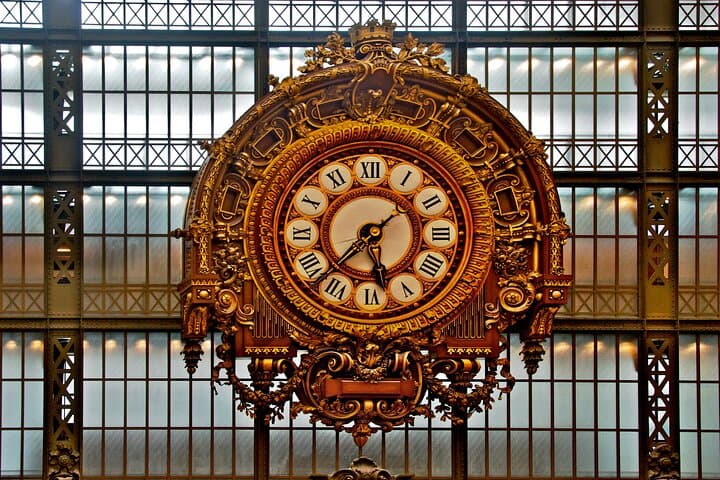
Morning light pours through the museum’s enormous clock and turns brushstrokes into routes of motion; the Musée d'Orsay feels like both gallery and observatory. On a private, fast-track tour, a guide leads small groups across the vast former railway concourse, where vaulted glass and iron frame still shape the way paintings and sculptures are seen.
Verified experiences and guided adventures in the surrounding area.
Operated by Rosotravel - France Tours & Activities · Paris, Île-de-France
Morning light pours through the museum’s enormous clock and turns brushstrokes into routes of motion; the Musée d'Orsay feels like both gallery and observatory. On a private, fast-track tour, a guide leads small groups across the vast former railway concourse, where vaulted glass and iron frame still shape the way paintings and sculptures are seen.
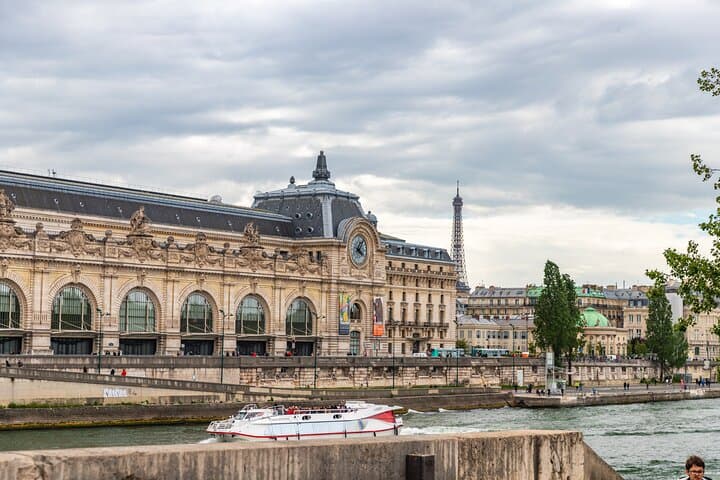
Originally opened as Gare d'Orsay for the 1900 Exposition, the building is a late-19th-century Beaux-Arts conversion that now houses France’s richest collection of 19th- and early-20th-century art. The Seine—always present—pushes traffic and light along the riverbank; across the water, Île de la Cité and the stone mass of Notre-Dame remind visitors of Paris’s layered history. The Orsay’s galleries map the shift from academic painting to Impressionism and beyond: Manet’s confrontations, Monet’s studies of light, Van Gogh’s volcanic strokes, and Rodin’s tactile sculptures.
Expect focused interpretation rather than a free-for-all: guides explain technique, patronage, and the social currents that shaped the works, and point out quieter corners like the clock-facing galleries and the lesser-known sculpture rooms.
Practicalities: tours range from two to 5.5 hours and may include private transfers; groups are limited (usually six) and you’ll pass through standard security checks. Bring a compact bag, charged phone, and expect limited photography in some galleries. Aim for a morning slot to avoid afternoon crowds, and allow extra time if you add a walking circuit through Saint-Germain-l'Auxerrois, the Louvre façades, and riverside viewpoints.
easy.
2–5.5 hours.
Suitable for most fitness levels; plan for moderate walking and standing during the tour.
Fast-track options reduce time at the ticket desk, but you will still queue briefly for ticket validation and mandatory security checks.
Non-flash photography is generally permitted in permanent galleries but may be restricted in specific rooms or temporary exhibitions—follow your guide’s instructions.
Yes; the route and private transfers can be arranged wheelchair-accessible, but inform the operator during booking so they can prepare assistance.
Transfers cover central Paris; 3.5- and 5.5-hour options include estimated round-trip transfers based on your accommodation location and traffic conditions.
Housed in a former 1900 train station (Gare d'Orsay), the museum opened in 1986 and specializes in art from 1848–1914, bridging academic painting and modern movements.
The museum limits group sizes and regulates exhibit conditions to protect works; visitors are encouraged to use public transit and follow museum guidelines to minimize impact.
Rosotravel - France Tours & Activities operates guided outdoor trips and adventures with an emphasis on safety, stewardship, and memorable experiences.

Morning light pours through the museum’s enormous clock and turns brushstrokes into routes of motion; the Musée d'Orsay feels like both gallery and observatory. On a private, fast-track tour, a guide leads small groups across the vast former railway concourse, where vaulted glass and iron frame still shape the way paintings and sculptures are seen.
Morning light pours through the museum’s enormous clock and turns brushstrokes into routes of motion; the Musée d'Orsay feels like both gallery and observatory. On a private, fast-track tour, a guide leads small groups across the vast former railway concourse, where vaulted glass and iron frame still shape the way paintings and sculptures are seen.
Originally opened as Gare d'Orsay for the 1900 Exposition, the building is a late-19th-century Beaux-Arts conversion that now houses France’s richest collection of 19th- and early-20th-century art. The Seine—always present—pushes traffic and light along the riverbank; across the water, Île de la Cité and the stone mass of Notre-Dame remind visitors of Paris’s layered history. The Orsay’s galleries map the shift from academic painting to Impressionism and beyond: Manet’s confrontations, Monet’s studies of light, Van Gogh’s volcanic strokes, and Rodin’s tactile sculptures.
Expect focused interpretation rather than a free-for-all: guides explain technique, patronage, and the social currents that shaped the works, and point out quieter corners like the clock-facing galleries and the lesser-known sculpture rooms.
Practicalities: tours range from two to 5.5 hours and may include private transfers; groups are limited (usually six) and you’ll pass through standard security checks. Bring a compact bag, charged phone, and expect limited photography in some galleries. Aim for a morning slot to avoid afternoon crowds, and allow extra time if you add a walking circuit through Saint-Germain-l'Auxerrois, the Louvre façades, and riverside viewpoints.