THE ADVENTURE COLLECTIVE® · Independent discovery and booking for outdoor travel

A private full-day tour takes you from the grandeur of Sultan Qaboos Grand Mosque to the winding alleys of Muttrah Souk and the photo-ready forts of Old Muscat. Expect cultural context, easy walking, and coastal vistas across an eight-hour loop.
A private full-day tour takes you from the grandeur of Sultan Qaboos Grand Mosque to the winding alleys of Muttrah Souk and the photo-ready forts of Old Muscat. Expect cultural context, easy walking, and coastal vistas across an eight-hour loop.
You step out of your hotel into Muscat light that slides off white stone and the sea at the harbor seems to pull the city toward it. The day begins with the Sultan Qaboos Grand Mosque, where the vast prayer hall and one-piece handmade carpet measure scale and human care; sunlight sifts through carved screens and the marble floor cools your steps.
Verified experiences and guided adventures in the surrounding area.
Operated by Landscape Tours · Muscat, Muscat Governorate
You step out of your hotel into Muscat light that slides off white stone and the sea at the harbor seems to pull the city toward it. The day begins with the Sultan Qaboos Grand Mosque, where the vast prayer hall and one-piece handmade carpet measure scale and human care; sunlight sifts through carved screens and the marble floor cools your steps.
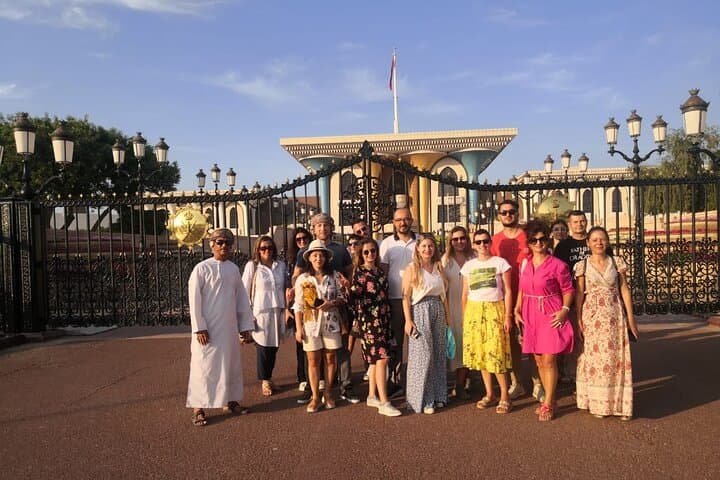
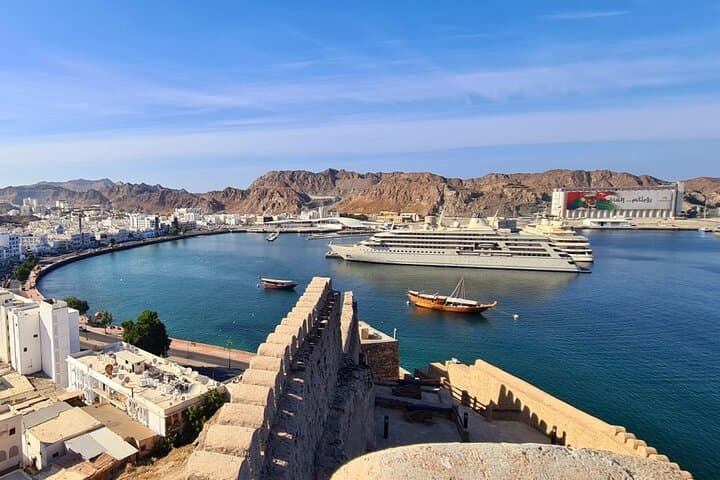
From there the tour moves through the civic spine around the Royal Opera House, then into Old Muscat where Al Alam Palace and the Portuguese-built Al Jalali and Al Mirani forts keep watch over the inlet. Muttrah’s souk tightens the pace: narrow alleys, brass lamps, khanjar on display, and bargaining that feels like a practiced ritual more than a sale. Along Qurm and Muttrah the sea nudges the harbor and, on clear days, the mountains behind the city present strata of ancient limestone and basalt that tell Oman’s geologic story.
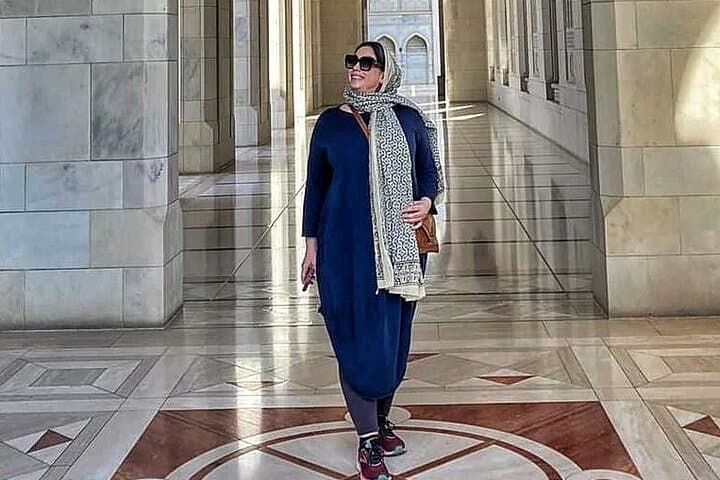
Culturally, Muscat balances conservative traditions with modern arts—museums and souks sit a short drive from government buildings and seaside parks. Practicalities matter: dress respectfully at religious sites, time visits around Friday prayers, and expect short walks on uneven surfaces at forts and in markets.
Bring a refillable water bottle, sun protection, comfortable shoes, and allow eight hours for the full loop. The tour runs well for first-time visitors who want an efficient, private overview of Muscat’s coastal history, civic architecture, and market life.
easy.
6–8 hours.
Suitable for most fitness levels; involves several short walks and standing at sites.
Most mosque visits are free but have dress rules; museum or fort admissions (if included) will be noted by the operator—confirm at booking.
Yes, the itinerary typically includes time to explore Muttrah Souk on foot for about an hour; purchases are at your own expense.
Yes—the tour includes pickup and drop-off within the Muscat area; you’ll provide your hotel or port details when booking.
Private format allows flexibility—ask the operator to swap stops or adjust time at each site when booking, subject to operating hours.
Old Muscat’s harbor forts were built by the Portuguese in the 16th century; Muttrah Souk evolved over two hundred years as a trading hub linking the Gulf and Indian Ocean.
Coastal development and visitor traffic put pressure on shorelines and cultural sites—stick to marked paths, avoid single-use plastics, and follow guidance at sensitive sites.
Landscape Tours operates guided outdoor trips and adventures with an emphasis on safety, stewardship, and memorable experiences.
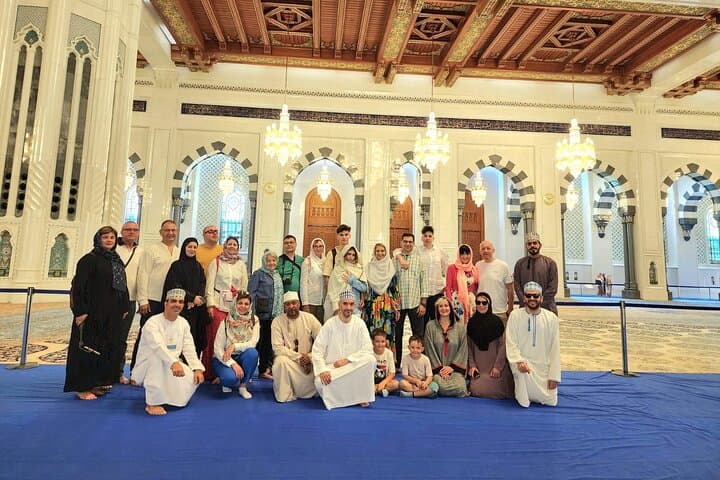
You step out of your hotel into Muscat light that slides off white stone and the sea at the harbor seems to pull the city toward it. The day begins with the Sultan Qaboos Grand Mosque, where the vast prayer hall and one-piece handmade carpet measure scale and human care; sunlight sifts through carved screens and the marble floor cools your steps.
You step out of your hotel into Muscat light that slides off white stone and the sea at the harbor seems to pull the city toward it. The day begins with the Sultan Qaboos Grand Mosque, where the vast prayer hall and one-piece handmade carpet measure scale and human care; sunlight sifts through carved screens and the marble floor cools your steps.
From there the tour moves through the civic spine around the Royal Opera House, then into Old Muscat where Al Alam Palace and the Portuguese-built Al Jalali and Al Mirani forts keep watch over the inlet. Muttrah’s souk tightens the pace: narrow alleys, brass lamps, khanjar on display, and bargaining that feels like a practiced ritual more than a sale. Along Qurm and Muttrah the sea nudges the harbor and, on clear days, the mountains behind the city present strata of ancient limestone and basalt that tell Oman’s geologic story.
Culturally, Muscat balances conservative traditions with modern arts—museums and souks sit a short drive from government buildings and seaside parks. Practicalities matter: dress respectfully at religious sites, time visits around Friday prayers, and expect short walks on uneven surfaces at forts and in markets.
Bring a refillable water bottle, sun protection, comfortable shoes, and allow eight hours for the full loop. The tour runs well for first-time visitors who want an efficient, private overview of Muscat’s coastal history, civic architecture, and market life.