THE ADVENTURE COLLECTIVE® · Independent discovery and booking for outdoor travel

Cruise the Venetian Lagoon on a private 4‑hour boat tour to see Murano’s glassblowers, Burano’s colorful houses and Torcello’s medieval mosaics. Expect short walks, artisan demonstrations and intimate island time away from the main canals.
Cruise the Venetian Lagoon on a private 4‑hour boat tour to see Murano’s glassblowers, Burano’s colorful houses and Torcello’s medieval mosaics. Expect short walks, artisan demonstrations and intimate island time away from the main canals.
You step off the vaporetto and into a different rhythm: the motorboat pulls away from St. Mark’s Square, the lagoon opening like a wide, briny street that presses forward with a light push. In four hours the private tour threads three islands—Murano, Burano and Torcello—each with a distinct voice: the hiss of a glass furnace, the bright geometry of fishermen’s facades, and the slow, shadowed stones of an early medieval settlement.
Verified experiences and guided adventures in the surrounding area.
Operated by Bucintoro Viaggi · Venice, Veneto
You step off the vaporetto and into a different rhythm: the motorboat pulls away from St. Mark’s Square, the lagoon opening like a wide, briny street that presses forward with a light push. In four hours the private tour threads three islands—Murano, Burano and Torcello—each with a distinct voice: the hiss of a glass furnace, the bright geometry of fishermen’s facades, and the slow, shadowed stones of an early medieval settlement.
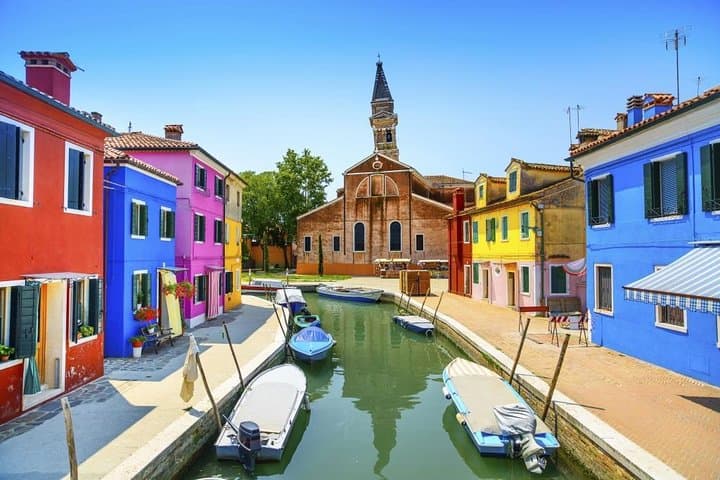
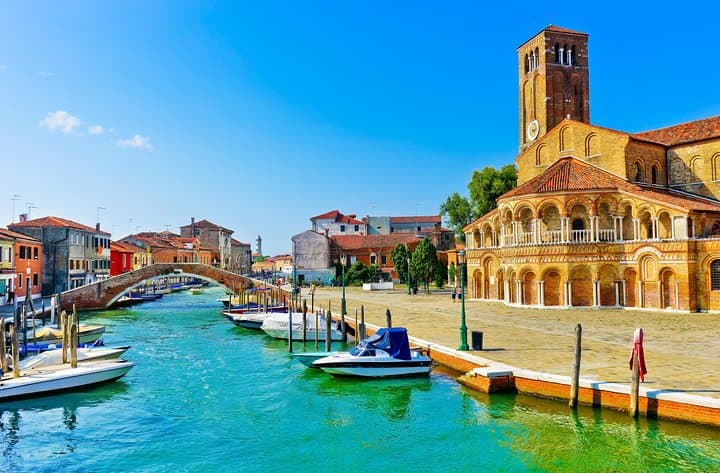
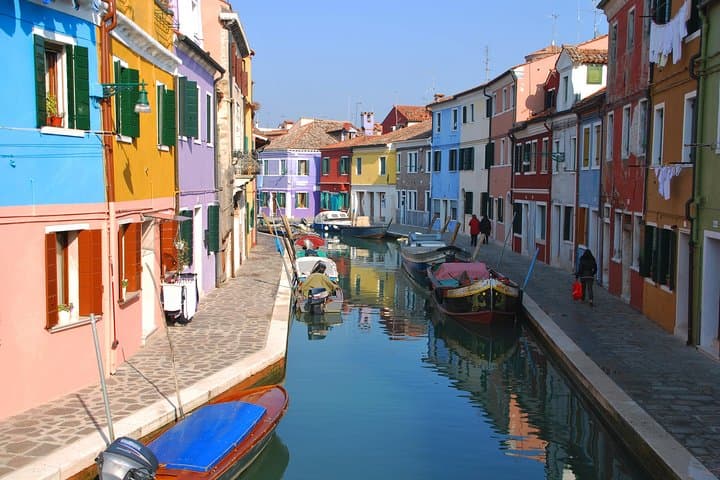
Murano’s story is industrial artistry. From the 13th century, Venetian authorities concentrated glassmaking here; visitors still watch masters reheating molten glass and coaxing forms with practiced blows. Burano answers with color and craft: painted houses align like a painter’s palette and lacemaking traditions reach back centuries; small ateliers sell bobbin lace and local biscottis. Torcello is quieter—one of the lagoon’s earliest communities—where the Cathedral of Santa Maria Assunta displays Byzantine mosaics and the 12th‑century Church of Santa Fosca anchors the piazza.
Practicalities matter: departures are from Campo San Luca (Bucintoro Viaggi), the trip uses a private motor boat, and the tour is capped at eight guests for a personalized pace. Churches require covered knees and shoulders. Expect short walks on uneven paving and narrow piers; stroller and wheelchair access is noted but confirm specifics when booking. Bring layered clothing for wind off the water, a small daypack, and cash for artisanal shops and cafés. Plan morning or late‑afternoon outings for softer light on Burano’s houses and fewer crowds—this half‑day is compact but rich, a close study in craft, color and lagoon history.
easy.
4 hours.
Suitable for most fitness levels; includes short, flat walks and boarding small boats—basic mobility recommended.
The tour departs and returns to Bucintoro Viaggi at Campo San Luca (near St. Mark’s Square) — check your confirmation for exact meeting details.
Yes; the itinerary includes a Murano glass demonstration and access to a workshop; some museums or specific paid exhibits on islands may be extra.
Yes—stroller access is listed, but narrow piers and short walks mean you should be prepared to fold or carry a stroller for some transitions.
Yes—knees and shoulders must be covered to enter churches; bring a scarf or long shorts to meet the dress code.
Murano became Venice’s centralized glassmaking center in the 13th century to control the industry; Torcello is one of the lagoon’s earliest settled sites with Byzantine and medieval remains.
The Venetian Lagoon is ecologically sensitive—avoid littering, respect nesting birds, and follow local guidance to minimize wake and shoreline disturbance.
Bucintoro Viaggi operates guided outdoor trips and adventures with an emphasis on safety, stewardship, and memorable experiences.
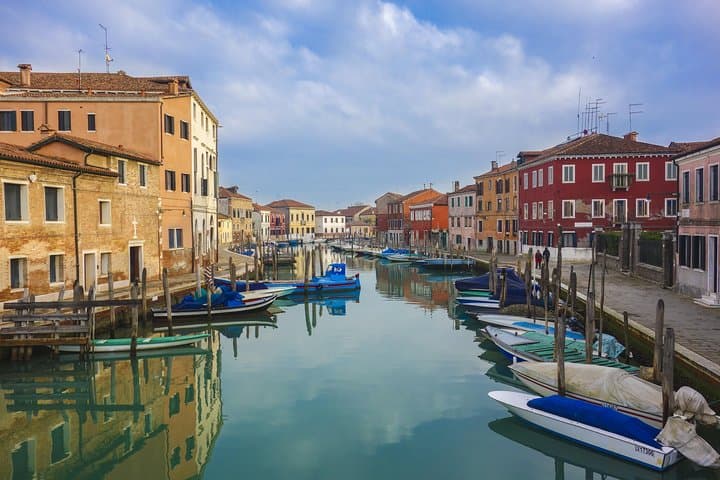
You step off the vaporetto and into a different rhythm: the motorboat pulls away from St. Mark’s Square, the lagoon opening like a wide, briny street that presses forward with a light push. In four hours the private tour threads three islands—Murano, Burano and Torcello—each with a distinct voice: the hiss of a glass furnace, the bright geometry of fishermen’s facades, and the slow, shadowed stones of an early medieval settlement.
You step off the vaporetto and into a different rhythm: the motorboat pulls away from St. Mark’s Square, the lagoon opening like a wide, briny street that presses forward with a light push. In four hours the private tour threads three islands—Murano, Burano and Torcello—each with a distinct voice: the hiss of a glass furnace, the bright geometry of fishermen’s facades, and the slow, shadowed stones of an early medieval settlement.
Murano’s story is industrial artistry. From the 13th century, Venetian authorities concentrated glassmaking here; visitors still watch masters reheating molten glass and coaxing forms with practiced blows. Burano answers with color and craft: painted houses align like a painter’s palette and lacemaking traditions reach back centuries; small ateliers sell bobbin lace and local biscottis. Torcello is quieter—one of the lagoon’s earliest communities—where the Cathedral of Santa Maria Assunta displays Byzantine mosaics and the 12th‑century Church of Santa Fosca anchors the piazza.
Practicalities matter: departures are from Campo San Luca (Bucintoro Viaggi), the trip uses a private motor boat, and the tour is capped at eight guests for a personalized pace. Churches require covered knees and shoulders. Expect short walks on uneven paving and narrow piers; stroller and wheelchair access is noted but confirm specifics when booking. Bring layered clothing for wind off the water, a small daypack, and cash for artisanal shops and cafés. Plan morning or late‑afternoon outings for softer light on Burano’s houses and fewer crowds—this half‑day is compact but rich, a close study in craft, color and lagoon history.