THE ADVENTURE COLLECTIVE® · Independent discovery and booking for outdoor travel

Walk Munich’s Old Town with a private guide: Marienplatz, Frauenkirche and Viktualienmarkt come alive through layered history, wartime stories, and lively market culture. This concise two-hour tour is a practical way to orient yourself and capture the city’s essential sights.
Walk Munich’s Old Town with a private guide: Marienplatz, Frauenkirche and Viktualienmarkt come alive through layered history, wartime stories, and lively market culture. This concise two-hour tour is a practical way to orient yourself and capture the city’s essential sights.
Step off a tram and into the pulse of Munich: cobblestones underfoot, the Glockenspiel chiming above Marienplatz and church towers slicing the sky. The guide leads through narrow lanes where façades bear the scars of the Second World War and the careful brushstrokes of reconstruction. Vendors at Viktualienmarkt call out like an orchestra of daily life; the Hofbräuhaus hums with long benches and local lore.
Verified experiences and guided adventures in the surrounding area.
Operated by Radius Tours GmbH · Munich, Bavaria
Step off a tram and into the pulse of Munich: cobblestones underfoot, the Glockenspiel chiming above Marienplatz and church towers slicing the sky. The guide leads through narrow lanes where façades bear the scars of the Second World War and the careful brushstrokes of reconstruction. Vendors at Viktualienmarkt call out like an orchestra of daily life; the Hofbräuhaus hums with long benches and local lore.
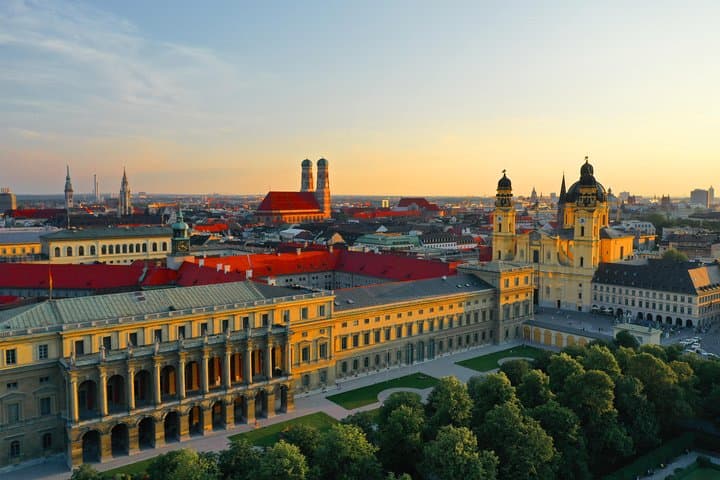
Munich’s core sits on a gravel plain shaped by the Isar River; its medieval street plan grew from a market and monastic settlement recorded from 1158. The Frauenkirche, with its distinctive domes, anchors centuries of civic and religious history, while the Residenz and Alter Hof show how Bavarian power concentrated and then softened into public squares and beer gardens. Cultural notes: Munich blends Bavarian tradition with modern design, and local food markets remain social hubs.
Practical guidance: this is a low-impact, two-hour walk on mostly flat, paved streets—bring sturdy shoes, a light jacket, and a small water bottle. Guided stops include photo-friendly viewpoints and market stalls; ask to tailor the route toward architecture, WWII history, or culinary stops. Public transport is efficient; plan to meet in Marienplatz to minimize confusion. Peak seasons (late spring–early fall) bring crowds—early morning departures deliver clearer photos and cooler air. The tour is wheelchair- and stroller-accessible in central areas, but some alleys have uneven paving. Keep ID handy for any museum entry you choose to add, and leave large backpacks at your hotel to move easily among narrow streets.
easy.
2 hours.
Suitable for most fitness levels; requires ability to walk 1–2 miles on paved, sometimes uneven surfaces.
Most tours meet at Marienplatz near the New Town Hall; confirm the exact meeting point on your booking voucher or with the guide.
Yes—this tour is stroller-accessible and family-friendly, though some alleys have uneven paving to watch for.
Yes—the guide can adjust focus to architecture, WWII history, or local food stops if you request it in advance or at the start.
Full refunds are available if you cancel at least 24 hours before the scheduled departure time; check your booking confirmation for specifics.
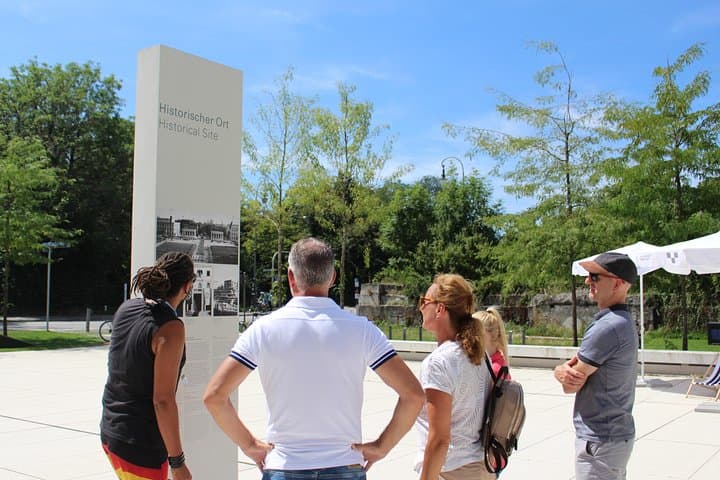
Munich’s Old Town grew from a market tied to a Benedictine monastery first recorded in 1158; heavy WWII bombing destroyed large parts of the center and prompted meticulous post-war reconstruction.
Visitors are encouraged to use public transport, support local markets and small businesses, and avoid trampling historic surfaces to preserve the district’s fragile urban fabric.
Radius Tours GmbH operates guided outdoor trips and adventures with an emphasis on safety, stewardship, and memorable experiences.
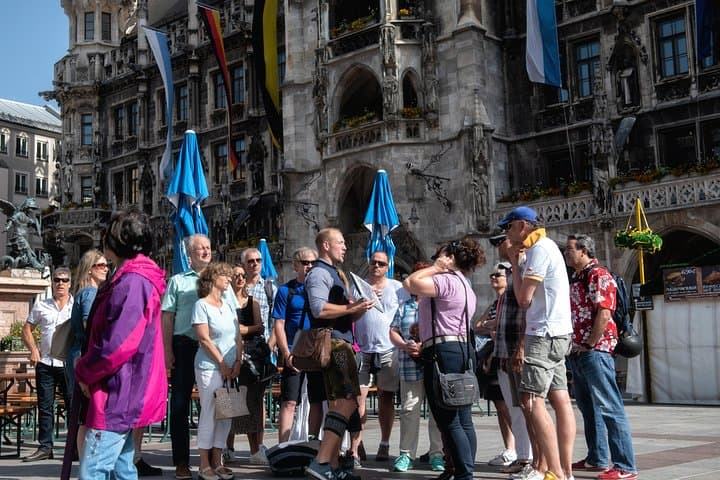
Step off a tram and into the pulse of Munich: cobblestones underfoot, the Glockenspiel chiming above Marienplatz and church towers slicing the sky. The guide leads through narrow lanes where façades bear the scars of the Second World War and the careful brushstrokes of reconstruction. Vendors at Viktualienmarkt call out like an orchestra of daily life; the Hofbräuhaus hums with long benches and local lore.
Step off a tram and into the pulse of Munich: cobblestones underfoot, the Glockenspiel chiming above Marienplatz and church towers slicing the sky. The guide leads through narrow lanes where façades bear the scars of the Second World War and the careful brushstrokes of reconstruction. Vendors at Viktualienmarkt call out like an orchestra of daily life; the Hofbräuhaus hums with long benches and local lore.
Munich’s core sits on a gravel plain shaped by the Isar River; its medieval street plan grew from a market and monastic settlement recorded from 1158. The Frauenkirche, with its distinctive domes, anchors centuries of civic and religious history, while the Residenz and Alter Hof show how Bavarian power concentrated and then softened into public squares and beer gardens. Cultural notes: Munich blends Bavarian tradition with modern design, and local food markets remain social hubs.
Practical guidance: this is a low-impact, two-hour walk on mostly flat, paved streets—bring sturdy shoes, a light jacket, and a small water bottle. Guided stops include photo-friendly viewpoints and market stalls; ask to tailor the route toward architecture, WWII history, or culinary stops. Public transport is efficient; plan to meet in Marienplatz to minimize confusion. Peak seasons (late spring–early fall) bring crowds—early morning departures deliver clearer photos and cooler air. The tour is wheelchair- and stroller-accessible in central areas, but some alleys have uneven paving. Keep ID handy for any museum entry you choose to add, and leave large backpacks at your hotel to move easily among narrow streets.