THE ADVENTURE COLLECTIVE® · Independent discovery and booking for outdoor travel

Cross sandstone canyons and snorkel crystal pools before descending into the wildlife-rich Pantanal on this private multiday nature tour. Expect long drives, early starts, and rich encounters with birds and wetland mammals.
Cross sandstone canyons and snorkel crystal pools before descending into the wildlife-rich Pantanal on this private multiday nature tour. Expect long drives, early starts, and rich encounters with birds and wetland mammals.
You step off the transfer in Cuiabá into a broad, sun-baked plain where the air smells faintly of earth and wet grass. The van eases onto red roads, and within an hour you’re climbing into the cooler plateau of Chapada dos Guimarães — sandstone cliffs rise like weathered pages, and waterfalls cut bright slashes into canyon walls.
Verified experiences and guided adventures in the surrounding area.
Operated by Rio Love Story · Cuiabá, Mato Grosso
You step off the transfer in Cuiabá into a broad, sun-baked plain where the air smells faintly of earth and wet grass. The van eases onto red roads, and within an hour you’re climbing into the cooler plateau of Chapada dos Guimarães — sandstone cliffs rise like weathered pages, and waterfalls cut bright slashes into canyon walls.
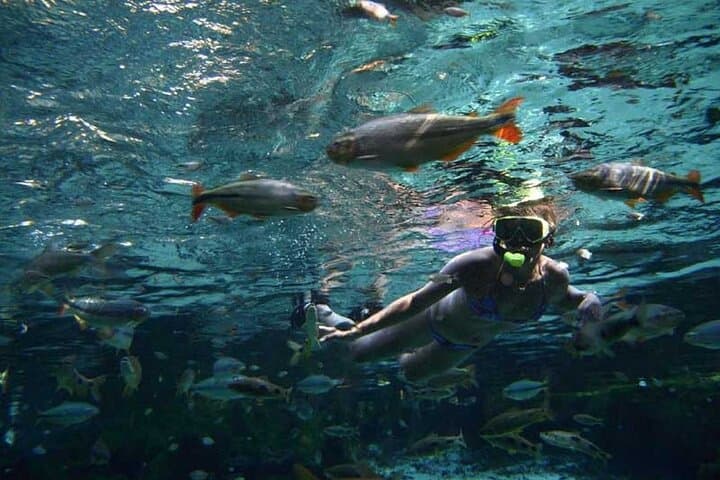
Chapada’s geology is blunt and honest: sandstones sculpted by wind and rain at roughly 760 m above sea level feed streams that become the headwaters flowing toward the Pantanal floodplain. At Nobres, crystal-clear pools and the Salobra River invite snorkeling among small, curious fish; the water here is a rare transparency in central Brazil. From there the landscape opens into the Pantanal’s mosaic of marshes, gallery forest, and savanna where capybaras loaf and hyacinth macaws flash across the sky.
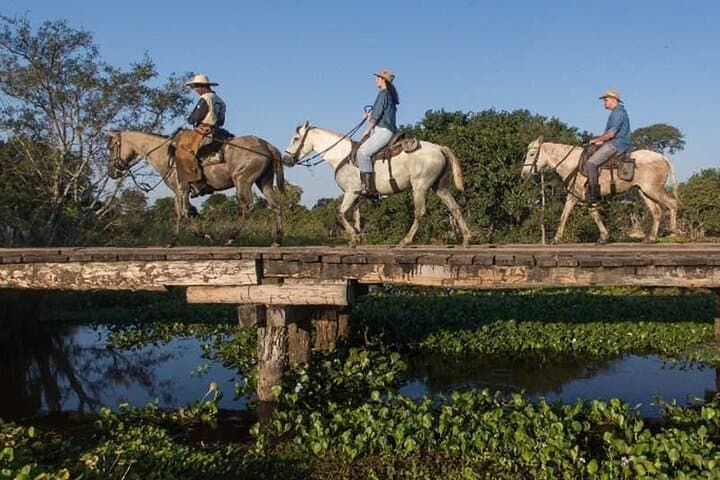
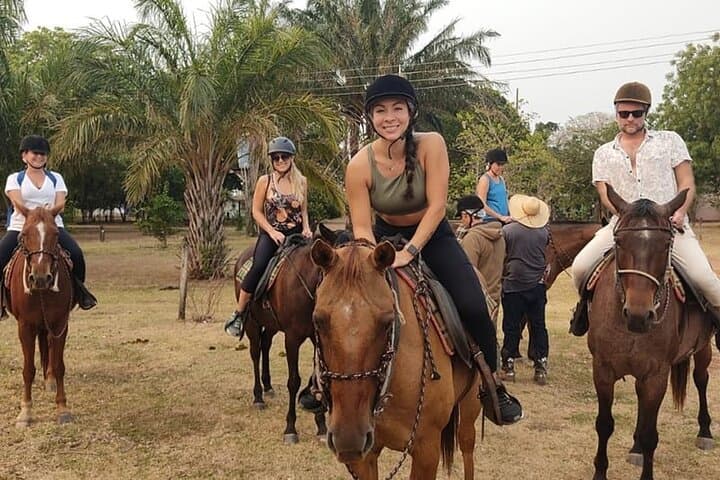
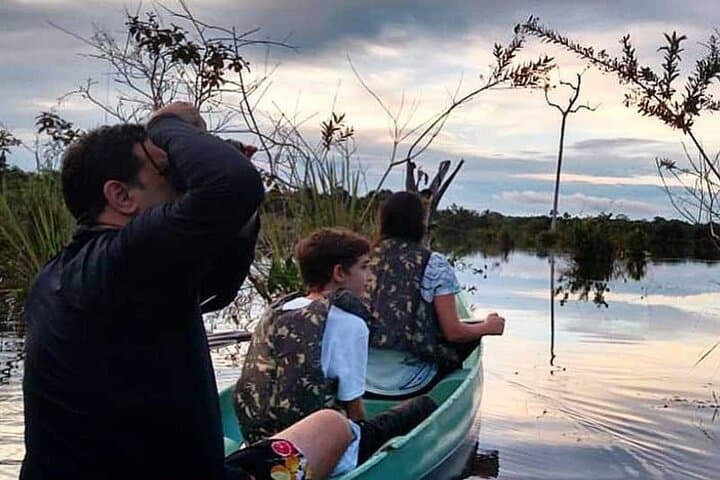
The region is shaped by cattle ranching culture and low-impact eco-lodges that guide visitors through a fragile ecosystem. Expect early starts for wildlife activity, long drives between sites (75–280 km legs), and a schedule built around light: sunrise boat trips, midday canyon swims, and nocturnal spotlighting.
Practical notes: bring a lightweight rain jacket during the wet season, a snorkel mask and reef-safe sunscreen, sturdy shoes for uneven sandstone, and mosquito protection. Hydrate frequently in the heat, and favor dry-season visits (May–September) for easier wildlife viewing. Guides follow strict viewing distances and responsible practices — observe quietly, stay on trails, and avoid feeding animals to help protect this extraordinary floodplain.
moderate.
5–6 days.
Suitable for travelers in moderate physical condition; full-day hikes and short swims require basic mobility and stamina.
Private transfers are included: typical legs are Cuiabá→Chapada (≈75 km, 1.5 h), Chapada→Nobres (≈165 km, 2.5 h), Nobres→Araras Pantanal (≈280 km, 4 h), and Pantanal→Cuiabá (≈130 km, 2 h).
The dry season (May–September) concentrates animals near water, making wildlife viewing more reliable; the wet season can spread animals out and limit road access.
Snorkeling takes place in shallow, crystal-clear pools — non-swimmers can participate with flotation assistance, but basic comfort in water is recommended.
Accommodations are eco-lodges with private rooms, AC in Pantanal lodges, and home-style meals featuring local fish, meats, and seasonal produce; dietary needs can be accommodated with advance notice.
The Pantanal is an ancient floodplain shaped by continental drainage patterns and traditional cattle ranching, while Chapada dos Guimarães preserves sandstone escarpments that recorded long-term erosion.
Local lodges work with guides to minimize disturbance: stay on trails, avoid feeding wildlife, and use reef-safe products to protect aquatic habitats.
Rio Love Story operates guided outdoor trips and adventures with an emphasis on safety, stewardship, and memorable experiences.
You step off the transfer in Cuiabá into a broad, sun-baked plain where the air smells faintly of earth and wet grass. The van eases onto red roads, and within an hour you’re climbing into the cooler plateau of Chapada dos Guimarães — sandstone cliffs rise like weathered pages, and waterfalls cut bright slashes into canyon walls.
You step off the transfer in Cuiabá into a broad, sun-baked plain where the air smells faintly of earth and wet grass. The van eases onto red roads, and within an hour you’re climbing into the cooler plateau of Chapada dos Guimarães — sandstone cliffs rise like weathered pages, and waterfalls cut bright slashes into canyon walls.
Chapada’s geology is blunt and honest: sandstones sculpted by wind and rain at roughly 760 m above sea level feed streams that become the headwaters flowing toward the Pantanal floodplain. At Nobres, crystal-clear pools and the Salobra River invite snorkeling among small, curious fish; the water here is a rare transparency in central Brazil. From there the landscape opens into the Pantanal’s mosaic of marshes, gallery forest, and savanna where capybaras loaf and hyacinth macaws flash across the sky.
The region is shaped by cattle ranching culture and low-impact eco-lodges that guide visitors through a fragile ecosystem. Expect early starts for wildlife activity, long drives between sites (75–280 km legs), and a schedule built around light: sunrise boat trips, midday canyon swims, and nocturnal spotlighting.
Practical notes: bring a lightweight rain jacket during the wet season, a snorkel mask and reef-safe sunscreen, sturdy shoes for uneven sandstone, and mosquito protection. Hydrate frequently in the heat, and favor dry-season visits (May–September) for easier wildlife viewing. Guides follow strict viewing distances and responsible practices — observe quietly, stay on trails, and avoid feeding animals to help protect this extraordinary floodplain.