THE ADVENTURE COLLECTIVE® · Independent discovery and booking for outdoor travel

Drive high passes, watch black-necked cranes in Phobjikha, and hike to the cliff‑perched Tiger’s Nest. This private 10‑day tour pairs cultural immersion—dzongs, monasteries and craft schools—with manageable mountain walks and wildlife viewing.
Drive high passes, watch black-necked cranes in Phobjikha, and hike to the cliff‑perched Tiger’s Nest. This private 10‑day tour pairs cultural immersion—dzongs, monasteries and craft schools—with manageable mountain walks and wildlife viewing.
The first morning light slices across Paro Valley and the hillshelves fill with prayer flags; a private vehicle hums toward Thimphu while rhododendron-splashed slopes blur past. Travelers feel altitude in the thin, clear air as the guide points out fortress-like dzongs clinging to ridgelines and a cliff-side monastery that seems to have grown from the rock itself.
Verified experiences and guided adventures in the surrounding area.
Operated by WORLD TOUR PLAN · Paro, Paro District
The first morning light slices across Paro Valley and the hillshelves fill with prayer flags; a private vehicle hums toward Thimphu while rhododendron-splashed slopes blur past. Travelers feel altitude in the thin, clear air as the guide points out fortress-like dzongs clinging to ridgelines and a cliff-side monastery that seems to have grown from the rock itself.
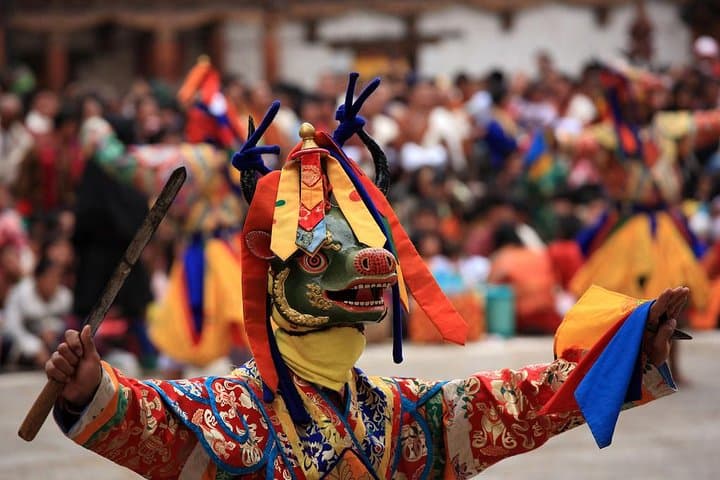
This itinerary threads Western Bhutan’s cultural and natural high points: Paro’s Ta Dzong museum and Rinpung Dzong, the capital’s chortens and craft schools, the glacial U-shaped Phobjikha Valley that hosts migrating black-necked cranes in winter, and the fertile Punakha plain with its timbered dzong and suspension bridge. Geologically the route follows Himalayan foothills carved by glaciers and rivers, with passes like Dochula rising above mixed conifer forest into windswept alpine meadows. Culturally, the tour moves through living Buddhist practice — circumambulating chortens, watching monks at prayer, and seeing traditional arts at the Zorig Chusum school.
Practical guidance: pack for wide temperature swings and altitude—layers, a waterproof shell, good walking shoes and blister care. Expect mostly paved drives between valleys with short steep hikes (notably the 3–4 hour ascent to Paro Taktsang). Allow time to move slowly at high passes, drink water, and heed guide advice on monastery etiquette (modest dress, quiet behavior). Photography is generally welcome but follow local rules in temples. With straightforward planning, the trip balances accessible hiking, wildlife viewing, and deep cultural encounters across ten purposeful days.
moderate.
10 days.
Moderate — able to walk 3–5 hours on hilly trails and tolerate driving at altitude; basic stamina for daily sightseeing required.
Most international visitors require a visa and must book through a licensed Bhutanese tour operator; the tour operator arranges permits and the Sustainable Development Fee (SDF).
The round‑trip hike typically takes 3–4 hours with steep sections and stone steps—reasonable for fit walkers but challenging if you have mobility limits or severe altitude sensitivity.
Yes — Phobjikha valley is known for wintering black‑necked cranes and you may spot takin near Thimphu preserves; sightings depend on season and time of day.
Bhutanese Ngultrum (BTN) is used alongside Indian Rupees in many places; Dzongkha is the national language though English is widely used in tourism services.
Many Western Bhutan dzongs and monasteries date to the 17th century and were built by Zhabdrung Ngawang Namgyal; Ta Dzong now houses the National Museum.
Bhutan limits tourist impact through permit systems and the Sustainable Development Fee; local conservation efforts protect crane wintering habitat and promote community‑based ecotourism.
WORLD TOUR PLAN operates guided outdoor trips and adventures with an emphasis on safety, stewardship, and memorable experiences.
The first morning light slices across Paro Valley and the hillshelves fill with prayer flags; a private vehicle hums toward Thimphu while rhododendron-splashed slopes blur past. Travelers feel altitude in the thin, clear air as the guide points out fortress-like dzongs clinging to ridgelines and a cliff-side monastery that seems to have grown from the rock itself.
The first morning light slices across Paro Valley and the hillshelves fill with prayer flags; a private vehicle hums toward Thimphu while rhododendron-splashed slopes blur past. Travelers feel altitude in the thin, clear air as the guide points out fortress-like dzongs clinging to ridgelines and a cliff-side monastery that seems to have grown from the rock itself.
This itinerary threads Western Bhutan’s cultural and natural high points: Paro’s Ta Dzong museum and Rinpung Dzong, the capital’s chortens and craft schools, the glacial U-shaped Phobjikha Valley that hosts migrating black-necked cranes in winter, and the fertile Punakha plain with its timbered dzong and suspension bridge. Geologically the route follows Himalayan foothills carved by glaciers and rivers, with passes like Dochula rising above mixed conifer forest into windswept alpine meadows. Culturally, the tour moves through living Buddhist practice — circumambulating chortens, watching monks at prayer, and seeing traditional arts at the Zorig Chusum school.
Practical guidance: pack for wide temperature swings and altitude—layers, a waterproof shell, good walking shoes and blister care. Expect mostly paved drives between valleys with short steep hikes (notably the 3–4 hour ascent to Paro Taktsang). Allow time to move slowly at high passes, drink water, and heed guide advice on monastery etiquette (modest dress, quiet behavior). Photography is generally welcome but follow local rules in temples. With straightforward planning, the trip balances accessible hiking, wildlife viewing, and deep cultural encounters across ten purposeful days.