THE ADVENTURE COLLECTIVE® · Independent discovery and booking for outdoor travel

Board a private half-day on the Mana'hau to snorkel, watch, and occasionally swim alongside humpback whales, rays, sharks and turtles. Small groups and a marine biologist make this a focused wildlife encounter in Moorea's dramatic lagoon and open sea.
Board a private half-day on the Mana'hau to snorkel, watch, and occasionally swim alongside humpback whales, rays, sharks and turtles. Small groups and a marine biologist make this a focused wildlife encounter in Moorea's dramatic lagoon and open sea.
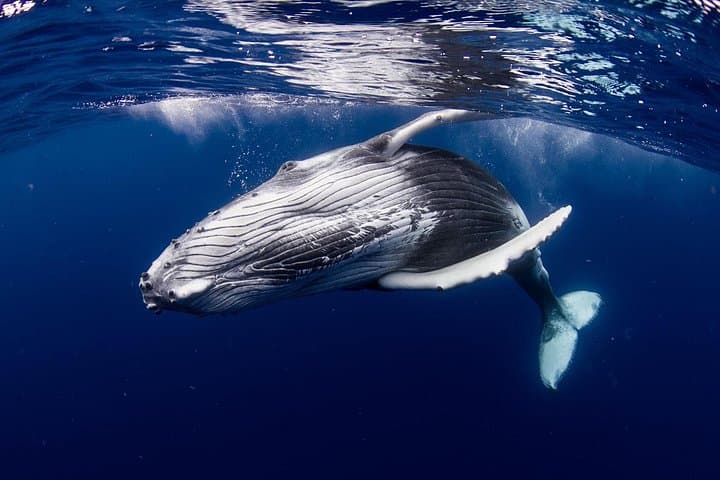
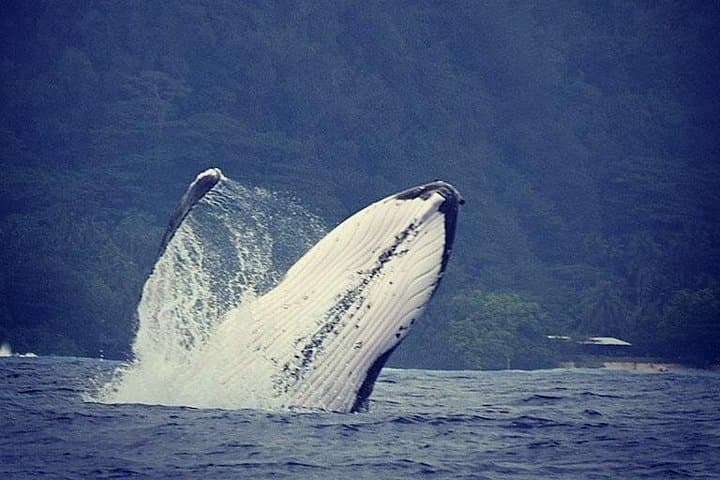
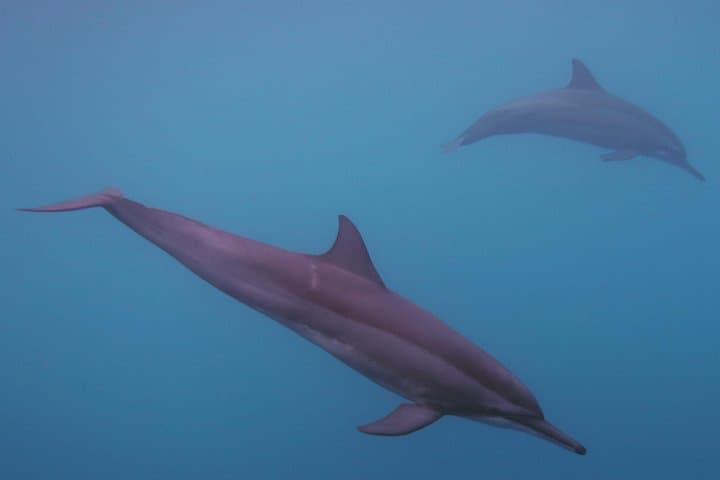
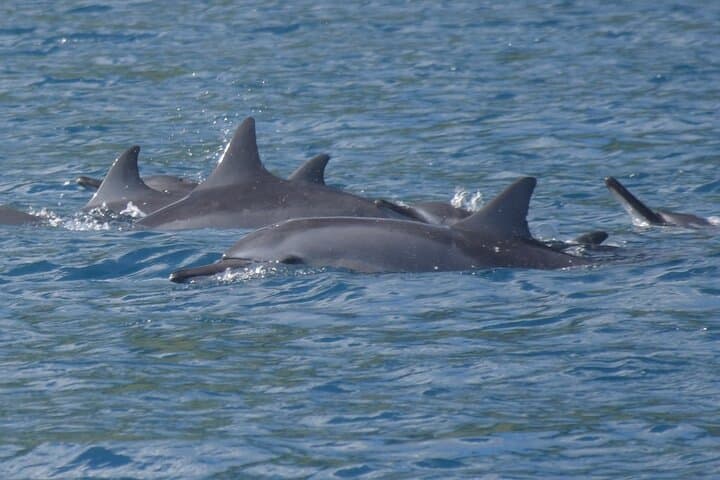
A low, warm swell rocks the Mana'hau as it slips from Moorea's lagoon into the open blue. Salt spray sharpens the air; the boat's crew scans the horizon while a marine biologist points to distant spouts. In a group capped at eight, passengers trade quiet anticipation for sudden, close encounters—dorsal fins, the arcing backs of rays, and, in season, the puffs and tail-slaps of humpback whales.
Verified experiences and guided adventures in the surrounding area.
Operated by Mana Moorea Tours · Moorea, Moorea-Maiao
A low, warm swell rocks the Mana'hau as it slips from Moorea's lagoon into the open blue. Salt spray sharpens the air; the boat's crew scans the horizon while a marine biologist points to distant spouts. In a group capped at eight, passengers trade quiet anticipation for sudden, close encounters—dorsal fins, the arcing backs of rays, and, in season, the puffs and tail-slaps of humpback whales.
Moorea sits on an uplifted volcanic rim carved by reefs and currents, its two main bays (Cook’s and Opunohu) shaped by erosion and ancient lava flows. Polynesian navigators read these same waters for generations; modern guides blend that local seafaring knowledge with marine science to locate feeding and resting zones. The archipelago’s coral gardens and channels support turtles, reef sharks, and schools of tropical fish that make snorkeling here vivid and accessible.
Practicalities matter: this is a four-hour private excursion that balances snorkeling with wildlife observation. Snorkel gear and safety equipment are supplied, and guides adapt the route to sightings and sea conditions. Expect short swims from a stable tender, basic ocean swimming ability, and a moderate level of fitness for getting on and off the boat. Peak whale season runs July–November; outside that window the trip focuses on rays, turtles, and reef snorkeling.
Bring reef-safe sunscreen, a snug mask, and a light wind layer. Plan for morning departures to avoid afternoon squalls and to catch calmer water and more active fauna. The result is a pragmatic, up-close marine experience—educational, safety-focused, and tuned to what the sea is offering that day.
moderate.
4 hours.
Moderate; able to climb on/off a small tender and swim 50–100 meters comfortably with a mask and snorkel.
Humpbacks are most commonly sighted during Moorea’s austral winter and spring — roughly July through November — when they migrate through the region.
No advanced skills are required, but a basic ability to swim and comfort with snorkeling in open water improves the experience and safety.
Wildlife sightings cannot be guaranteed; the private format and expert guides increase odds, but the crew will adapt the itinerary to what the ocean offers that day.
Children may join but must be supervised and sit on laps if infants; operators set limits based on safety and sea conditions, so disclose ages at booking.
Moorea’s bays were long used by Polynesian navigators and later by European explorers; reefs and channels shaped settlement patterns and continue to influence boat routes.
Operators emphasize reef-safe practices and limited group sizes to reduce disturbance; visitors should avoid touching coral and follow guide instructions to protect fragile habitats.
Mana Moorea Tours operates guided outdoor trips and adventures with an emphasis on safety, stewardship, and memorable experiences.
A low, warm swell rocks the Mana'hau as it slips from Moorea's lagoon into the open blue. Salt spray sharpens the air; the boat's crew scans the horizon while a marine biologist points to distant spouts. In a group capped at eight, passengers trade quiet anticipation for sudden, close encounters—dorsal fins, the arcing backs of rays, and, in season, the puffs and tail-slaps of humpback whales.
A low, warm swell rocks the Mana'hau as it slips from Moorea's lagoon into the open blue. Salt spray sharpens the air; the boat's crew scans the horizon while a marine biologist points to distant spouts. In a group capped at eight, passengers trade quiet anticipation for sudden, close encounters—dorsal fins, the arcing backs of rays, and, in season, the puffs and tail-slaps of humpback whales.
Moorea sits on an uplifted volcanic rim carved by reefs and currents, its two main bays (Cook’s and Opunohu) shaped by erosion and ancient lava flows. Polynesian navigators read these same waters for generations; modern guides blend that local seafaring knowledge with marine science to locate feeding and resting zones. The archipelago’s coral gardens and channels support turtles, reef sharks, and schools of tropical fish that make snorkeling here vivid and accessible.
Practicalities matter: this is a four-hour private excursion that balances snorkeling with wildlife observation. Snorkel gear and safety equipment are supplied, and guides adapt the route to sightings and sea conditions. Expect short swims from a stable tender, basic ocean swimming ability, and a moderate level of fitness for getting on and off the boat. Peak whale season runs July–November; outside that window the trip focuses on rays, turtles, and reef snorkeling.
Bring reef-safe sunscreen, a snug mask, and a light wind layer. Plan for morning departures to avoid afternoon squalls and to catch calmer water and more active fauna. The result is a pragmatic, up-close marine experience—educational, safety-focused, and tuned to what the sea is offering that day.