THE ADVENTURE COLLECTIVE® · Independent discovery and booking for outdoor travel

Lift above the thunder of Victoria Falls in a private microlight for an intimate aerial view of the Zambezi gorge. Short but unforgettable, the flight pairs raw geology and cultural context with practical logistics for first-time flyers.
Lift above the thunder of Victoria Falls in a private microlight for an intimate aerial view of the Zambezi gorge. Short but unforgettable, the flight pairs raw geology and cultural context with practical logistics for first-time flyers.
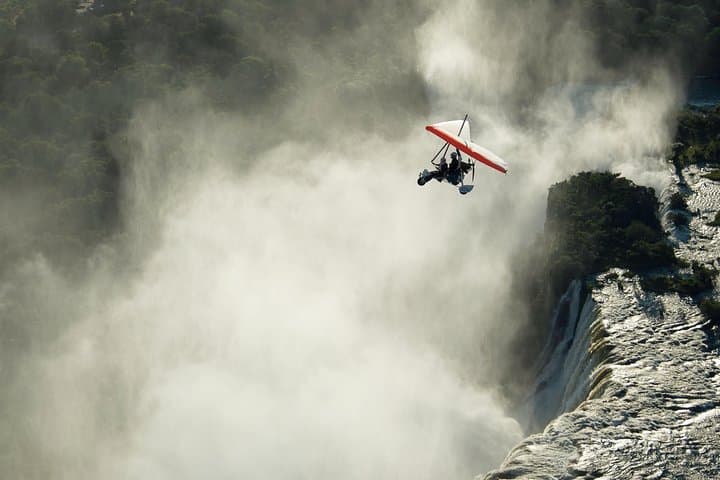
You taxi onto a short grass strip, the microlight's skin humming as the pilot runs the checks, and the roar of the Zambezi grows from distant thunder to a wall you can feel. Minutes later you lift free of the riverbank, the spray of Mosi-oa-Tunya (the smoke that thunders) drifting beneath wingtip; the gorge yawns like a deep, sculpted scar carved through basalt by relentless water and time.
Verified experiences and guided adventures in the surrounding area.
Operated by Afro Dawn Safaris · Livingstone, Southern Province
You taxi onto a short grass strip, the microlight's skin humming as the pilot runs the checks, and the roar of the Zambezi grows from distant thunder to a wall you can feel. Minutes later you lift free of the riverbank, the spray of Mosi-oa-Tunya (the smoke that thunders) drifting beneath wingtip; the gorge yawns like a deep, sculpted scar carved through basalt by relentless water and time.
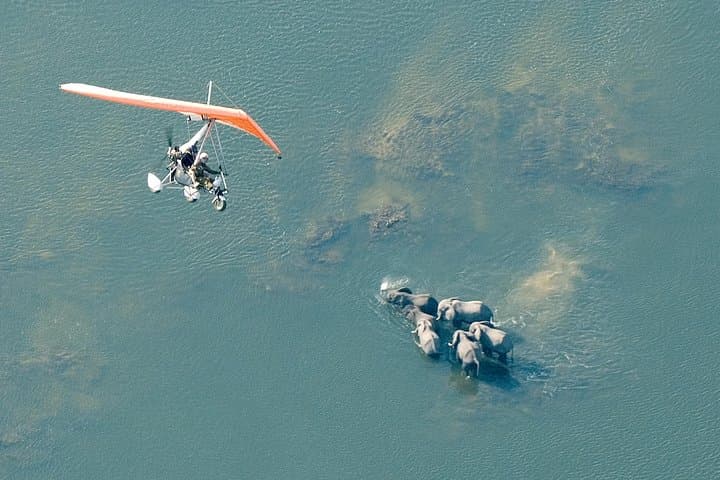
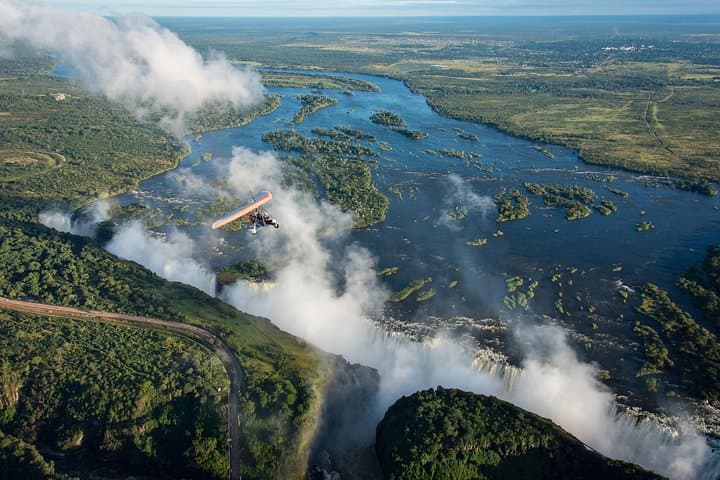
Geology here is raw: basalt escarpments and deep plunge pools cut by the Zambezi over millions of years. The falls sit on the Zimbabwe–Zambia border and are central to Lozi and Tonga cultural landscapes; local guides will speak of river spirits and ritual crossings that predate colonial mapping. From the air you see islands, cataracts, and the braided channels that shift with seasonal flow.
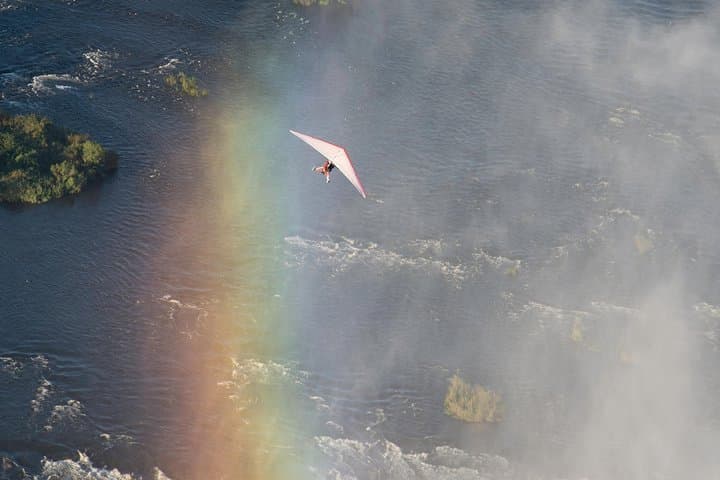
Practical guidance: flights are about 15 minutes in the air but plan an hour for briefing, weight checks and transfers. Passenger weight limit is strict (110 kg/242 lb); cameras are handled by the crew for safety and imagery is available for purchase. Expect wind and spray—pilots fly closer in the dry season for clearer lines and in the high-water season for dramatic curtains of spray.
Wear layered clothing and closed-toe shoes for walkways to the strip; bring motion-sickness precautions if you’re sensitive. Morning slots often offer calmer air and softer light for photos. This is an accessible yet adrenaline-tinged way to see one of the world's largest waterfalls—intimate, airborne, and undeniably elemental.
easy.
15 minutes (allow 1–2 hours total).
No special fitness required, but you should be comfortable with heights and short walks on uneven surfaces
Yes — the operator enforces a single-passenger weight limit of 110 kg (242 lb). Disclose accurate weight when booking to avoid refusal at check-in.
No — for safety you cannot take your own camera; the microlight is equipped with wing-mounted cameras and images/video are available to buy after the flight.
Children must be at least 12 years old; ages 4–12 may fly only at the pilot’s discretion and with guardian consent.
Flights are canceled if conditions are unsafe; operators usually offer full refunds if canceled at least 24 hours in advance or if weather forces a stoppage.
Victoria Falls is part of a landscape shaped by the Zambezi and long-inhabited by Lozi and Tonga peoples; European discovery by David Livingstone in 1855 brought global attention and the town of Livingstone developed as a gateway.
The falls and surrounding national parks face pressures from tourism and hydropower; operators emphasize stick-to-trail practices and minimizing disturbance to wildlife and riverine habitat.
Afro Dawn Safaris operates guided outdoor trips and adventures with an emphasis on safety, stewardship, and memorable experiences.
You taxi onto a short grass strip, the microlight's skin humming as the pilot runs the checks, and the roar of the Zambezi grows from distant thunder to a wall you can feel. Minutes later you lift free of the riverbank, the spray of Mosi-oa-Tunya (the smoke that thunders) drifting beneath wingtip; the gorge yawns like a deep, sculpted scar carved through basalt by relentless water and time.
You taxi onto a short grass strip, the microlight's skin humming as the pilot runs the checks, and the roar of the Zambezi grows from distant thunder to a wall you can feel. Minutes later you lift free of the riverbank, the spray of Mosi-oa-Tunya (the smoke that thunders) drifting beneath wingtip; the gorge yawns like a deep, sculpted scar carved through basalt by relentless water and time.
Geology here is raw: basalt escarpments and deep plunge pools cut by the Zambezi over millions of years. The falls sit on the Zimbabwe–Zambia border and are central to Lozi and Tonga cultural landscapes; local guides will speak of river spirits and ritual crossings that predate colonial mapping. From the air you see islands, cataracts, and the braided channels that shift with seasonal flow.
Practical guidance: flights are about 15 minutes in the air but plan an hour for briefing, weight checks and transfers. Passenger weight limit is strict (110 kg/242 lb); cameras are handled by the crew for safety and imagery is available for purchase. Expect wind and spray—pilots fly closer in the dry season for clearer lines and in the high-water season for dramatic curtains of spray.
Wear layered clothing and closed-toe shoes for walkways to the strip; bring motion-sickness precautions if you’re sensitive. Morning slots often offer calmer air and softer light for photos. This is an accessible yet adrenaline-tinged way to see one of the world's largest waterfalls—intimate, airborne, and undeniably elemental.