THE ADVENTURE COLLECTIVE® · Independent discovery and booking for outdoor travel

Short, guided 4x4 excursion from Merzouga into Erg Chebbi with a visit to nomadic families and traditional Gnaoua music in Khamlia. Perfect for a half-day cultural and landscape immersion.
Short, guided 4x4 excursion from Merzouga into Erg Chebbi with a visit to nomadic families and traditional Gnaoua music in Khamlia. Perfect for a half-day cultural and landscape immersion.
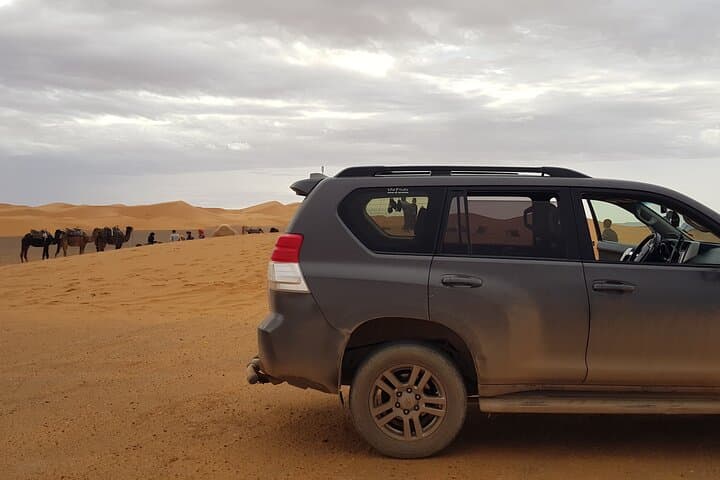
Morning light strips the dunes to a palette of gold and shadow as an air-conditioned 4x4 rolls away from Merzouga toward Erg Chebbi.
Verified experiences and guided adventures in the surrounding area.
Operated by Merzouga Desert · Hassilabied, Drâa-Tafilalet
Morning light strips the dunes to a palette of gold and shadow as an air-conditioned 4x4 rolls away from Merzouga toward Erg Chebbi.
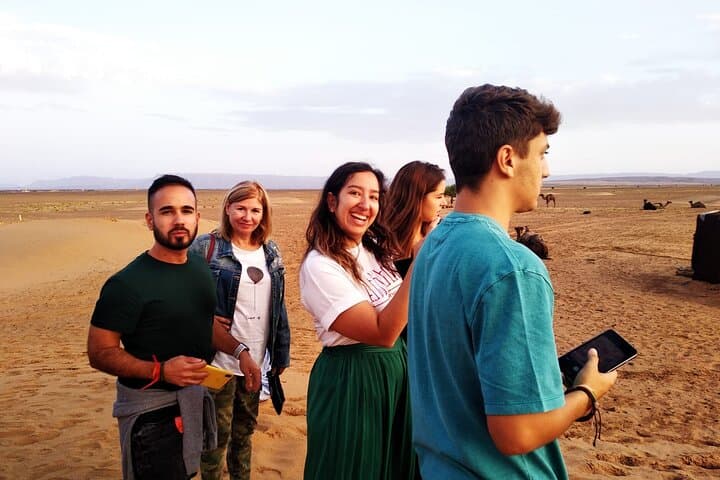
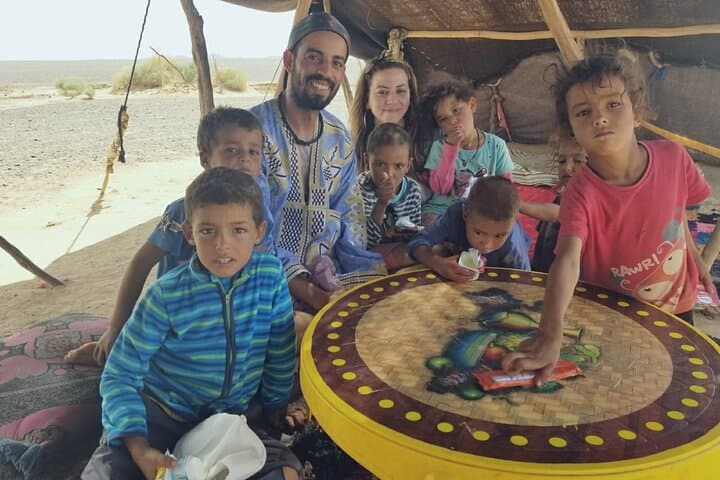
You cross a landscape that feels alive: wind-shaped ridges that breathe and shift, scrub that hugs the interdune flats, and the first low houses of Khamlia emerging like a human punctuation mark on the sand. The van pulls up; tea steams, voices trade rhythms, and you meet families whose movements are still tied to seasons and pasture.
This stretch of southeastern Morocco sits at the edge of the Sahara where the Atlas foothills feed sand into Erg Chebbi. Khamlia’s residents trace a cultural lineage to the Gnawa—musicians and storytellers whose rhythms map histories of migration, spiritual practice and cross-Saharan trade.
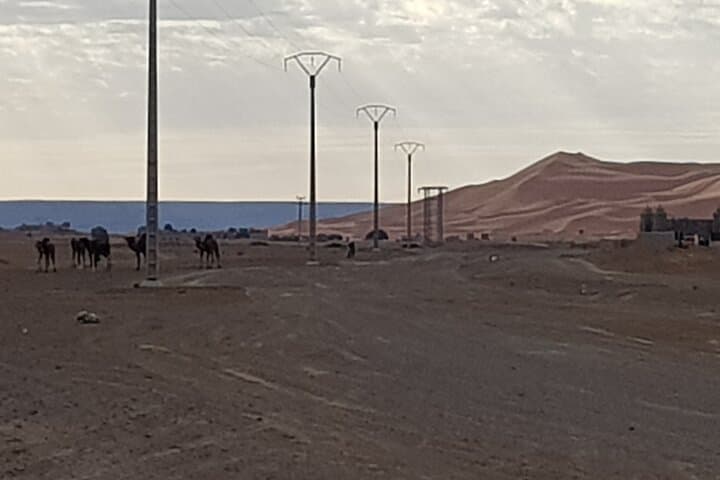
The visit mixes geology and human geography: soft, wind-sorted dunes atop compacted alluvial plains; nomadic camps that shift with water and grazing cycles; and a village that keeps live percussion and call-and-response singing at its center.
Practical side: the tour is short—roughly three hours total—so plan it for morning cool or late afternoon light. Wear breathable layers, closed shoes for stepping around dunes and a hat; bring water and a small amount of cash for tea or crafts. Respect private space—ask before photographing children—and follow your guide’s lead on routes to minimize impact on fragile dune crusts.
This excursion is for travelers who want a compact encounter: tactile desert, living traditions, and a window into a way of life that has adapted to extremes without losing its rhythm.
easy.
3 hours.
Minimal fitness required; suitable for travelers who can climb short dune slopes and step in uneven sand.
The private tour lasts about three hours total, including transfers from and back to your Merzouga-area hotel.
Yes—there are short walks when visiting camps and Khamlia; closed-toe shoes are recommended.
Yes; infant seats are available in the vehicle and the operator notes the activity is suitable for all fitness levels.
Yes—tea is commonly offered and small handmade items are sometimes available; carry small local currency for purchases.
The Erg Chebbi dunes sit on ancient alluvial deposits; local villages developed along caravan and pastoral routes with strong Gnawa musical traditions in Khamlia.
Stay on established tracks and avoid disturbing dune crusts or vegetation; support local guides and crafts to help keep tourism benefits in the community.
Merzouga Desert operates guided outdoor trips and adventures with an emphasis on safety, stewardship, and memorable experiences.
Morning light strips the dunes to a palette of gold and shadow as an air-conditioned 4x4 rolls away from Merzouga toward Erg Chebbi.
Morning light strips the dunes to a palette of gold and shadow as an air-conditioned 4x4 rolls away from Merzouga toward Erg Chebbi.
You cross a landscape that feels alive: wind-shaped ridges that breathe and shift, scrub that hugs the interdune flats, and the first low houses of Khamlia emerging like a human punctuation mark on the sand. The van pulls up; tea steams, voices trade rhythms, and you meet families whose movements are still tied to seasons and pasture.
This stretch of southeastern Morocco sits at the edge of the Sahara where the Atlas foothills feed sand into Erg Chebbi. Khamlia’s residents trace a cultural lineage to the Gnawa—musicians and storytellers whose rhythms map histories of migration, spiritual practice and cross-Saharan trade.
The visit mixes geology and human geography: soft, wind-sorted dunes atop compacted alluvial plains; nomadic camps that shift with water and grazing cycles; and a village that keeps live percussion and call-and-response singing at its center.
Practical side: the tour is short—roughly three hours total—so plan it for morning cool or late afternoon light. Wear breathable layers, closed shoes for stepping around dunes and a hat; bring water and a small amount of cash for tea or crafts. Respect private space—ask before photographing children—and follow your guide’s lead on routes to minimize impact on fragile dune crusts.
This excursion is for travelers who want a compact encounter: tactile desert, living traditions, and a window into a way of life that has adapted to extremes without losing its rhythm.